Showing posts with label self help. Show all posts
Notorious tiger mom and law professor Amy Chua wrote recently on the drivers of success. Particularly interesting is the seemingly paradoxical interplay between a superiority complex and a perpetual sense of insecurity. The former underlies and induces the latter, creating a constant need to prove oneself and live up to the belief in one's greatness.
As is the case whenever psychology is transposed onto socio-cultural phenomena, Chua's account is problematically simplistic and may not actually be accurate at all. But at least on the level of the individual, there's some truth in the magic of that interplay. Nevertheless, there's a caveat—it's a double-edged sword that can cut you as much as it can help you cut a path to success.
The motivation that the interplay between a superiority complex and the sense of insecurity evokes is indeed quite strong. But it can also induce despair and a subsequent retreat from a challenge in order to avoid the cognitive dissonance that might occur in the event of failure. In other words, rather than be proven not as superior as you believe yourself to be, you might prefer to avoid difficult things.
And that's not yet accounting for its effects on happiness. Last year, a study showed that social media use is correlated with lower levels of happiness, as users compare the positive images of other people's lives that they see with their own invariably imperfect lives. I imagine a similar problem also applies here: While success and hard work do induce happiness, the constant feeling of inadequacy that often results from comparing oneself to others in trying to maintain the belief in one's superiority would undoubtedly have a negative impact on one's happiness.
So, ultimately, the question is, is it worth it? Would you trade happiness for success? Or is it the case that, recalling J.S. Mill's distinction between happiness and contentment, success brings the ultimate happiness that can overcome the perpetual pain felt during the journey?
These are not questions that neat, simplistic recipes for success can answer.

Why do people celebrate the new year? It only marks the end of the holiday season; it means jumping back into the rat race that had so occupied you for most of the past year. Yes, the days can be full of excitement at times, but it's like the rush of battle—you don't want to get back to it so soon.
So will there be any new opportunities that you could not have seized this past year? Are you hoping, vainly, for something new to happen to you?
It occurs to me that it's much better to live for the day knowing that the year after next year after next, you would have lost your youth or vitality. That great year you're looking forward to? It's the year you've been looking forward to again and again, never to actually arrive. And one fine day, your life would have passed with barely a whimper.
It's funny that the brash can spout "happy new year" and "carpe diem" in the same breath, should their lonely neurons just fire accordingly. "Happy new year" is the symptom of a malaise afflicting our forward-looking society, which overlooks everything that happens in between now and that shiny imaginary future.
No, it probably won't be a happy new year unless you've had a happy year. And no, it won't be the new year that brings you happiness—if you play your cards right, it's you who will.
You vs. the world
Posted by
moses
@
09:26
adulthood,
optimism,
personal,
pessimism,
self help
0
comments
When cornered, many animals fight back. We should probably do the same. Compromise becomes impossible when there is no middle ground. The only options are capitulation and confrontation, and at times only the latter offers a chance at survival.
When people talk about confronting an issue or a problem, they sometimes mean capitulating to it. Catchphrases like "change your mindset" or "adapt to the situation" may conceal a sense of helplessness that has prompted the speaker to give up without actually admitting as much.
Indeed, surrendering may often seem the easier option. Sometimes, the world seems hostile to our ideas and our aspirations; sometimes, it defeats us. However, even if we haven't lost, it's so much easier to give up without a fight. Let the world consume us rather than resist it. After all, isn't defeat inevitable?
It's true that, chances are, going against the world will be a tough long slog. And you're often alone in that struggle. But it may be your only chance at achieving freedom when everything conspires to bind you. The more remote the possibility of compromise, the more you have to fight.
If we do choose to fight, we shouldn't expect to survive, much less to win. But perhaps, by the time we are done fighting, a path towards compromise would have opened. Or perhaps we would indeed have to surrender in the end. But you will certainly never find out for yourself if you give up from the start.
And that I think is a fitting message to think on as the new year rolls around.
Education
Posted by
moses
@
09:56
education,
personal,
philosophy,
self help,
Singapore
0
comments
Every year it's the same. I would be lulled into thinking that there are possibilities here, that things will be different. This year, I actually convinced myself that I think positively now, that I will see things differently. I was even beginning to think that I may prefer to stay here instead of leaving again. But, in the end, I still feel the same way
The people are still the same. People might change since you've got to know them, but they'd never change again. Here, they are still indifferent. You can't rely on them to make the simplest of gestures unless they can see what's in it for them. In general, old friends tend to become nothing but a tiny blot in the paper of the mind, a memory of people who exist but who are of little concern to you now.
Every year, I learn a little more about how to live a largely solitary existence. When family became lost to me emotionally, I had friends. Now friends are merely a collection of acquaintances. You don't leave a place and expect to pay no price. Maybe some people can, but such are my blessings.
Each time, to stave off bitterness, I have to know that I've become better. I have to be able to say that I've become more self-sufficient. To achieve that, I have to turn again to philosophy. Only philosophy can teach you how to live alone and nonchalantly.
The strong person is an essentially solitary person. I have no need for friends, as they have no need for me.
The Odyssey
Posted by
moses
@
20:24
life,
Marxism,
Nietzsche,
philosophy,
self help,
society
0
comments
A great many thinkers have devoted much time and effort to answering this question. Camus, one of those whom I remember most clearly, gives an absurdist answer when he asks and responds to his central question: If the universe is an absurd place, why live at all?
Yet, even though he deals exhaustively with the problem of existing with the awareness of the absurd, he seems to devote little attention to the material and therefore political-economic constitution of our everyday lives. That seems to be the domain of Marxist humanist philosophy, where the question has a different formulation: How does the individual assert himself as a human subject in a society that objectifies him and his labour through processes of reification and exchange? In other words, how does one be a human being who is capable of action unencumbered by the systems of domination immanent to our commercial society?
The answer seems to be revolution, one way or another—to destroy or destructively resist the systems of domination. Yet as we live our everyday lives, it seems to me that it is often not apparent what each of us as individuals can do in that regard. Between thriving through conformity and a difficult survival in opposition to everything that our society stands for, it's quite clear what most of us would choose.
So how might we chart the happiest path in our existence, neither completely consigning ourselves to having self-destructive tendencies to give up our subjectiveness nor sacrificing ourselves as martyrs on the barricades? How do we exist as human subjects in our normal everyday lives?
Nietzsche gives a pretty compelling answer: Be a strong subject. In essence, do not bow down to the rules imposed on you by others, but strive to create your own for yourself; assert yourself as a person with minimal regard to what others want to turn you into.
This sounds like a good general principle, but how do we go about applying it? What tangible thing can we build on it and hold on to?
Moving our attention away from the will to power, which can only reproduce systems of domination and thus lead to circularity, I believe that we must live for a labour of love. In other words, instead of instrumentalising ourselves to the conventions and modes of life prescribed by society in order to live, we have to subsume the necessity of conforming under our attempts to live to work on our own magna opera. Thus, in a Marxist way, we are re-inverting the order—instead of serving the rules, we are trying to make the rules serve us.
I think this is an interesting way of thinking because it implicitly makes a few crucial points—that we are only human in doing, and that we are only subjects in being able to do what we want (in a broad and existential sense of it). And I believe these points are crucial because they inform us on how to be.
Thus the journey begins.
I think some people figured out that it's best to be nice and positive-sounding, even if the ends of others are sometimes better furthered by truthfulness. Clearly, there is nothing inherently 'nice' about this attitude. It's merely convenient. But perhaps I should give these people more credit—it's quite cunning.
The simple trick lies in the fact that people love the sugar coating. They love the smiles, the sweet words and the genial laughs, whether or not they know if those are genuine. Of course, many would say that they prefer to hear true words. Nonetheless, most of them are still susceptible to the psychological effect of being met with niceties.
I think we should be at least a little wary of those who speak good but dishonest words. The mask they wear might make them seem better people than they really are, and it's only when you expect something of them that you might realise the true depth of their good-natured ways. Then you might be in for a disappointment. Or worse. After all, doesn't it resemble a confidence trick?
Infuriatingly, however, such consummate liars also tend to get away with things. People really do love the sugar coating. It's usually only when the truth stares them in the face would they admit that they've been bought. And the trickster would still be able to count on the goodwill of others who have not had their own encounter with his or her true character.
This makes me think, sadly, that the trick is too effective. Thus, on reflection, I can't say that I don't find something that I could learn from it. Therefore, try to reveal the truth only if you know that it's relatively safe to do so.
You might object that it's difficult to constantly be insincere, and that people will eventually be able to tell if you don't mean something.
However, there's a deeper level to this. If you're convinced yourself that you are being kind and pleasant by withholding your true feelings, you can certainly appear genuinely nice despite the fact that you are insincere. The goodwill of others can thus be maintained. People love their sugar coating. They adore those who are loveable and well-meaning.
I guess.
You've probably heard that statement many times by now. And if you're reading this, you're probably past the age when my words are going to do much, if you need them at all. Still, I find it good to reflect.
"Just be yourself" is the mantra that self-help gurus go by. I agree. But that is in the sense that I think one should be as frank as possible, if not entirely sincere.
On the other hand, just being themselves doesn't quite turn out as well as many people wish. Do you know what the problem is?
They aren't prepared to live with the consequences of just being themselves.
Some people think that by just being themselves, friends would naturally come. Yes, the friends you do have would likely be real friends. But that's a truism: If you remain a certain way, the friends you'd have would be those who don't mind you for who you are. And there might be just two or three of them. Nobody said anything about how rich your social life would be.
Of course, I have to be fair to self-help guides – they do generally give tips on how to make oneself more endearing. But that single message seems to be what gets digested and thrown about the most. Well, on its own, I don't think it's all that meaningful. There's a reason why they are called "self-help". Just being whatever you start off with isn't going to help your lonely self win hearts and minds. You have to help yourself, and change.
That doesn't mean be someone you're not, though. When you change, you shouldn't just change superficially. Change your mindset. Change fundamentally, maybe philosophically. Be yourself, but be a different self.
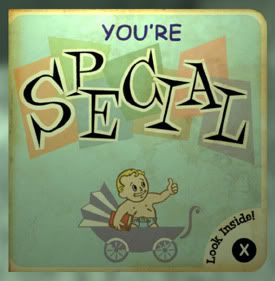
Just being yourself is also often understood to be good because everyone is unique anyway. You are special, so who cares what people think? Whatever floats your boat. Being your own individual is the right way to go.
Well, is it? I think so, but to say only that is a big oversimplification. The truth is you ain't cool just because you are yourself. If you want to have a good number of friends, you'd better align at least some of your interests and your habits such that you do get friends. Again, the problem is in what constitutes "floating your boat". Does having just a few friends who share your interest in tetherball, and who are almost exactly like you, float your boat?
"You're special" might be intended to help someone build self esteem. But if they had self esteem issues in the first place, I doubt it's going to help. Besides, confidence and self esteem are built by results as well. If you have many friends whom you genuinely enjoy interacting with, you'd feel better about yourself than if you don't. If, on the other hand, being your old self hasn't really produced results, then throw all those feel-good statements out. They are a lot worse to depend on than propofol.
And you know what doing the same thing over and over and expecting different results constitutes, right?
So, if I were to give some advice to a young kid, I'd say pick the right interests, hobbies and mannerisms. Think about being an individual after that.