Padd Solutions

Converted by Falcon Hive

Death to the patriot!

@ 15:59 • • 0 comments


Often, I would read about things that make me embarrassed of even downright ashamed of my country. I'm aware of its rather dirty history, and I don't have such faith in it to be certain that it's not involved in some reprehensible business today. In this light, is there any place for patriotism?

I find it amazing how people get up in arms over criticism of their country. Some of them do not even care if the criticism holds some truth. That or they are simply convinced that it is false. Perhaps to them, their country can do no wrong. What is the source of such touchy pride?


I'd like to say that it's because these people are aware of the historical significance of their statehood, because they truly understand how it compares to the alternatives. But that is a distant knowledge, if it can be grasped at all. Rather, I suspect the source is found in 'education' and propaganda, in the meanings they imbue through symbolic power and in the paranoid alternative scenarios that they plant in people's minds.

It is patently ridiculous that the paraphernalia and icons of national identification are treated with such reverence, so much so that acts that indicate disrespect towards them may be subject to legal sanction. These symbols are said to have a unifying function, yet in affording them true iconic status, the real things that they might have stood for become overlooked, relegated into the obscurity reserved for complex ideas that seem difficult for the minds of the brash to hold.

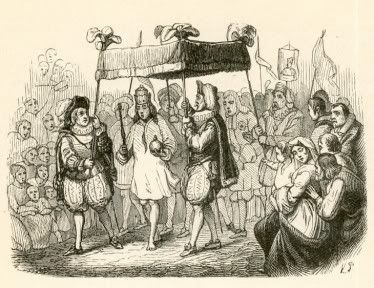
Thus we have the flag, the lion and what-not, symbols that are regularly wheeled out to summon feelings of pride and attachment so the masses can cheer as they did for kings. These are closely associated with the conception of the nation, together with and sometimes more prominently than real things such as community and solidarity with your fellowmen. They are mere noise, the pop of party poppers and the drunken singing of anthems before the wars that kill citizens in the name of the fatherland.

Far from being its defender, the unthinking patriot who is swayed by these icons, by pithy calls to augment the glory of the nation, is a danger to the community. It is the patriot who gives strength to hegemony and oppression. In his blindness, he may allow all manner of evil and political deception to come to pass. What's more, he may play the role of a soldier and marshal for them, actively aiding them and coercing his countrymen. Hence, if there is one slogan that we must have for patriotism, let it be "Death to the patriot!” 


Patriotism in peacetime is as useful as anger is while one is resting.
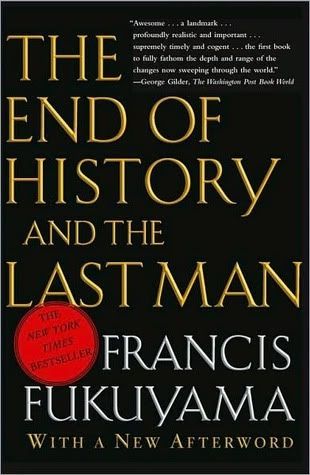
The Last Man

@ 02:11 • • 0 comments


Life is beautiful—so much so that there's little need to change it in any significant way. Such is the sentiment that I feel is predominant in the middle class public sphere, to the extent that, apart from a handful of disparate issues on the agenda, there is little prospect for active participation in social transformation.
"We have discovered happiness"—say the last men, and blink thereby.
This Nietzschean imagery seems particularly apt if we conceive of modern consumer society as the endpoint of a grand enlightenment project, namely that of turning human beings into masters of their own fates—beginning with mastery over nature through scientific progress (which is still ongoing), and arguably taken to the fullest extent in the Marxist vision of the human mastery over its own labour power.

This endpoint does not mark the fulfilment of the project, however. It seems that while science is still moving irresistibly forward, there is no longer much impetus to expand this project into other domains of human life. We have stopped, it seems, because life is good enough. Material conditions for the large middle classes in wealthier societies are sufficient for the pursuit of individual happiness; so what else do we need?

With the notion of success measured primarily in terms of the accumulation of material goods and perhaps influence, and now that pleasure as a chief mode of happiness is easily attainable, 'structural adjustment' is only used in a macroeconomic and financial sense. The drive for revolution dissipates in the humdrum of daily work and entertainment, drowned out by television and music. It's an uneventful and perhaps even blissful death.

Thus, it is perhaps the case that human agency can only, at least in present times, play but a small part in historical change. Mass action is generally precipitated by external changes and not vice versa. I think this certainly has implications on participation in social organisation, implications that are, unfortunately, less than inspiring.


While cultural studies has today succeeded in appearing to undermine the Frankfurt School critique of the Culture Industry, the machinery of commodification steams ahead, more productive than ever. The intellectual world is powerless before this trend and continues to concede its influence. Numerous scholars of culture are striving to make their field at once more obscure and more accessible. They toil to create a happy vision of a world that is poised to reap the benefits of new communications technology, promising a cosmopolitan future of choice and enlightened consumption.

This vision is constructed through discourse that is sprinkled with an ever-growing list of newly-coined terms. Yet it is, at the same time, one that people can readily identify with—for who isn't ready to believe in the prospect of a brave new world, especially when the media has just informed them of the exciting new products available in the market?

Admittedly, Critical Theory does not often fare well in today's intellectual climate, a circumstance that I feel is attributable to its underpinnings in the labour theory of value, or at least in varying degrees of economic determinism. Popular conceptions of value no longer hold it as something objective or cardinal. Value is something that is purely relational and manifested in actual preferences. In other words, that people value something more than another cannot often be explained in terms of natural and tangible causes. Valuation is often a subjective affair.

In a powerful way, this undermines the Marxist critique of exchange value, not only by dispelling the labour theory of value on which the critique is based, but also by replacing the concept of use value with ordinal utility. Now we have another conception of value that is also Subject-determined and correlated with exchange value but is not equivalent to the latter. And the concept of use value seems cumbersome and obsolete beside one that is able to account for all Subject perceptions of value, including the intangible, instead of being mired in the materialist paradigm. Moreover, this conception of value is seductively democratic. After all, what can appear more empowering than a view of value that privileges people's preferences and decisions?

What this means for the Frankfurt School critique is its effective isolation as an elitist view of culture that presumes to tell people what they ought to value. If preferences are subjective, what right does anyone have to proscribe any as long as no actual harm can reasonably be alleged to result?

It is difficult to defend the Frankfurt School from such a charge. Yet I maintain that its critique of the Culture Industry still rings true, albeit in a way that may necessitate some distancing from Marxist discourse. My proposition is to look at the critique from a particularly modern perspective that revolves around expectations and hype.

If there is anything that we have learned from the last global financial crisis, it is that expectations may diverge from a more tangible reality of a situation, whatever the latter may be. Perhaps this can be seen in terms of the divergence between short-term and long-term confidence, the latter which is dependent on a stricter or more complete procedure of reasoning. But regardless of what exactly we should compare expectations to, the evidence seems to point to the existence of hype.

Hype can be understood, in that sense, as the inflating of expectations of returns relative to a more tangible measure of actual returns. Even under conventional ways of looking at the market, hype is rarely a good thing—it implies that buyers are ultimately losing out in terms of expected versus real returns to their spending. And since hype is paid for by marketing costs that are likely to figure in pricing decisions, hype also represents a potential deadweight loss.

What does this have to do with the Culture Industry? It is my contention that the Culture Industry is a major source of hype. It deals in feelings, manufacturing them in order to generate interest in things—a process that is typically subsumed under the goal of making profit. It thus becomes the primary source of trends that influence people's preferences in goods. To grasp the commercial importance of the Culture Industry under late capitalism, simply witness how advertising thrives on the products of the Culture Industry.

Moreover, this principle does not apply merely to the products of various industries, but also to more general things such as lifestyles and even happiness—the message is that spending our money on something or adopting a certain attitude or lifestyle can bring us happiness or a sense of fulfillment.

But can hype not become real if it proves to be permanent? After all, there are still many people who would be very happy to buy, for example, the latest Apple products simply on the basis of the expectations that have been generated through marketing. Thus, it would seem to be the case that these people continue to get what they expect.

Yet it remains true that no one really knows how long the ephemeral expectations that are associated with hype can last, especially on the level of the individual. All it takes is for the realisation to come, in one fine moment, that there is no basis for believing that something is as good as it has been made out to be. Much of the perceived returns would be lost in that moment, just as the perceived values of certain financial instruments evaporated a few years ago.

The lie that Culture Industry sells us does not, therefore, have to depend on a highly contentious philosophical analysis of value. Whatever the exact nature or typology of value may be, hype as the commodification of feelings can be observed in our everyday experience; and it stands clearly a means of extracting profit through the inflating of expectations.

Those who wish to hold on to dreams should also be prepared to give them up. One cannot be uncompromising about dreams, for dreams have power over us. They have the power to reveal our mortal limitations, unclothed by the delusions of power that flights of fancy bring. For dreams are always a few steps ahead of us—the more we are able to realise, the fancier they become. Confidence often leads to our undoing, and the moment when we see the precariousness of our situation, the potential futility of our efforts, is the moment of despondency; a moment of lifelessness and regret for failures past.

To dare to dream is to dare to give them up. Yet, on the other hand, can we do without them? As dreams give meaning to our lives, they may also take them away. Thus, it is not having dreams or giving them up that is most crucial. Most importantly, accept the passing of dreams. Old dreams die to be replaced by newer, often less exalted ones. As we age, so do our dreams decay. But still you must hold on to them, to give them up later or perhaps to even realise them. That is what we really live for—the chance, however small, to see some of our dreams realised, or to fight again another day until we breathe no longer.
Gatsby believed in the green light, the orgiastic future that year by year recedes before us. It eluded us then, but that's no matter—tomorrow we will run faster, stretch out our arms farther… And one fine morning—

So we beat on, boats against the current, borne back ceaselessly into the past.


More technocratic or elitist discourses on governance often bring up concepts like 'the big picture' or the 'the long view'. I won't dispute the fact that these terms have meanings (albeit relative ones). But they don't seem as clear as they are made out to be in those instances. It's always worth asking what the big picture or the long view is, and how anyone knows what it is. Otherwise, it would only serve as a cover that allows the powerful to explain things away with a wave of the hand.

The problem in thinking in terms of the big picture becomes clear when there are competing claims about the same reality, typically with some grounded in experienced reality and others in more abstract or socially-constructed terms. For example, it is possible to enjoy a period of posted economic growth and rising nominal (or even real) wages while having people report decreasing standards of living in their everyday experience. Of course, facts grounded in experienced reality are often fragmentary and contentious—they are typically anecdotal and it is easy to find examples that contradict each other. To the rationally-minded, such facts might therefore be unquestionably devalued.

However, this does not mean that they are necessarily untrue or unreal. Everyone sees reality through the veil of a particular (and partly self-imposed) perspective. However, this reality is also the reality that each of us knows. It's cold comfort to be told that some abstraction or another person's reality can free our perceptions from the constraints of the experienced. What we experience is necessarily treated as true because we experience it. That is a fundamental tautology in epistemology.

Of course, ontologically this is a problematic position. Yet in practical matters, the empirical is the most directly relevant to the individual. Small epistemologically-determined problems can culminate in an ontological crisis. After a certain point, we just don't know if a claim that has been 'proven' to be ontologically true is indeed true. It becomes increasingly difficult, for example, to hold on to a traditionally held view that something is good when we are finding so many little things that are wrong with it.

The epistemological/ontological divide translates into a small picture/big picture divide in the socio-economic realm. What I call the 'small picture' is obvious enough to each individual, as it concerns the present and immediate reality around him. But how do we derive the big picture? Are we able to see how all the small things, consisting as they are of an insurmountable mountain of conflicting data, form the big picture? The long view is even more complicated as time constantly introduces change.

What people wind up doing is simplifying the reality that they see. They abstract reality, deriving theories, numbers and indicators to allow them take stock of it in a convenient and concise way. When they need to think about the future, they make projections based on these abstractions. This is a powerful and useful method, but it's not without its risks. If experienced reality is affected by perspective, what exempts our visions of the big picture from the same influence? In fact, most if not all attempts at abstracting reality are acts of interpretation—we are interpreting reality according to a certain framework or paradigm.

In governance, the tendency to abstract and derive the big picture for policy purposes has led governments to pursue numbers. They rely on indicators to measure the effectiveness of their policy, the welfare of the people and virtually everything that pertains to their business. This is often a necessary measure in their position, yet the problem with these indicators is that they are interpretive. The real problem, however, comes when people are not aware of this. Numbers and abstractions become totalitarian teleologies, imposing an "iron cage", as Max Weber put it, of rationalism on the lives of individuals. And worst of all, they become held as 'truth'.

The elitism regarding the big picture is a manifestation of this rationalist arrogance and its obliteration of the hermeneutic. What individuals think and feel is completely unimportant beside the data. Unfortunately, the people who champion the big picture often neglect to ask how the data is derived. Emptily they claim to be bastions of reason and lovers of wisdom, and those who disagree they declare to be contrarian or oppositional. Hence, the position of the unthinking rationalist is readily assumed by the most dangerous ignorant people of all—the pseudo-educated, the body of the reactionary middle class.

I don't care much for procedural politics in general. My aspirations for social and political change are a little bit on the 'pie-in-the-sky' side. This is not to say, though, that I don't care to vote. Voting is important for some rather obscure reasons to do with the technicalities of particular representative democratic systems, barring some really exciting circumstances—and this comes from someone who normally likes pretty obscure stuff. Real life seems rather too important and straightforward for obscure reasoning, but in the absence of strong reasons to believe otherwise, citizens should exercise their voting rights.

So that is to say that I am normally pretty agnostic towards voting, but I am leaning more for it than against it. Now let me explain why I don't think voting is anywhere near the limit or the be-all-end-all of the exercise of one's capacity as a political (in the bona fide classical sense) individual.

In order to do so, it looks like I have to first explain why I have little faith in the electoral process as a mechanism for social and political change anyway. Perhaps I live under somewhat exceptional circumstances, but I have seen the election of new governments fail spectacularly to institute much meaningful change. In a country like Singapore, where institutions can be expected to be particularly sticky or conservative, the electoral process certainly doesn't inspire me with much hope.

I am not familiar with comparative and more empirical theories of democracy, and so I turn to bigger narratives to find reasons why it is the case that elections are not normally game-changing. There is a myth defended by the older stuffy liberals (sometimes known as conservatives) that voting is the ultimate exercise of one's capacity as a responsible political agent. This is the myth we are brought up to believe, which may explain the religious seriousness with which some attend to the matter of voting in elections. However, reflecting Habermas' narrative of the decline of the public sphere, elections constitute a dated procedure handed down from ages past, an old gentlemen's game that has been massified but nevertheless expected to retain the same significance for each individual voter. Meanwhile, as the actualisation of the sovereign will of the people, it is actively being circumvented in modern times by influential political organisations with direct access to policy makers and by purported political exigencies that are subject to little public scrutiny. In other words, your votes as individuals pale in significance to how much power and influence is wielded by a political elite, whose mandate to rule over you is ironically affirmed by your votes.

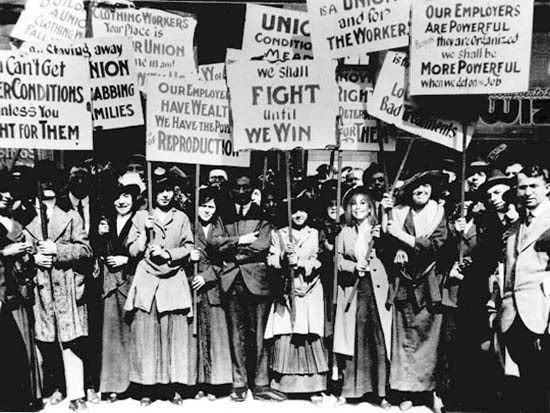
The only way forward, under present constraints of the prevailing democratic systems, seems to be in trying to match the direct policy-making influence of powerful organisations. We are in need of a large civil society consisting of citizen activists who would fight for the causes they believe in. The only way forward is through citizen advocacy groups, unions and active everyday participation in politics. The days of waiting for elections and for your representatives in parliament to make your voices heard are over, if they were ever there. Only then can the public put itself on the same playing field as elite organisations in determining the character of governance.

In a sense, the conservatives have it right: Don't trust the authorities. But that does not mean we should minimise government—the government does many beneficial things after all; it means we should have a civil society to match. This, if anything, is the true meaning of a big society.

For this to happen, however, there must be a lively as well as a quality culture of political participation in society. It takes a certain amount of awareness, political wisdom and community spirit amongst citizens to institute a strong civil society. Unfortunately, the current state of Singapore's society and its public discourse does not inspire me with much hope in this either at present. Nevertheless, the stirrings in the public, if rather too naively focused on the electoral process, might be a sign of the beginnings of change. This may also be somewhat 'pie-in-the-sky', but, ultimately, I think one should be optimistic and look forward to real change.


Here I present a reading of Theodor Adorno and Max Horkheimer's The Culture Industry: Enlightenment as Mass Deception, with reference to Frederic Jameson's essays on Adorno in Late Marxism and Amresh Sinha's Adorno on Mimesis in Aesthetic Theory.

So where should we begin? The first thing to note is the fact that there is more to Adorno and Horkheimer's theory than the suggestion of mass culture as fundamentally characterised by passive consumption. That is really only a symptom (though a very important one for Adorno and Horkheimer) of the general 'malaise' of mass culture, and one that has received far too much emphasis in media studies to the detriment of the discussion of its other aspects. In light of this, I will endeavour to present a more contextual reading of this essay.


I am looking at Adorno and Horkheimer's critique of mass culture from the perspective of their critique of pleasure as it is associated with mass entertainment under late capitalism. It should be noted that Adorno and Horkheimer's analysis of pleasure "takes place within a framework of the theory of the alienated labor process" (Jameson, 1990: 145). This entails the analysis of mass culture as the colonisation and the commodification of leisure time—amusement is the prolongation of the working day insofar as it merely functions as a period of relaxation that demands no effort (hence the passivity of the consumer), which is sold to the individual worker so that he/she can continue working contentedly the next day. Pleasure is therefore seen not only as a flight from reality but also as the flight from "any last thought of resistance" (Adorno and Horkheimer, 1998).

The full implications of commodification will be brought out later. Presently, we will attend more closely to the notion of the colonisation of leisure, which involves the mechanisation of culture that reflects the mechanisation of modern economic production: The enjoyment of culture is schematised for a passive audience so that, as mentioned above, no effort is required on the part of the latter. This entails the presentation of "repetition and the familiar" (Jameson, 1990: 148) in order not to tax the audience's minds. Thus, the familiar character of the labour process is ironically reproduced in entertainment, which indicates that the monotony of "standardised operations" that characterises the working day "can be evaded only by approximation to it in one's leisure time" (Adorno and Horkheimer, 1998).

This is where media scholars' criticisms of Adorno and Horkheimer are typically focused, with their rather belaboured emphasis on the examination of the link between media consumption and power (sometimes in an effort to deny that the media wield power over the audience). As stated in the beginning, such a perspective is sorely inadequate, and this will become evident as we examine the other aspects of Adorno and Horkheimer's theory on mass culture, beginning with its aesthetic critique of pleasure.

Adorno and Horkheimer hold that pleasure/happiness is found in what is yet to be, and their charge is that the Culture Industry offers 'inauthentic' pleasure that is purported to already exist and is ready for consumption. Furthermore, Adorno postulates a conception of the artistic mimesis as pure expression, which is antithetical to the notion of 'expressing something' (Sinha, 2000). Artistic expression is hence self-identical (Sinha, 2000) and thereby incompatible with the notion of equivalence, which is so important to the process of commodity exchange. Like the mystical in Wittgenstein's philosophy, in other words, it cannot be substituted by something else. Therefore, unlike the products of the Culture Industry, it cannot be subsumed under the mechanism of substituting means for ends (Sinha, 2000), being thus quite apart from the market for identity and leisure that under late capitalism are treated as just more commodities to be exchanged.

One important insight that we can derive from Adorno's conception of art is that, for Adorno and Horkheimer, reception is identified with the capitalist mode of production, particularly in the context of commodification. This means the reception of the products of the Culture Industry has to be understood in relation to their production. The most common criticisms of Adorno and Horkheimer are heavily invested in the critique of their claims regarding reception, emboldened by evidence indicating that audiences are not passive. Thus, a good way to uphold the Frankfurt School critique, without explicitly invoking theories of power, is to bring production back into the discourse.

Equivalence is, as stated earlier, crucial for commodity exchange, and it is created through abstraction—the Marxist account of commodity exchange involves the abstraction of the use values of goods into exchange/monetary value, "allowing comparable and measurable quantities to be manipulated" (Jameson, 1990: 149). This forms a vital part of the commodification of leisure as it is the need to conform to the principle of equivalence and create monetary value that drives the production of cultural products in a manner that is similar to the production of consumer goods, leading to the creation of what Walter Benjamin calls the mechanically reproducible work of art.

But what implications does the nature of production in the Culture Industry have on consumption? Questions of quality come first to mind, but this is, understandably, shaky ground on which to stake a critique of mass culture. We need look above and beyond, at the implications of the relations of production on the consumption of mass culture as a whole and not as discrete cultural products. 

Roland Barthes asserted, mirroring Adorno's critique of pleasure, that mass-produced culture under late capitalism serves to conceal or obscure the capitalist mode of production, thereby eliminating resistance. However, this line of argument is once again susceptible to the criticism, born of audience studies, that audiences are not simply passive recipients. Indeed, I think the exact opposite is the case: Far from hiding it, the Culture Industry revels in the capitalist mode of production, showing us the promises that await us should we acquiesce to the system, namely all manner of consumer goods and the status and identities that come with them—rewards that are, however, readily available. It tempts the audience with these prizes, rather than compelling or co-opting them directly. But, crucially, it also promises the more elusive, yet-to-be prospect of success itself, embodied most vividly and blatantly by the stars it churns out as the human end-products of its capitalist mode of production. It is therefore unsurprising, though ironic in light of Adorno's linking of pleasure to readily achievable ends, that audiences are so preoccupied with stars.

Continued in Part II