Showing posts with label psychology. Show all posts
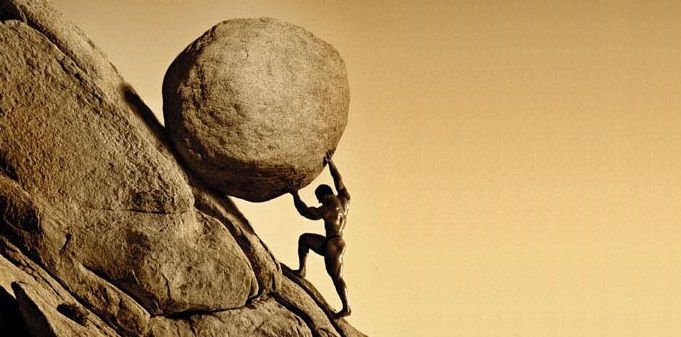
Notorious tiger mom and law professor Amy Chua wrote recently on the drivers of success. Particularly interesting is the seemingly paradoxical interplay between a superiority complex and a perpetual sense of insecurity. The former underlies and induces the latter, creating a constant need to prove oneself and live up to the belief in one's greatness.
As is the case whenever psychology is transposed onto socio-cultural phenomena, Chua's account is problematically simplistic and may not actually be accurate at all. But at least on the level of the individual, there's some truth in the magic of that interplay. Nevertheless, there's a caveat—it's a double-edged sword that can cut you as much as it can help you cut a path to success.
The motivation that the interplay between a superiority complex and the sense of insecurity evokes is indeed quite strong. But it can also induce despair and a subsequent retreat from a challenge in order to avoid the cognitive dissonance that might occur in the event of failure. In other words, rather than be proven not as superior as you believe yourself to be, you might prefer to avoid difficult things.
And that's not yet accounting for its effects on happiness. Last year, a study showed that social media use is correlated with lower levels of happiness, as users compare the positive images of other people's lives that they see with their own invariably imperfect lives. I imagine a similar problem also applies here: While success and hard work do induce happiness, the constant feeling of inadequacy that often results from comparing oneself to others in trying to maintain the belief in one's superiority would undoubtedly have a negative impact on one's happiness.
So, ultimately, the question is, is it worth it? Would you trade happiness for success? Or is it the case that, recalling J.S. Mill's distinction between happiness and contentment, success brings the ultimate happiness that can overcome the perpetual pain felt during the journey?
These are not questions that neat, simplistic recipes for success can answer.
No mass morality without empathy
Posted by
moses
@
09:37
ethics,
philosophy,
psychology
0
comments
Reason may the highest human faculty, but it is not always perfectly grasped.
The intellect can be a selfish thing—and that's the consequence of an epistemological problem; perhaps the epistemological problem. We are the centre of our universe (or lifeworld) and it is a position that we can never escape. Everything that we interact with we interact with in relation to ourselves, whether through our physical selves or through our Ego or the equivalent. As a result, the tendency to view others in relation only to ourselves is prevalent.
This epistemological problem is present in metaphysics as well, potentially leading to solipsism, or the idea that minds apart from one's own do not exist.
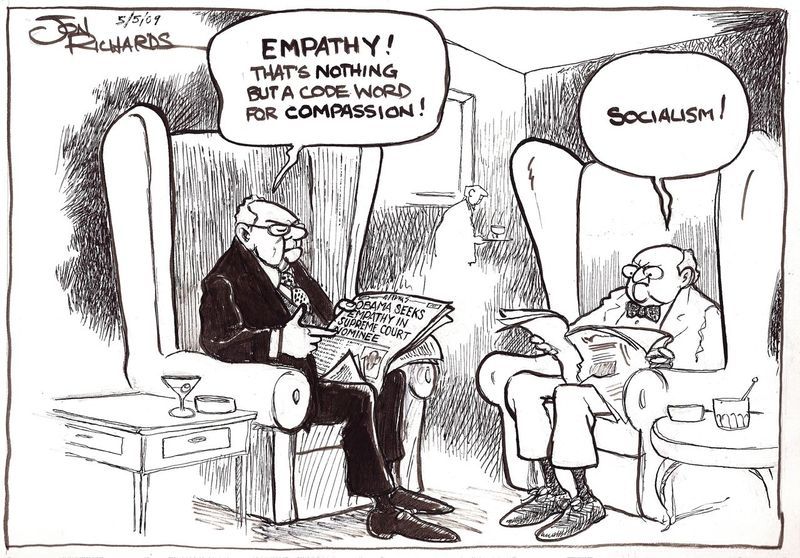
Much as empathy, the ability to see or feel other minds as equivalents of one's own, offers a solution to the problem of solipsism, it also offers a solution to the problem of selfishness in ethics. Being able to approximate the experiences of others in one's mind allows one to appreciate their experiences and thereby establish a kindred connection between Self and Other.
This is a powerful connection that can succeed where reason has failed. While it is certainly possible for one to hold fast to ethical precepts, the abstraction of these precepts cannot match the tangibility of the simulated experiences generated in an emphatic connection.
And the beautiful thing about empathy is this—it allows us to see others in terms of our own selves, thus short-circuiting the solipsistic tendency by transferring our selfness onto others so we could act (or react) as though prompted by our own experience.
This may be a simplistic way of looking at this matter, but it's a start.
I was asked to write a piece on a new marketing concept called the 'multiplier' as an assessment for a job. What I wrote was probably not what they were looking for. Nevertheless, my scepticism towards it is the only worthwhile thing I had to add.
Here, I reproduce the piece in full.
---
As outlined by McCracken in a blog post, ‘multipliers' seem to not simply be a new breed of consumers but a category of people that supplants them. 'Multipliers' are not consumers in the traditional sense of the word. Creating an opposition between the two terms, McCracken contends that unlike with consumers, whose responses to products are "an end state", producers "depend on [‘multipliers’] to complete the work".
'Multiplier', however, cannot be a good definition for today's consumer as it seems to represent an attempt at looking past something that we as consumers will probably never leave behind—the act of consumption, with all its less-than-noble implications (or, in McCracken’s words, its “mischievous and sometimes malevolent intent”).
The idea of consumption is closely tied to the consumer-being, the Subject, and therefore also to his physical self. 'Multiplication' is orientated towards the Object, which is either a product or its value. Therefore, there are two inherent dangers in using the latter term: The first is that the term 'multiplier' objectifies the highly anthropocentric act of consumption and takes it entirely into the abstract realm of value, thereby inverting the relationship between Subject and Object; the second is that in abstracting the act of consumption, we would forget the physical and to some extent destructive nature of consumption. These problems are explained in turn below.
The Subject-orientation of consumption means that although consumers may sometimes build on a product they buy, in reality they do not ultimately do so to engage in the act of value creation. Consumers make consumption decisions according to their desires and goals. This means that even where they add value to products, they do so for their own purposes, which may or may not be to the producers’ benefit. For example, player modification of PC games for the benefit of other players is good for producers where it drives sales for the base products. Conversely, fan-made subtitles (fan subs) of Japanese animation often come with the original products for free, and thus many viewers, for whom the subs are a crucial access point to the products, need not pay for the products at all. These details would likely be lost with the term ‘multiplier’ or ‘multiplication’.
The second danger in using the term 'multiplier' is that we would risk forgetting the nature of the beast—of the physical, animalistic and often irrational impulse of consumption. 'Multiplication' makes it sound like a pure act of creation and would therefore belie the endless, insatiable and destructive striving that has come to be implied by the term 'consumption'. And thus we may forget the real costs that consumption imposes, whether or not any value was added in the process. This is not just in the context of finite resources; it is also relevant when the Object does gain mastery over the Subject, such as when the Diderot Effect (another area of McCracken’s work) takes hold and a new possession induces an avalanche of consumption.
All of these are nuances contained within the term ‘consumer’ that I do not see in the term ‘multiplier’. Making the latter the definition of today’s consumer would therefore risk sounding like a cynical marketing exercise that conveniently glosses over them. Caveat emptor.
Luck is superstition—at least when it suggests the existence of a god in the machine, a capricious supernatural force that determines one's fortunes. That said, luck could be a descriptive term, merely used in reference to circumstances that are perceived to be out of one's control. The first kind of luck, a prescriptive understanding of luck, should rationally be relegated to the level of superstition.
But what about the work of providence, or what people often call blessings? How much stock can we really put into that concept in our everyday lives?
It is convenient and perhaps sometimes truly beneficial to claim that, yes, one is specifically blessed in a particular matter. But here too a distinction needs to be made between a descriptive use of the word and a prescriptive one. A descriptive use could, for example, be meant to express gratitude. A prescriptive use of it would, however, go further in implicitly claiming, in a definitive way, that one is indeed personally helped by a higher power in a particular instance.
Such a claim probably stems from a desire to feel that one's every want and need is taken care of by a higher power, or that one has direct access to or a favour-based personal relationship with a deity.
I find such notions as presumptuous or childish as they sound. Our desires don't simply translate into reality. And if we accept that a higher power exists, and that this power deserves our devotion, the appropriate attitude would be subordinate our needs and wants to its will. Even trying to think up a win-win scenario strikes me as being arrogant and wrong.
However, just as many believe in luck as a metaphysical force, so do many believers subscribe to the idea that God blesses them in every human and banal matter that they are concerned with. I think that is a very simplistic expression of faith, one that resembles young children's belief in Santa Claus or in their parents' unfailing ability to grant their every wish. I think we need to grow up from such notions and learn to find faith that does not need constant reassurance.
Don't bet on the Batman
Posted by
moses
@
16:37
art,
culture,
film,
heroes,
media,
psychology,
society
0
comments
Upon hearing that a massacre had occurred during a premiere of the latest iteration of the Batman films, some people asked, "Where was Batman?"
Perhaps the joke, all jokes are not an appropriate response to such a tragedy. But this is also a singularly powerful question. Indeed, where was—is—Batman?
Of course. He's not real. Batman is fiction. Everyone except some kids (and maybe some delusional fools) knows that. People can be expected to know the difference between reality and the superhero fiction, can't they? Well, can they?
Most people know that superheroes don't exist. But to what extent do they grasp this fact? I mean, why do people like superhero stories? The modern trend in fiction may be to humanise superheroes, to depict the conflicted and flawed hero. But they're still superheroes—they are still powerful; they can still solve the world's problems, even if they must bleed and sacrifice much in the process. Perhaps stories like Watchmen defy this convention altogether, but not the Batman films.
Christopher Nolan's Batman is a tortured hero, a hero who has to mask himself as a villain. But the audience are well aware that he is hero. And the fantasy of the mighty superhero, furthermore, is not shattered. People can expect Batman to save the world within the big screen. They want to savour—even just a shadow of it—the excitement that springs from the knowledge that a saviour is here to fight for them. Fiction melds with reality; the story is not real, but physiological reaction to it is.
That is why the massacre is semiologically powerful—a horrible crime is occurring while the superhero is 'present' on the big screen, a demonstrably flat image that interacts with the world purely as illusion. It's not even impotent; it's nothing at all. The mirage is shattered completely by the jarring reality of a tragedy unfolding simultaneously. Thus, observers may be prompted to ask, "Where was this hero?" Of course they'd known that he doesn't exist. But this incident makes them realise that anew and takes the realisation to a higher, uncanny level.
The death of the superhero, a theme that has been explored in fiction, is not as devastating to the fantasy as the real deaths of superhero fans in front of the big screen.
However, while many of us may intuit this, not everyone will realise what it means. Take, for example, this Facebook comment about the survivors:
All I can say is send them a hero Chris send the dark knight to the hospital for them, so the children know there are real heroes out there, and that evil won't win
This is exactly the kind of sentiment that should have been extinguished by this incident. Yet people want to hold on to the fantasy and, worse, to perpetuate it by instilling the same delusion in children—the notion that there is a simple fix to the big problems that can be accomplished by a few mighty and benevolent individuals.
Perhaps adults have a vested interest in raising children who are naïve and docile. Some of them had probably been raised to be that way themselves. But the use of a crutch is symptomatic of disability—this much-needed delusion reveals people's psychological inability to steer away from a petty existence waiting for salvation.
Those people have got it the wrong way around. If they did exist, superheroes would exist because people are unable to fight for themselves. Thus, instead of wishing that they did exist, we should want their existence to be unnecessary. That, not having a superhero around, would be truly empowering.
Simplicity/sophistication
Posted by
moses
@
21:50
consumerism,
culture,
identity,
media,
psychology,
society
0
comments
What is the simple life? Traditionally, it is understood as a thrifty life lived without pretensions. But what exactly does that entail? Are you thrifty as long as you don't buy yachts or mansions or don't live a jet setting lifestyle? Can you be free of pretensions even when you chase the latest trends and fashions?
Of course, the simple life, in the traditional sense of it, still exists. But in the developed part of the modern world, it is increasingly rare. In everyday life, the urge to consume—to spend and to be wealthy enough to spend—is overwhelming. Through constant exposure to various media whose function is to encourage consumption, we have been conditioned to desire and even need extensive material comforts.
Consumption is also about status and a social-psychological need to earn one's place in modern society. Simply being able to consume and being 'sophisticated' enough to know how to consume confers upon us identities that are compatible with the self image of modern society. And what falls outside of the latter is at best unconventional.
Thus, society exerts a pressure on individuals to conform to a consumerist lifestyle, and this pressure increases as more and more people embrace that way of life. Mass exerts its own gravity; popularity may well correlate with conformity.
One result of this trend is the engendering of a pervasive inertia among the expanding middle class—we have become much more productive over the past century, but most of our time and energy goes into the furious cycle of production and consumption, leaving us perpetually exhausted and, in our spare time, desiring only to enjoy the material comforts that our labours have bought. So despite the great degree of empowerment that human beings have enjoyed over the past century, most of us remain content to let the world take shape around us, to let the powerful and influential push society in whatever direction they desire.
Hence, while the simple life would help bring us out of the passivity induced by the consumerist lifestyle, the simple life is by no means simple to live. And so we drift.
Big picture, small picture—who the hell knows anyway?
Posted by
moses
@
20:18
philosophy,
politics,
pseudoscience,
psychology,
society
0
comments
More technocratic or elitist discourses on governance often bring up concepts like 'the big picture' or the 'the long view'. I won't dispute the fact that these terms have meanings (albeit relative ones). But they don't seem as clear as they are made out to be in those instances. It's always worth asking what the big picture or the long view is, and how anyone knows what it is. Otherwise, it would only serve as a cover that allows the powerful to explain things away with a wave of the hand.
The problem in thinking in terms of the big picture becomes clear when there are competing claims about the same reality, typically with some grounded in experienced reality and others in more abstract or socially-constructed terms. For example, it is possible to enjoy a period of posted economic growth and rising nominal (or even real) wages while having people report decreasing standards of living in their everyday experience. Of course, facts grounded in experienced reality are often fragmentary and contentious—they are typically anecdotal and it is easy to find examples that contradict each other. To the rationally-minded, such facts might therefore be unquestionably devalued.
However, this does not mean that they are necessarily untrue or unreal. Everyone sees reality through the veil of a particular (and partly self-imposed) perspective. However, this reality is also the reality that each of us knows. It's cold comfort to be told that some abstraction or another person's reality can free our perceptions from the constraints of the experienced. What we experience is necessarily treated as true because we experience it. That is a fundamental tautology in epistemology.
Of course, ontologically this is a problematic position. Yet in practical matters, the empirical is the most directly relevant to the individual. Small epistemologically-determined problems can culminate in an ontological crisis. After a certain point, we just don't know if a claim that has been 'proven' to be ontologically true is indeed true. It becomes increasingly difficult, for example, to hold on to a traditionally held view that something is good when we are finding so many little things that are wrong with it.
The epistemological/ontological divide translates into a small picture/big picture divide in the socio-economic realm. What I call the 'small picture' is obvious enough to each individual, as it concerns the present and immediate reality around him. But how do we derive the big picture? Are we able to see how all the small things, consisting as they are of an insurmountable mountain of conflicting data, form the big picture? The long view is even more complicated as time constantly introduces change.
What people wind up doing is simplifying the reality that they see. They abstract reality, deriving theories, numbers and indicators to allow them take stock of it in a convenient and concise way. When they need to think about the future, they make projections based on these abstractions. This is a powerful and useful method, but it's not without its risks. If experienced reality is affected by perspective, what exempts our visions of the big picture from the same influence? In fact, most if not all attempts at abstracting reality are acts of interpretation—we are interpreting reality according to a certain framework or paradigm.
In governance, the tendency to abstract and derive the big picture for policy purposes has led governments to pursue numbers. They rely on indicators to measure the effectiveness of their policy, the welfare of the people and virtually everything that pertains to their business. This is often a necessary measure in their position, yet the problem with these indicators is that they are interpretive. The real problem, however, comes when people are not aware of this. Numbers and abstractions become totalitarian teleologies, imposing an "iron cage", as Max Weber put it, of rationalism on the lives of individuals. And worst of all, they become held as 'truth'.
The elitism regarding the big picture is a manifestation of this rationalist arrogance and its obliteration of the hermeneutic. What individuals think and feel is completely unimportant beside the data. Unfortunately, the people who champion the big picture often neglect to ask how the data is derived. Emptily they claim to be bastions of reason and lovers of wisdom, and those who disagree they declare to be contrarian or oppositional. Hence, the position of the unthinking rationalist is readily assumed by the most dangerous ignorant people of all—the pseudo-educated, the body of the reactionary middle class.
Social groups are often formed around common subjects or content, but much less frequently do the latter remain the defining characteristics of those same groups.
What do I mean? To get to the point, I am referring to the problem of identification: I believe that although identification with a group is initially inseparable from agreement with its formative tenets, and the two may always remain tied to some extent, there will probably come a point where identification with the outward image of the group becomes the members' main connection to it.
Indeed, we see this very often in history and in daily life. While a nation may have been founded on principles of liberty, for example, its citizens eventually become patriots first and defenders of liberty second. And national identity, in particular, rests very heavily on the nation's outward image—on names and symbols, including flags, pledges, anthems and various other markers of identity.
Such markers of identity, which collectively form the outward image of the group, become a checklist for identification. We become concerned with questions such as "How American are you?" or "How Christian are you?" without simultaneously contemplating what those identities really entail, or might have entailed before they became nigh empty shells.
This problem is what has allowed the corruption of social groups. It is what allowed corporations to successfully court counter-culture groups such as the hippies and the hipsters, for instance, as their identity markers turned towards the domains of lifestyle and fashion. Sometimes it has even allowed groups to do an about-face and turn against everything they had stood for without loss of identity and credibility. Just look at many revolutionary governments in history, or the changing economic doctrines of Communist China.
I think the chief cause of it lies in the need for the human brain to be able to recognise easily. An evolutionary scientist might say that this has its roots in our ancestors' need to quickly recognise predators and prey. We need to recognise easily and therefore our brain takes shortcuts. We pick out certain convenient markers and associate them with the corresponding things.
On the other hand, remembering the actual content behind a group's identity requires us to remember lists or arguments that often don't come readily to mind. This unwieldy information is stored somewhere in our brain and has to be found again. Compare this to the quick and easy identification offered by markers; it's no surprise that our brains favour the latter.
Nowhere is the problem of identification better exemplified than in the world of politics. The existence of party whips in 'free' countries (a relatively benign force for party discipline), which maintain the loyalty of party members, point to a common culture that prioritises identity (i.e. in accordance with its markers) over substance. It might be worth noting that it would be unreasonable to presume instead that the whip is the constant defender of the party's tenets, as it is answerable to the ever-changing leadership.
Even without such formal enforcement, the very act of adopting a certain political label often necessitates conformity in order to be accepted and recognised within the group. So it is with other kinds of social groups.
And, in case I have not stressed this enough, for most people conformity is measured by one's adherence to the markers of identity.
I think some people figured out that it's best to be nice and positive-sounding, even if the ends of others are sometimes better furthered by truthfulness. Clearly, there is nothing inherently 'nice' about this attitude. It's merely convenient. But perhaps I should give these people more credit—it's quite cunning.
The simple trick lies in the fact that people love the sugar coating. They love the smiles, the sweet words and the genial laughs, whether or not they know if those are genuine. Of course, many would say that they prefer to hear true words. Nonetheless, most of them are still susceptible to the psychological effect of being met with niceties.
I think we should be at least a little wary of those who speak good but dishonest words. The mask they wear might make them seem better people than they really are, and it's only when you expect something of them that you might realise the true depth of their good-natured ways. Then you might be in for a disappointment. Or worse. After all, doesn't it resemble a confidence trick?
Infuriatingly, however, such consummate liars also tend to get away with things. People really do love the sugar coating. It's usually only when the truth stares them in the face would they admit that they've been bought. And the trickster would still be able to count on the goodwill of others who have not had their own encounter with his or her true character.
This makes me think, sadly, that the trick is too effective. Thus, on reflection, I can't say that I don't find something that I could learn from it. Therefore, try to reveal the truth only if you know that it's relatively safe to do so.
You might object that it's difficult to constantly be insincere, and that people will eventually be able to tell if you don't mean something.
However, there's a deeper level to this. If you're convinced yourself that you are being kind and pleasant by withholding your true feelings, you can certainly appear genuinely nice despite the fact that you are insincere. The goodwill of others can thus be maintained. People love their sugar coating. They adore those who are loveable and well-meaning.
I read an amusing blog entry recently that set me thinking about whether the reflection of people's choices is correct simply because it reflects people's choices, as is often implied in economics.
As I've mentioned before, a liberal society is all for autonomy. It is thus, in effect, for individual choice. We've heard the maxims: "To each his own", "Different strokes for different folks"; even J.S. Mill's harm principle can be considered one.
No doubt, choice is great—and everyone knows that these days. Economics is about preferences and choices. Capitalism too promotes individual choice. You can choose what you want to acquire for yourself. Might you be interested in some of these wares? An iPod? An iRiver? Just remember, it's about me. It's about you.
Where do you want to go today?
Yet how do we know that the choices that we make are ours? Is it simply by virtue of the fact that they are the choices we end up making, the fact that they are our revealed preferences? Might there not be something important about their unrevealed aspect, about the psychological processes that take place behind decision making?
I think if we delve into these processes we might find that those are not really our (with emphasis on the sense of ownership) choices. They are not what we really want as individuals abstracted from our surroundings and our social contexts. The fact is we are subject to a lot influences that are external to our wants and needs, at least initially—not least from those who would sell something as your choice.
Indeed, it seems to make little sense to talk about individuals without context. So, in short, life really isn't all about autonomy and choice. It's about existing as an individual, a social creature and a limited physical being at the same time.
Thus, this begs the question: Should we never ask why people make the choices they make?
To some extent our society is conditioned to abhor such questioning. Remember the maxims? If you were to challenge another person's choices, you would often be regarded as a nuisance. It certainly wouldn't help to win you friends.
But you might protest that people do question others' choices, such when they choose to drop out of school at an early age or to acquire bad and destructive habits. However, such questions do not usually arise where decisions are perceived as utility-based. If an individual determines rationally that a choice gives him enough utility as to be worth making, he is justified in making that choice.
And what are the criteria for rational decision making? Typically, it would entail something like weighing decisions in terms of utility gained to the best of one's knowledge. Interestingly, even if it is thus held that people are not always capable of making the best or most accurate choice in terms utility, the above description would seem to leave out instances such as impulse buying. That means many of the decisions made in the marketplace, for a start, might not be considered rational under such a common understanding of rationality.
Yet, ironically, those tend to be regarded as perfectly legitimate economic decisions. The sellers would certainly be quick to assert that they are.
So it turns out that, even assuming that we generally are rational utility-maximising agents, there is still room to question the choices that we make. But how would we go about doing that without attempting to impose arbitrary preferences on each other, as is often presumed to be the case when we dare ask why?
I think this is where the criterion of rationality is worth emphasising. If there are to be questioning and debate, they have to be based on reason. That means we must have good reasons that are backed by good reasoning—and if we do, I see no reason to stop us from asking.
Hence, while questioning and disapproval are not necessarily judgemental in the negative sense that we mean the word, we would come across as judgemental if our positions are not backed up by reason.
Well, that deals nicely with both sanctimonious conservatives and High Street liberals.
I guess.
You've probably heard that statement many times by now. And if you're reading this, you're probably past the age when my words are going to do much, if you need them at all. Still, I find it good to reflect.
"Just be yourself" is the mantra that self-help gurus go by. I agree. But that is in the sense that I think one should be as frank as possible, if not entirely sincere.
On the other hand, just being themselves doesn't quite turn out as well as many people wish. Do you know what the problem is?
They aren't prepared to live with the consequences of just being themselves.
Some people think that by just being themselves, friends would naturally come. Yes, the friends you do have would likely be real friends. But that's a truism: If you remain a certain way, the friends you'd have would be those who don't mind you for who you are. And there might be just two or three of them. Nobody said anything about how rich your social life would be.
Of course, I have to be fair to self-help guides – they do generally give tips on how to make oneself more endearing. But that single message seems to be what gets digested and thrown about the most. Well, on its own, I don't think it's all that meaningful. There's a reason why they are called "self-help". Just being whatever you start off with isn't going to help your lonely self win hearts and minds. You have to help yourself, and change.
That doesn't mean be someone you're not, though. When you change, you shouldn't just change superficially. Change your mindset. Change fundamentally, maybe philosophically. Be yourself, but be a different self.
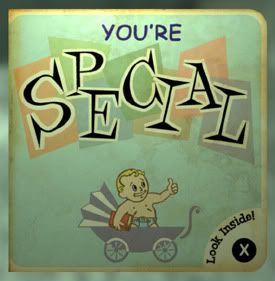
Just being yourself is also often understood to be good because everyone is unique anyway. You are special, so who cares what people think? Whatever floats your boat. Being your own individual is the right way to go.
Well, is it? I think so, but to say only that is a big oversimplification. The truth is you ain't cool just because you are yourself. If you want to have a good number of friends, you'd better align at least some of your interests and your habits such that you do get friends. Again, the problem is in what constitutes "floating your boat". Does having just a few friends who share your interest in tetherball, and who are almost exactly like you, float your boat?
"You're special" might be intended to help someone build self esteem. But if they had self esteem issues in the first place, I doubt it's going to help. Besides, confidence and self esteem are built by results as well. If you have many friends whom you genuinely enjoy interacting with, you'd feel better about yourself than if you don't. If, on the other hand, being your old self hasn't really produced results, then throw all those feel-good statements out. They are a lot worse to depend on than propofol.
And you know what doing the same thing over and over and expecting different results constitutes, right?
So, if I were to give some advice to a young kid, I'd say pick the right interests, hobbies and mannerisms. Think about being an individual after that.
True, false or free?
Posted by
moses
@
06:33
civil rights,
education,
freedom,
gay rights,
politics,
pseudoscience,
psychology,
science,
Singapore,
truth value,
United States
0
comments
Last week I wrote about what freedom means. But it might raise some questions in some people's minds. What spurs me to confidently state that freedom doesn't really apply to certain opinions? I brought up the fact that freedoms clash, and that some precede others. Thus, the freedom of speech should not be emphasized over (among others) the right to live and to pursue happiness.
Nevertheless, let's dig around a bit more. Or, rather, let's turn our eyes to the elephant in the room: Truth – as opposed to falsity or ignorance.
In all the discourse about the freedom and the relativism of opinion, we might forget that the elephant sits quietly on one side. Others pointedly ignore it. But it's there. Maybe one needs a shock before one remembers its presence. Maybe some news that would set our alarm bells off, for example – like the recent proposals being considered by the Texas Board of Education.
The conservative-dominated Board appointed six reviewers to propose changes to make to the history curriculum. Two of the three reviewers appointed by conservative board members run conservative Christian organisations, while the three appointed by the moderates and liberals are all professors of history or education at Texas universities.
Here are some recommendations that the conservative reviewers made:
Replace Thurgood Marshall with Harriet Tubman or Sam Houston.
In first grade, students are expected to study the contributions of Americans who have influenced the course of history. Rev. Peter Marshall, a reviewer, calls Thurgood Marshall – who as a lawyer argued Brown v. Board of Education and later became the first black justice on the U.S. Supreme Court – a weak example."
Brown v. Board of Education of Topeka was the case where segregated schools were ruled unconstitutional in the United States.
Delete César Chávez from a list of figures who modeled active participation in the democratic process.
Two reviewers objected to citing Mr. Chávez, who led a strike and boycott to improve working conditions for immigrant farmhands, as an example of citizenship for fifth-graders. "He's hardly the kind of role model that ought to be held up to our children as someone worthy of emulation," Rev. Marshall wrote."
César Chávez was a Mexican American labour leader and civil rights activist who made contributions to the recognition of workers' rights in the United States.
Replace references to America's 'democratic' values with 'republican' values
Reviewer David Barton suggests swapping out 'republican' for 'democratic' in teaching materials. As he explains: "We don't pledge allegiance to the flag and the democracy for which it stands."
Can you see where these recommendations are going?
Now, the question that begs asking is what were these religious leaders doing making official recommendations on school curriculum in the first place? Why were actual educators and experts in the field sharing the table with them? We can infer a sad answer from the examples above, especially the third.
And this, by the way, is the Board that has approved the teaching of creationist critiques of evolution in schools.
Thus, the elephant is forgotten amidst all the politicking. And Thio Li Ann's case is another example. Let's pick just one issue amongst the many it has:
Homosexuality is a gender identity disorder; there are numerous examples of former homosexuals successfully dealing with this. Just this year, two high profile US activists left the homosexual lifestyle, the publisher of Venus, a lesbian magazine, and an editor of Young Gay America. Their stories are available on the net. An article by an ex-gay in the New Statesmen this July identified the roots of his emotional hurts, like a distant father, overbearing mother and sexual abuse by a family friend; after working through his pain, his unwanted same-sex attractions left. While difficult, change is possible and a compassionate society would help those wanting to fulfill their heterosexual potential. There is hope.
- Thio Li Ann
Compare that to the American Psychological Association's (among others) findings:
Sexual orientation has proved to be generally impervious to interventions intended to change it... No scientifically adequate research has shown that such interventions are effective or safe. Moreover, because homosexuality is a normal variant of human sexuality, national mental health organizations do not encourage individuals to try to change their sexual orientation from homosexual to heterosexual. Therefore, all major national mental health organizations have adopted policy statements cautioning the profession and the public about treatments that purport to change sexual orientation. The statement of the American Psychiatric Association cautions that “[t]he potential risks of ‘reparative therapy’ are great, including depression, anxiety and self-destructive behavior."
And the American Psychiatric Association's findings:
APA affirms its 1973 position that homosexuality per se is not a diagnosable mental disorder... APA recommends that the APA respond quickly and appropriately as a scientific organization when claims that homosexuality is a curable illness are made by political or religious groups.
Who do you trust, scientists and experts or conservative leaders with religious agendas and maybe some sinners to burn?
And, therefore, this is another compelling reason why freedom of speech is quite beside the point here. We want to argue truth, not falsity. We can talk about the freedom to hold and express an opinion all day, but if the opinion is utterly false, then nothing will be accomplished at all. And there might be a heavy price to pay too.
So, are we going to acknowledge the elephant in the room?
Well, I think I know what the Republicans might have done with theirs.