Barking up the wrong (money) tree
Posted by
moses
@
12:11
education,
eudaimonia,
humanities,
life,
pessimism,
society
0
comments
Feel Good Inc.
Posted by
moses
@
08:46
charity,
consumerism,
culture,
education,
politics,
Singapore,
society
1 comments
All i want to say, is that we should really learn to appreciate and accept them as our equal. Maybe the next time we see them, we could perhaps just give them a simple smile, or even a word of thanks, to show our appreciation for what they are doing, I'm sure it would make their day. Or at the very least, the next time we see them, we can just try not to pull an ugly face or walk away.Thank you for taking time to read this, and although every share would not get a dollar donated or anything, but every share is a step closer to a warmer, more accepting society.
Is losing yourself good?
Posted by
moses
@
18:55
adulthood,
education,
identity,
life,
society
0
comments
Singapore 21
Posted by
moses
@
06:44
#occupyrafflesplace,
Asian values,
big business,
consumerism,
economics,
education,
freedom,
GINI,
politics,
Singapore,
socialism,
society
2
comments
So, in light of our predicament, let me say this: Welcome to the 21st century, ladies and gentlemen. The worst is yet to be.
How much to consume education?
Posted by
moses
@
15:44
economics,
education,
society,
United Kingdom
0
comments
Education
Posted by
moses
@
09:56
education,
personal,
philosophy,
self help,
Singapore
0
comments
Every year it's the same. I would be lulled into thinking that there are possibilities here, that things will be different. This year, I actually convinced myself that I think positively now, that I will see things differently. I was even beginning to think that I may prefer to stay here instead of leaving again. But, in the end, I still feel the same way
The present farce that is liberal democracy
Posted by
moses
@
06:53
democracy,
education,
Marxism,
politics,
society,
United Kingdom
0
comments
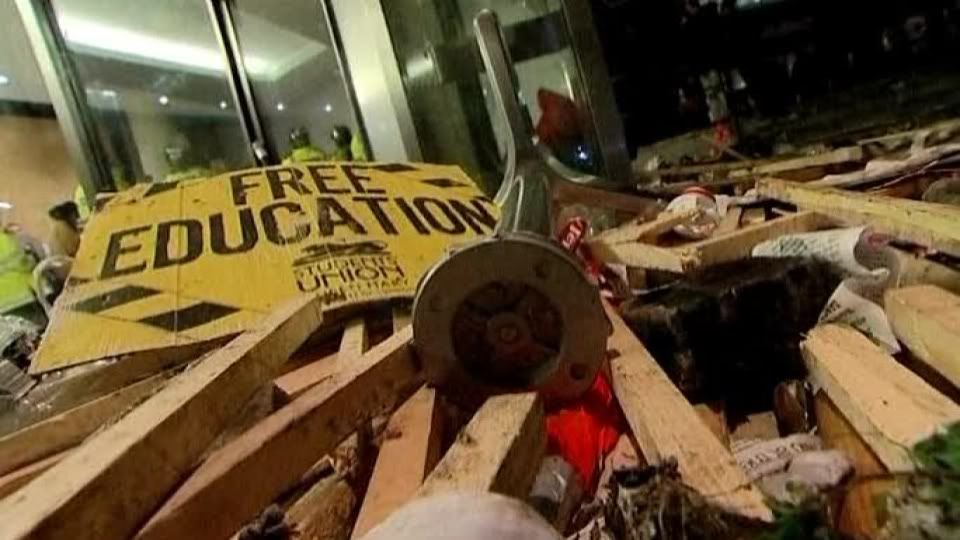
Having witnessed first hand the large student protest against the UK government's decision to raise tuition fee caps, I'm neither unnerved by the sporadic violence nor disheartened by the chaos of mass action. Rather, looking at the aftermath of the day, I've become more convinced of the corruption and the absurdity of the system.
A comedian on the show couldn't have done better.
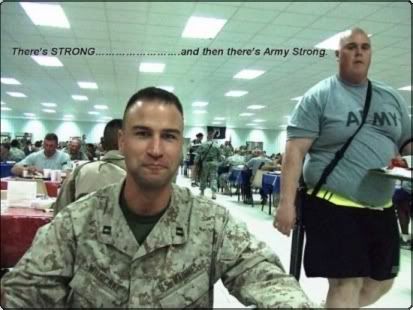
And this time I'm going say that contrary to the popular saying, mandatory military service or national service does not turn boys into men, at least as far as I can see. It simply keeps boys as boys.
I've got soul but I'm not a soldier
Posted by
moses
@
08:31
education,
humanities,
NUS,
Singapore
0
comments
This week hasn't been a particularly good week and I haven't had the energy to read the local newspapers. But it did set me thinking about my own world, and I recalled a little detail from years ago.
Unlike wearing uniforms on a metal deck, of course.
But it's not just that.
What a wuss that guy was.
True, false or free?
Posted by
moses
@
06:33
civil rights,
education,
freedom,
gay rights,
politics,
pseudoscience,
psychology,
science,
Singapore,
truth value,
United States
0
comments
Last week I wrote about what freedom means. But it might raise some questions in some people's minds. What spurs me to confidently state that freedom doesn't really apply to certain opinions? I brought up the fact that freedoms clash, and that some precede others. Thus, the freedom of speech should not be emphasized over (among others) the right to live and to pursue happiness.
Nevertheless, let's dig around a bit more. Or, rather, let's turn our eyes to the elephant in the room: Truth – as opposed to falsity or ignorance.
In all the discourse about the freedom and the relativism of opinion, we might forget that the elephant sits quietly on one side. Others pointedly ignore it. But it's there. Maybe one needs a shock before one remembers its presence. Maybe some news that would set our alarm bells off, for example – like the recent proposals being considered by the Texas Board of Education.
The conservative-dominated Board appointed six reviewers to propose changes to make to the history curriculum. Two of the three reviewers appointed by conservative board members run conservative Christian organisations, while the three appointed by the moderates and liberals are all professors of history or education at Texas universities.
Here are some recommendations that the conservative reviewers made:
In first grade, students are expected to study the contributions of Americans who have influenced the course of history. Rev. Peter Marshall, a reviewer, calls Thurgood Marshall – who as a lawyer argued Brown v. Board of Education and later became the first black justice on the U.S. Supreme Court – a weak example."
Brown v. Board of Education of Topeka was the case where segregated schools were ruled unconstitutional in the United States.
Two reviewers objected to citing Mr. Chávez, who led a strike and boycott to improve working conditions for immigrant farmhands, as an example of citizenship for fifth-graders. "He's hardly the kind of role model that ought to be held up to our children as someone worthy of emulation," Rev. Marshall wrote."
César Chávez was a Mexican American labour leader and civil rights activist who made contributions to the recognition of workers' rights in the United States.
Reviewer David Barton suggests swapping out 'republican' for 'democratic' in teaching materials. As he explains: "We don't pledge allegiance to the flag and the democracy for which it stands."
Can you see where these recommendations are going?
Now, the question that begs asking is what were these religious leaders doing making official recommendations on school curriculum in the first place? Why were actual educators and experts in the field sharing the table with them? We can infer a sad answer from the examples above, especially the third.
And this, by the way, is the Board that has approved the teaching of creationist critiques of evolution in schools.
Thus, the elephant is forgotten amidst all the politicking. And Thio Li Ann's case is another example. Let's pick just one issue amongst the many it has:
Homosexuality is a gender identity disorder; there are numerous examples of former homosexuals successfully dealing with this. Just this year, two high profile US activists left the homosexual lifestyle, the publisher of Venus, a lesbian magazine, and an editor of Young Gay America. Their stories are available on the net. An article by an ex-gay in the New Statesmen this July identified the roots of his emotional hurts, like a distant father, overbearing mother and sexual abuse by a family friend; after working through his pain, his unwanted same-sex attractions left. While difficult, change is possible and a compassionate society would help those wanting to fulfill their heterosexual potential. There is hope.
- Thio Li Ann
Compare that to the American Psychological Association's (among others) findings:
Sexual orientation has proved to be generally impervious to interventions intended to change it... No scientifically adequate research has shown that such interventions are effective or safe. Moreover, because homosexuality is a normal variant of human sexuality, national mental health organizations do not encourage individuals to try to change their sexual orientation from homosexual to heterosexual. Therefore, all major national mental health organizations have adopted policy statements cautioning the profession and the public about treatments that purport to change sexual orientation. The statement of the American Psychiatric Association cautions that “[t]he potential risks of ‘reparative therapy’ are great, including depression, anxiety and self-destructive behavior."
And the American Psychiatric Association's findings:
APA affirms its 1973 position that homosexuality per se is not a diagnosable mental disorder... APA recommends that the APA respond quickly and appropriately as a scientific organization when claims that homosexuality is a curable illness are made by political or religious groups.
Who do you trust, scientists and experts or conservative leaders with religious agendas and maybe some sinners to burn?
And, therefore, this is another compelling reason why freedom of speech is quite beside the point here. We want to argue truth, not falsity. We can talk about the freedom to hold and express an opinion all day, but if the opinion is utterly false, then nothing will be accomplished at all. And there might be a heavy price to pay too.
So, are we going to acknowledge the elephant in the room?
Well, I think I know what the Republicans might have done with theirs.