Padd Solutions

Converted by Falcon Hive

Showing posts with label philosophy. Show all posts


In my previous job, I often wondered why we had to travel by air to meet clients.

On one hand, my company was very used to video conferencing. We worked with teams scattered around the globe—some in Europe, some in South Asia, and others in North America. My own team was spread across Asia-Pacific, and so were our clients. Some clients, notably tech companies, were perfectly comfortable with video calls, and we did plenty of online training to take our clients through how to use our products.

On the other hand, some clients were not, and that might mean we had to fly somewhere to have meetings, sometimes just for a few hours. And that often meant ten times the amount of time spent getting to meetings and having them versus if we had just had a video conference—and God knows how many times bigger the carbon footprint.

The company might be global and online, but a local, physical presence was sometimes demanded of it.

Fast forward to today, the world is in the grip of a pandemic. Suddenly, almost everything had to be done remotely, whether people like it or not. By now, I have had quite a lot of experience using Zoom and other video conferencing and presentation tools, and I find myself doling out advice here and there to people who are trying them out for the first time, including church groups who are moving their meetings online. Well, Jesus did say, "For where two or three gather together in My name, there am I with them." It's certainly interesting to think about Jesus lurking in the background on Zoom.

And, on that note, it's much easier to be a silent participant when you are not physically present.


Yawning or coughing during a meeting? (Photo: yanalya - www.freepik.com)

Let's face it, doing something remotely is often not as effective as being present while you're doing it—whether that means time being wasted unproductively doing everything else at home, or people simply being disengaged while having an online meeting with disembodied voices. Yes, that's the price we pay for our lack of physical presence in a purposeful environment. And, of course, it's a price we can often afford to pay if we take into account the material, environmental, psychological and health costs of having to always be in an office to get something done.

But there is a price. And in the current rush to proclaim the goodness of doing things remotely, the faddish world is rushing headlong into a different extreme.

As I go through every social media posting like everyone else these days, I'm quite amazed by the sudden explosion in the number of proud introverts. Have I just never noticed, or have introverts become very extroverted about their introversion now that they have a good excuse?

I'm an introvert too, at least according to various personality tests, but I find myself kind of sad about people using the virus as a reason to fall silent and quietly drop their participation in group activities because these activities no longer involve their physical presence. I'm probably guilty of that myself. I suppose, at the end of the day, we are sensory beings, and the lack of physical tangibility might confuse our minds and our perception.

As my past study in the philosophy of mind suggests, we learn about the world through our sensory-motor functions, and hence anything that does not engage most or all of our senses may seem less real and, as such, less important to us.



Trump knows what to do (Photo: Nicholas Kamm - Getty Images)

So what does this mean in the days of #StayHome? Doing things remotely is great, and I wish people had embraced it more willingly earlier, but it does require that we invest effort into making sure we are doing things like we would if we were physically present. It means not turning into ghosts just because we can more easily evade notice. It means not letting our introvert selves turn us into phantoms of a dark basement, whose voice can only occasionally be heard.

Make remote working great again. Shut down the borders to bad home-based habits.

(Okay, I'll stop now.)


Top image created by makyzz - www.freepik.com

Reason may the highest human faculty, but it is not always perfectly grasped.

The intellect can be a selfish thing—and that's the consequence of an epistemological problem; perhaps the epistemological problem. We are the centre of our universe (or lifeworld) and it is a position that we can never escape. Everything that we interact with we interact with in relation to ourselves, whether through our physical selves or through our Ego or the equivalent. As a result, the tendency to view others in relation only to ourselves is prevalent.

This epistemological problem is present in metaphysics as well, potentially leading to solipsism, or the idea that minds apart from one's own do not exist.

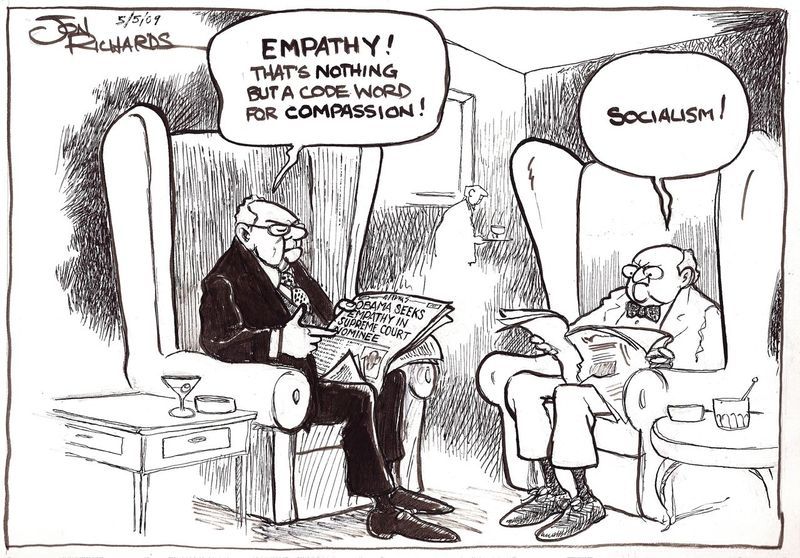
Much as empathy, the ability to see or feel other minds as equivalents of one's own, offers a solution to the problem of solipsism, it also offers a solution to the problem of selfishness in ethics. Being able to approximate the experiences of others in one's mind allows one to appreciate their experiences and thereby establish a kindred connection between Self and Other.

This is a powerful connection that can succeed where reason has failed. While it is certainly possible for one to hold fast to ethical precepts, the abstraction of these precepts cannot match the tangibility of the simulated experiences generated in an emphatic connection.

And the beautiful thing about empathy is this—it allows us to see others in terms of our own selves, thus short-circuiting the solipsistic tendency by transferring our selfness onto others so we could act (or react) as though prompted by our own experience.

This may be a simplistic way of looking at this matter, but it's a start.

I think I've had just about enough.

Often, people believe lies because they like the sound of them. It has been said that our minds are hardwired to look for patterns, even where there are none. In addition, we lock on to some of these patterns and superimpose them on things that we subsequently see. We let preconceived notions determine how we experience the world.

Certainly, such phenomena are not necessarily bad; to some extent they may even be important in helping us make sense of the world. At the same time, however, they lead us to all kinds of falsehood by making us insensitive to our actual experiences. They impose a mental processing system by which we make sense of and even twist these experiences to suit our preconceived notions.

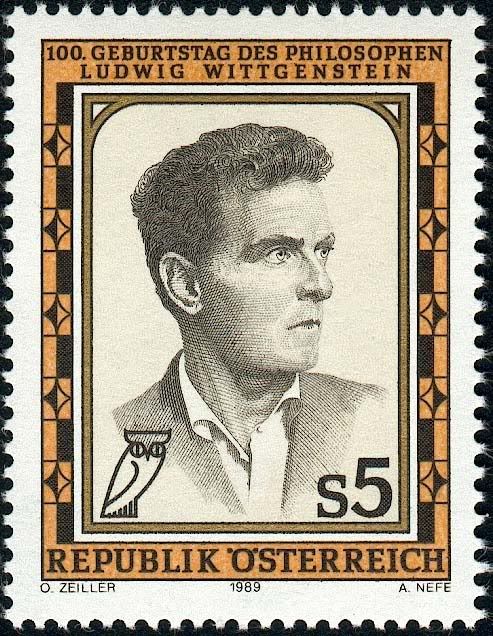
The genius philosopher Wittgenstein devoted part of his life's work to quashing traditional philosophical thinking that falls into such a pattern. To quote a recent New York Times article on the subject:
..the non-empirical (“armchair”) character of philosophical investigation—its focus on conceptual truth—is in tension with [the goal of discovering actual truth].  That’s because our concepts exhibit a highly theory-resistant complexity and variability. They evolved, not for the sake of science and its objectives, but rather in order to cater to the interacting contingencies of our nature, our culture, our environment, our communicative needs and our other purposes.
Letting premade concepts filter our experience can inure us to authentic experiencing, compelling us into thinking that our experiences conform to those concepts. I believe that this is what makes people automatically assume that there is a god and that certain experiences are divine and must have had certain effects. It's what makes people believe in miracles that can happen any time they want. 


The scientific-minded may just cite the lack of conclusive evidence for the occurrence of miracles, but this objection goes beyond that. It highlights how we, fundamentally, look at the world around us in an inauthentic way and why we are capable of seizing upon lies and integrating them into our reality. It demystifies what is at once an act of cosmic arrogance and wilful ignorance. 

And the most egregious cases of this act are what I just can't stand anymore.

Child's play

@ 15:54 , , , 0 comments


Luck is superstition—at least when it suggests the existence of a god in the machine, a capricious supernatural force that determines one's fortunes. That said, luck could be a descriptive term, merely used in reference to circumstances that are perceived to be out of one's control. The first kind of luck, a prescriptive understanding of luck, should rationally be relegated to the level of superstition.

But what about the work of providence, or what people often call blessings? How much stock can we really put into that concept in our everyday lives?

It is convenient and perhaps sometimes truly beneficial to claim that, yes, one is specifically blessed in a particular matter. But here too a distinction needs to be made between a descriptive use of the word and a prescriptive one. A descriptive use could, for example, be meant to express gratitude. A prescriptive use of it would, however, go further in implicitly claiming, in a definitive way, that one is indeed personally helped by a higher power in a particular instance.

Such a claim probably stems from a desire to feel that one's every want and need is taken care of by a higher power, or that one has direct access to or a favour-based personal relationship with a deity.  

I find such notions as presumptuous or childish as they sound. Our desires don't simply translate into reality. And if we accept that a higher power exists, and that this power deserves our devotion, the appropriate attitude would be subordinate our needs and wants to its will. Even trying to think up a win-win scenario strikes me as being arrogant and wrong.

However, just as many believe in luck as a metaphysical force, so do many believers subscribe to the idea that God blesses them in every human and banal matter that they are concerned with. I think that is a very simplistic expression of faith, one that resembles young children's belief in Santa Claus or in their parents' unfailing ability to grant their every wish. I think we need to grow up from such notions and learn to find faith that does not need constant reassurance.

untitled

@ 12:33 , , , 0 comments


I don't know if this has specifically been addressed by someone before, but one dimension to the existential problem is banality of existence. There is a kind of abstract meaninglessness that people like Camus have written about, but there's also a very practical sense of the banality that most of us are, from time to time, conscious of. In short: How do we live a life where we know that the world is so full wrongs and that we are, by and large, powerless to change it?

We live our lives day to day seeking our own happiness as though it carries a deep meaning. We suffer for the most trivial things, and we are put through all kinds of absurdity in order to buy ourselves some comfort in which we can pass our days. We lose, we gain; and after time has had its way, every joy or pain loses its significance. We live in bubbles, painfully focused on the minutiae of our lives but often unaware of the larger things going on around us.

And for our entertainment, we often watch others pass the same banal lives—characters on screens or on pages looking for happiness and revelling in frivolity. Or if we seek an escape, a fantasy, we try to lose ourselves in a world where individuals have power and could shape the world around them; and sometimes this only reminds us of just how unremarkable our own existence is.

Then there's religion or faith. But all it tells us is that, yes, we're powerless, that ultimately we need to depend on a greater power. It only gives an answer to the problem by affirming it and denying that we there is anything we can do on our own.

So how do we do it? How do most of us go about living our daily lives willy-nilly? It's strange, even fascinating. 

Perhaps that is the miracle of life.

Autumn Rhythm, Watercolour

@ 08:11 , 0 comments


I walk with the wind against my face, blowing frigid and fierce, promising a cold day ahead. This is of course typical of the repertoire of autumn weather in London: wind, rain and fog–and they have all made an appearance throughout the week.

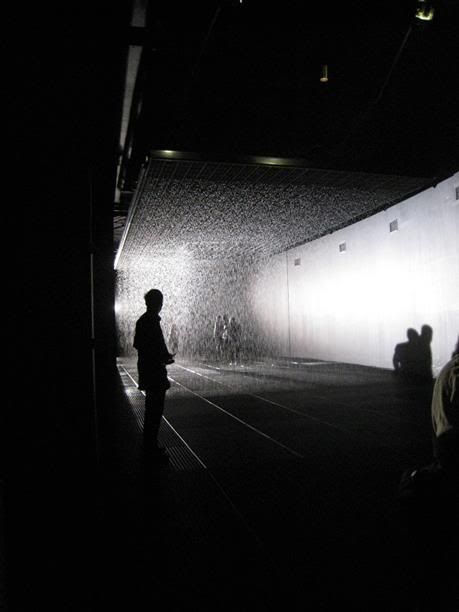
Entering the Barbican Centre, I hurriedly join a friend in the queue that has steadily been building up even before the Rain Room opens. The sight of the growing line begs the question: Why would people want to visit an installation about rain when they experience rain all the time in this city?

Over an hour later, finally stepping inside, the darkened space that is the Curve Gallery feels warm enough–the first difference between experiencing rain in here and experiencing it outside during this season. But the biggest and most important difference between the two experiences is the magic of the installation itself: unlike in the outside world, walking under the rain in here will not get you wet.

There are, however, a few conditions. Firstly, you must take your steps slowly to allow your position to be properly detected. Secondly, anything extending too far from your body is not protected–stretch your arms out far enough and they will get wet.

These caveats hint at the inner technical workings behind the Rain Room's magic; and they may perhaps take a little of the sense of wonder away.

Still, waiting just outside the torrential box, the excitement is palpable. There is something about the field blanketed in drops of water, glinting in the harsh white light that shines across the space, that is fascinating; and, chances are, you feel more than ready to give it a try.

Our turn comes and we step into the rain zone carefully, a dry space forming around us. Looking up, I can see circles where the downpour has been stopped above me, and they seem a little wide, perhaps slightly too wide for the experience to be as thrilling as I imagined.

Nonetheless, the curtain of rain around me, appearing misty in the light that illuminates it, seems as though it encloses me in a kind of surreal personal sanctum, surrounded by a persistent yet ephemeral shroud. And the experience is sublime. The world outside one's immediate vicinity seems further away but still eminently reachable–it's as though one has withdrawn tentatively into a serene and reflective place, a mandala, observing the world, samsara, from a mediated distance. It reminds me of the many times I have stood under an umbrella in tropical rain, the water mere inches from my body all around; except that here I can remain completely dry.

And that seems key to the installation's appeal. Rain in the outside world often presents itself as an obstacle, an inconvenience, a source of discomfort; in here, one is free to experience and contemplate rain without having to relate it to one's immediate needs and desires. It is the quintessential Schopenhauerian aesthetic experience.

And that is why to me, despite its rather technical and not quite wondrous nature (partly due its technical limitations), the Rain Room is art. You can't quite get the same experience anywhere else.


Is all fair in love and work? I think many would say no, and that is partly because of a difference in attitudes that is entrenched in our culture and in our discourses on love and work.

Consider this: Well-known columnist David Brooks wrote in an article for the New York Times that young people should not "pursue happiness and joy" when deciding on their career paths, focusing instead on solving the problems they come across and seeking fulfillment through "[engaging] their tasks". On the other hand, Brooks wrote in his book The Social Animal that "The relationship between money and happiness is very tenuous; the relationship between personal bonds and happiness is incredibly strong". So we are told that happiness matters in our personal relationships but not in our jobs.

But why this difference in attitudes? How much time do we spend at our workplaces every day versus the time we spend socialising? How many friends do we see every day for durations that come anywhere close to the amount of time we spend at work? Why does happiness not matter in something that forms a significantly larger proportion of our everyday lives?

The only relationship we have with people that can come close in terms of the time and commitment that we have to invest in it is a serious romantic relationship. We might say that it's difficult or even unbearable to be in a serious relationship with someone you don't love, having to see the person daily and to pretend that, deep down, you care about him/her first and foremost. So why do some us think we can do it when it comes to our jobs?

As we are probably well aware, it comes down to a difference in motivation. It's not that happiness matters in our personal relationships and not in our jobs to begin with, it's that a lot of the time we look for happiness in our personal relationships but not in our jobs. That is quite understandable. Work occupies that space between our public and private spheres of life where necessity and practical considerations are dominant. In other words, the primary reason we work is to earn a living, and we don't often have much of a choice in that.

But, that said, we can still ask why we voluntarily set up a teleological barrier between work and personal relationships. Why do we judge people who enter into personal relationships out of purely material concerns? Why are people who work purely for money normal but those who seek partners for material reasons deplorable?

You might put this difference in attitudes down to a matter of frequency and significance. Serious relationships are more significant because they are harder to come by, whereas one can switch jobs relatively easily. But what difference would there be if we keep looking for jobs without putting much weight on how much we love them? Working for purely practical reasons wouldn't therefore be a temporary arrangement.

Or you might put it down to a matter bad faith. Normally, people enter into personal relationships on the understanding that it is mostly, in a strict sense of the word, personal. In other words, as we see it, personal relationships concern our persons and not so much external and material things. So in letting the latter take precedence, you would often be breaking a tacitly made contract.

Yet these days many jobs ask for passion and a degree of personal commitment that justifies the personal sacrifices that we have to make for them, often for no tangible compensation. We can no longer be assembly line workers who perform mechanical tasks while waiting for the working day to end so that we can be free to live our own lives after that. The discourse on work-life balance is increasingly making way for the discourse on work-life integration. The job is no longer something that you have to get over and done with out of necessity; it's very much a part of you as a person. Indeed, it demands to be so. Hence, if we put on a front in our jobs, aren't we similarly lying to our employers and maybe to ourselves?

So, in light of the changes in the way we live and work, is the sacred teleological divide between jobs and personal relationships defensible? Can we condemn people who treat love as labour, as an exchange to be understood in material terms? If we can lie and pretend that love or passion for our jobs is integral to our work ethic, why should we disapprove of people who pretend that love or passion is integral to their relationships? Are we just being hopeless romantics who wish to use moral indignation to protect one of the last aspects of our lives that is not touched by the paradigm of commodity exchange?

Ma Nuo, a Chinese reality show contestant, was famously blasted by the public for stating on the topic of life partners that she "would rather cry in the back of a BMW than laugh on the back of a bicycle". But wouldn't many of us rather cry in the back office of Goldman Sachs than laugh behind the counter of a café? What makes us sure that that is a morally superior sentiment?

So perhaps we can't judge people who enter into personal relationships for material or tangible gains any more than we can judge people who work purely for money. At this point, that seems to be the most logically consistent position we can have.

Zen-like Kant

@ 16:18 , 0 comments


Can an immutable law be, at the same time, constrained by context and dependent upon particular circumstances for its construction and application? I think so. To put it simply, a law is made real insofar as it is known and obeyed, and its construction and application is dependent on the societies (and on the particular moments in their history) that institute it and that are governed by it. Yet the same law may have the gravity and the force of an immutable law.

But it is not my intention here to discuss the metaphysical implications of this line of reasoning. Instead, I want to take a brief look at a pillar of Kantian ethics, which is the notion of autonomous will. As my memory of Kant's first two Critiques is sketchy, I am indebted to the SEP in writing this quick recap of Kant's moral philosophy.

Unlike the utilitarians and many other ethical systems, Kantian ethics holds that moral law is constituted not by instrumental principles that rational agents must adhere to in order to attain some form of ultimate good. Rather, moral law is founded upon the categorical imperative, which is a non-instrumental principle and which is not predicated on the existence of an abstract notion of ultimate good.

Nor is morality the product of our physiology. Unlike the central principle of, for example, an ethic that is based on empathy for others, the categorical imperative does not command us to act by virtue of what we feel (although emotions may play an important part in motivating us)—it commands us unconditionally.

Hence, we have a duty to obey the categorical imperative. But not all duties are absolutely binding—the law of the land, for example, is only binding insofar as we fall under its jurisdiction, a status we can often opt out of by leaving. The duty to obey the categorical imperative is, on the other hand, absolute because it is binding for all rational agents who are by definition "capable of guiding their own behaviour on the basis of directives, principles and laws of rationality". And we cannot opt out of our membership in the category of rational agents.

We can therefore see the connection between the categorical imperative and our status as rational agents. But the notion of autonomous will has not yet entered the picture. What role does it play in Kantian ethics? We are tempted to assume that rational agents possess autonomous will, which is a point that Kant does argue for. But how does he do so? And how is this important to the categorical imperative?

As rational agents, human beings possess rational wills, which is a will that "operates by responding to reasons". Hence, for it to be rational, it should not be entirely constrained in its operation by, for example, "being determined through the operation of natural laws, such as those of biology or psychology". To some, this might seem like an attempt to divorce reason from our biological make up, which they would regard as labouring in vain under the idealist illusion. However, Kant does not seem to go so far. He argues only that what is necessary for a will to exercise itself freely is "the Idea of its freedom", holding that having free will means not strictly operating under the constraints of immediate practical considerations when "trying to decide what to do" and "what to hold oneself and others responsible for". In other words, as I understand it, we can be said to have free will because in our practical endeavours we are capable of engaging in "self-directed rational behaviour and to adopt and pursue our own ends"; we are capable of making choices and not just of doing as the physical or material circumstances dictate.

Thus, Kant asserts that rational wills are also necessarily autonomous wills. And the significance in his ethics of the autonomy of a rational will can be found in the Kingdom of Ends and humanity formulations of the categorical imperative. Under the Kingdom of Ends formulation, a will that regards itself as a member of the category of rational wills must "regard itself as enacting laws binding to all rational wills" and thereby as a member of a “systematic union of different rational beings under common laws”—a “Kingdom of Ends” whose members "equally possesses this status as legislator of universal laws". Hence, not only must we acknowledge other people as fellow rational, autonomous beings, we must also recognise that they possess the same responsibilities as we do because they are similarly, in their capacity as rational and autonomous beings, capable of enacting universal moral laws. This is a strong basis for the concept of human dignity, a concept that is articulated in the Humanity formulation of the categorical imperative, which demands that we treat others' humanity not as a mere means to our own ends but as an end in itself.

What this means, in plain language, is that we must respect fellow human beings as equals who, like us, possess a significant basic level of dignity. This is a law that should appear immutable to us as both its legislators and its subjects; it should not be modified depending on who we're talking about or on the prevailing circumstances. Even those who are guilty of heinous crimes retain their humanity and therefore their human dignity, and the punishment meted out to them should not fail to recognise this.

All this might seem quite obvious when we think about it, but when we feel antipathy towards others for the smallest of reasons, we clearly need to remind ourselves why we shouldn't our feelings cloud our reason.


It is often said that knowledge is power. Is it? Or does knowledge simply avail us to the means of power, if that?

There are criticisms to be made of the naive view that knowledge can automatically solve the world's ills, but we do not even have to venture there. In the first place, we should ask what kind of knowledge is regarded as power.

It stands to reason that not all kinds of knowledge can be associated with power. But aside from the fact that some knowledge is obviously of limited use, there's a particular kind that is foremost in the hierarchy of knowledge, being perhaps the only kind that is really recognised as empowering in the minds of many: Actionable knowledge.

In a way, this is apt when we consider the naive belief that knowledge is automatically empowering. Obviously, actionable knowledge is valuable because it allows us to take actions that would otherwise not have been possible or as effective without it. On the other hand, the notion that only actionable knowledge is empowering leads to the idea that only knowledge that is actionable is worth pursuing. That is why we hear rants, such as the one in New York Times recently, about the amount of time and money spent pursuing 'useless' knowledge.

Such complaints do have their points, but they often leave us with the distinct impression that people expect a lot from the knowledge they pursue. They expect it to pave the way to good jobs, to yield financial profit, to save time—in short, knowledge is expected to have tangible benefits, measured in terms that people are already familiar with and fully expect.

There are two criticisms that can be made. Firstly, such expectations are contrary to the nature of discovery. Whether the discovery is unprecedented or personal, whether the knowledge gained is completely new or already known to others, gaining knowledge entails learning something you didn't know before. It is therefore strange that we think we know what we can expect out of gaining some knowledge. While we can perhaps guess at or imagine its possible outcomes, the process of learning is likely to entail learning more than just actionable knowledge. In any particular body of knowledge learned, perhaps only a small part of it is actionable knowledge. Yet such 'wastage' is an unavoidable part of the learning process, a consequence of not knowing what exactly to expect, and this is especially true when engaging in cutting-edge research that seeks to break new ground.

This brings us to the second point, which is what the New York Times article seems to overlook when it rehashes old complaints about the academic ivory tower: A lot of the knowledge gained through research in institutes of higher learning is 'useless' because research is not an entirely predictable process. Important discoveries are often unexpected and made when pursuing lines of inquiry that might initially seem esoteric and of limited practical consequence. Even if a body knowledge seems to be full of information that is of little use outside of academia, the discourse it generates may have a cumulative effect that could be instrumental to making important discoveries within that body or outside of it. Thus, research is not made up self-contained projects that either yield useful results or not—research can be seen as consisting of discourses that together form the ground from which new knowledge germinates, not necessarily as a result of any single effort.

That is not to say that research need not be directed by practical goals. However, we should not be surprised that only "around 40 percent" or whatever proportion of academic research proves to be immediately useful in practical contexts. These circumstances are part and parcel of the process of research, and perhaps it is a gross misunderstanding of the way knowledge is gained that leads to the kind of cynicism that demands that knowledge yield tangible rewards or be deemed not worthwhile.


The difficulty of praxis in art is compounded by the intrusion of the empirical or the purely practical. The definition of art is a political matter; it is bound up with the power to dictate or influence what is considered art and what is not. Perhaps the philosophy of art can exist in parallel with the power structures that, in our reality, define art and the beautiful. However, one gets the feeling that praxis should still entail the reconciling of aesthetic theory with aesthetics in practice, if not overcome the latter altoghether.

The trouble for aesthetic theory is, even if it has revealed the secret of the beautiful and why art is art, it frequently does not account for the practical preoccupation with the medium as a crucial determinant of what can be considered art. A digital image is at most 'art' in a much more qualified sense than is a painting on a canvas. This is because it does not in itself (without relying on the reputation of the artist or on physical installations), by virtue of its medium, typically garner the kind of recognition as an artwork that comes with socially-bestowed value and that can provide the artist with the material means to continue his work.

A way of dealing with this reality is to call for an anti-elitist view of art that disregards or devalues the importance of the art establishment, the respected institutions that serve as gatekeepers for universally-recognised art. Such a view would not discriminate between career artists and those who are not or between one medium and another.

Yet, as suggested earlier, this conception of art would only exist in parallel with the politics of art in practice. Praxis becomes viable but constrained, maintaining itself only by the act of a splintering, by taking itself away from dominant trends.

What is needed is an aesthetic theory that critically engages with the politics of art and, in a dialectical fashion, brings theory and practice together under an all-encompassing praxis. If the medium indeed plays a part in deciding what is art and what is not, such a theory would, as is done in Hegel's philosophy of art, explore the essential elements of art and show how they create qualitative differences between different media. However, it would also have to be cognisant of and explicate the power relations that mediate social perceptions of art.

In this sense, only a synthesis between aesthetic theory and the sociology of art can provide an all-encompassing praxis for art.

Every year it's the same. I would be lulled into thinking that there are possibilities here, that things will be different. This year, I actually convinced myself that I think positively now, that I will see things differently. I was even beginning to think that I may prefer to stay here instead of leaving again. But, in the end, I still feel the same way

The people are still the same. People might change since you've got to know them, but they'd never change again. Here, they are still indifferent. You can't rely on them to make the simplest of gestures unless they can see what's in it for them. In general, old friends tend to become nothing but a tiny blot in the paper of the mind, a memory of people who exist but who are of little concern to you now.

Every year, I learn a little more about how to live a largely solitary existence. When family became lost to me emotionally, I had friends. Now friends are merely a collection of acquaintances. You don't leave a place and expect to pay no price. Maybe some people can, but such are my blessings.

Each time, to stave off bitterness, I have to know that I've become better. I have to be able to say that I've become more self-sufficient. To achieve that, I have to turn again to philosophy. Only philosophy can teach you how to live alone and nonchalantly.

The strong person is an essentially solitary person. I have no need for friends, as they have no need for me.


Part I

In the second part of this discussion of Adorno and Horkheimer's The Culture Industry: Enlightenment as Mass Deception, I conclude by building on the key observations made in the first part regarding mass culture and capitalist relations of production, sketching out a slightly different theory of mass culture. The latter is subsequently applied, partly with reference to Slavoj Žižek's Shoplifters of the World Unite, to a brief analysis of the social problems facing contemporary British society (although it applies similarly to many other contemporary societies) that culminated in the disturbances that occurred in the summer of 2011.


It has previously been postulated that mass culture celebrates both consumption and success within the capitalistic paradigm, the latter which revolves around its particular social relations of production. Success in this context, however, has to be seen in relation to consumption, for the market for status and identities in a capitalist society demands equivalence, which in turn demands objective measurability. As such, success is measured by what is called 'purchasing power' and its instantiation in the form of the consumption of goods and services.

At the same time, the association between consumption and success also has its implications on consumption—while it has been suggested that consumption promises an inauthentic easy form of happiness, it is only always easy in a metaphysical sense, inasmuch as happiness as a concept, as Adorno conceives of it, is always being sought rather than readily found. In practice, consumption is by no means always attainable, particularly in forms that are socially valued and identified with success.

Yet, in spite of the relative difficulty of socially-valued consumption, mass culture must nevertheless persist in tempting audiences with it in order to maintain their interest and, consequently, the industries that depend on it. This creates a harsh paradox in which consumption is sold as an easy and attainable pleasure that is, on the contrary, more difficult to accomplish than it is made out to be, and must be so in order to maintain a degree of exclusivity that upholds the social value of consumption.

The contrast between the expectations generated by mass culture and economic realities in turn leads to social tension, as segments of society are continually being seduced by the promise of socially-valued consumption without the means to engage in it to substantial extent. And this phenomenon may have serious practical consequences for society: For example, the violence and the looting that occurred in London and a few other English cities can be understood as at least partly the result of the frustrations engendered by mass culture in its celebration of consumption and of success as measured by consumption.

That is not to say that there is a simple causal relationship between mass culture and social unrest in contemporary capitalist society. Discontent may, at least initially, emerge as movements of resistance, some of which express themselves in benign ways.

Yet what Žižek calls the "impotent rage and despair [that is] masked as a display of force" and the "consumerist desire violently enacted when unable to realise itself in the ‘proper’ way" (2011) seems manifestly connected to the influence of mass culture. The latter's power may not be as absolute as the Frankfurt School asserts. However, unless we choose to regard the looters simply as human beings who became "beasts" (Žižek, 2011) on their own accord, we must see that mass culture, in wielding significant influence over the modern psyche through the pervasiveness of mass media and through its relentless and seductive celebration of consumption, helps to create an impetus for them to go out and take what they want. Moreover, on a fundamental level, the 'anti-social' act of looting is partly one of lashing out against the fundamental tenet of capitalist society that is property rights, the legal framework that maintains the exclusivity of material ownership and socially-valued consumption.

In light of this, as a famous revolutionary once asked, what is to be done? There seems to be no option other than to continue resisting, but in a different way. While capitalism, presented to us by the messenger that is mass culture, "represents truth without meaning", giving us the freedom to choose only "between playing by the rules and (self-)destructive violence" (Žižek, 2011), we have to return to what is perhaps a less novel and less cynical way of thinking—we need to adopt a teleology of social and personal life that is both meaningful and lucidly aware of its humanity. We must become aware of the centrality not of particular things or even of transcendent things that may cloud our vision, but of human life itself and the importance of realising it in the fullest capacity possible.

I believe that this is the essence of the Frankfurt School critique of mass culture, or indeed of the Marxist critique of the capitalist relations of production. And this is a point that is not undermined by the dispute over facts about audience reception.

While cultural studies has today succeeded in appearing to undermine the Frankfurt School critique of the Culture Industry, the machinery of commodification steams ahead, more productive than ever. The intellectual world is powerless before this trend and continues to concede its influence. Numerous scholars of culture are striving to make their field at once more obscure and more accessible. They toil to create a happy vision of a world that is poised to reap the benefits of new communications technology, promising a cosmopolitan future of choice and enlightened consumption.

This vision is constructed through discourse that is sprinkled with an ever-growing list of newly-coined terms. Yet it is, at the same time, one that people can readily identify with—for who isn't ready to believe in the prospect of a brave new world, especially when the media has just informed them of the exciting new products available in the market?

Admittedly, Critical Theory does not often fare well in today's intellectual climate, a circumstance that I feel is attributable to its underpinnings in the labour theory of value, or at least in varying degrees of economic determinism. Popular conceptions of value no longer hold it as something objective or cardinal. Value is something that is purely relational and manifested in actual preferences. In other words, that people value something more than another cannot often be explained in terms of natural and tangible causes. Valuation is often a subjective affair.

In a powerful way, this undermines the Marxist critique of exchange value, not only by dispelling the labour theory of value on which the critique is based, but also by replacing the concept of use value with ordinal utility. Now we have another conception of value that is also Subject-determined and correlated with exchange value but is not equivalent to the latter. And the concept of use value seems cumbersome and obsolete beside one that is able to account for all Subject perceptions of value, including the intangible, instead of being mired in the materialist paradigm. Moreover, this conception of value is seductively democratic. After all, what can appear more empowering than a view of value that privileges people's preferences and decisions?

What this means for the Frankfurt School critique is its effective isolation as an elitist view of culture that presumes to tell people what they ought to value. If preferences are subjective, what right does anyone have to proscribe any as long as no actual harm can reasonably be alleged to result?

It is difficult to defend the Frankfurt School from such a charge. Yet I maintain that its critique of the Culture Industry still rings true, albeit in a way that may necessitate some distancing from Marxist discourse. My proposition is to look at the critique from a particularly modern perspective that revolves around expectations and hype.

If there is anything that we have learned from the last global financial crisis, it is that expectations may diverge from a more tangible reality of a situation, whatever the latter may be. Perhaps this can be seen in terms of the divergence between short-term and long-term confidence, the latter which is dependent on a stricter or more complete procedure of reasoning. But regardless of what exactly we should compare expectations to, the evidence seems to point to the existence of hype.

Hype can be understood, in that sense, as the inflating of expectations of returns relative to a more tangible measure of actual returns. Even under conventional ways of looking at the market, hype is rarely a good thing—it implies that buyers are ultimately losing out in terms of expected versus real returns to their spending. And since hype is paid for by marketing costs that are likely to figure in pricing decisions, hype also represents a potential deadweight loss.

What does this have to do with the Culture Industry? It is my contention that the Culture Industry is a major source of hype. It deals in feelings, manufacturing them in order to generate interest in things—a process that is typically subsumed under the goal of making profit. It thus becomes the primary source of trends that influence people's preferences in goods. To grasp the commercial importance of the Culture Industry under late capitalism, simply witness how advertising thrives on the products of the Culture Industry.

Moreover, this principle does not apply merely to the products of various industries, but also to more general things such as lifestyles and even happiness—the message is that spending our money on something or adopting a certain attitude or lifestyle can bring us happiness or a sense of fulfillment.

But can hype not become real if it proves to be permanent? After all, there are still many people who would be very happy to buy, for example, the latest Apple products simply on the basis of the expectations that have been generated through marketing. Thus, it would seem to be the case that these people continue to get what they expect.

Yet it remains true that no one really knows how long the ephemeral expectations that are associated with hype can last, especially on the level of the individual. All it takes is for the realisation to come, in one fine moment, that there is no basis for believing that something is as good as it has been made out to be. Much of the perceived returns would be lost in that moment, just as the perceived values of certain financial instruments evaporated a few years ago.

The lie that Culture Industry sells us does not, therefore, have to depend on a highly contentious philosophical analysis of value. Whatever the exact nature or typology of value may be, hype as the commodification of feelings can be observed in our everyday experience; and it stands clearly a means of extracting profit through the inflating of expectations.

Those who wish to hold on to dreams should also be prepared to give them up. One cannot be uncompromising about dreams, for dreams have power over us. They have the power to reveal our mortal limitations, unclothed by the delusions of power that flights of fancy bring. For dreams are always a few steps ahead of us—the more we are able to realise, the fancier they become. Confidence often leads to our undoing, and the moment when we see the precariousness of our situation, the potential futility of our efforts, is the moment of despondency; a moment of lifelessness and regret for failures past.

To dare to dream is to dare to give them up. Yet, on the other hand, can we do without them? As dreams give meaning to our lives, they may also take them away. Thus, it is not having dreams or giving them up that is most crucial. Most importantly, accept the passing of dreams. Old dreams die to be replaced by newer, often less exalted ones. As we age, so do our dreams decay. But still you must hold on to them, to give them up later or perhaps to even realise them. That is what we really live for—the chance, however small, to see some of our dreams realised, or to fight again another day until we breathe no longer.
Gatsby believed in the green light, the orgiastic future that year by year recedes before us. It eluded us then, but that's no matter—tomorrow we will run faster, stretch out our arms farther… And one fine morning—

So we beat on, boats against the current, borne back ceaselessly into the past.


More technocratic or elitist discourses on governance often bring up concepts like 'the big picture' or the 'the long view'. I won't dispute the fact that these terms have meanings (albeit relative ones). But they don't seem as clear as they are made out to be in those instances. It's always worth asking what the big picture or the long view is, and how anyone knows what it is. Otherwise, it would only serve as a cover that allows the powerful to explain things away with a wave of the hand.

The problem in thinking in terms of the big picture becomes clear when there are competing claims about the same reality, typically with some grounded in experienced reality and others in more abstract or socially-constructed terms. For example, it is possible to enjoy a period of posted economic growth and rising nominal (or even real) wages while having people report decreasing standards of living in their everyday experience. Of course, facts grounded in experienced reality are often fragmentary and contentious—they are typically anecdotal and it is easy to find examples that contradict each other. To the rationally-minded, such facts might therefore be unquestionably devalued.

However, this does not mean that they are necessarily untrue or unreal. Everyone sees reality through the veil of a particular (and partly self-imposed) perspective. However, this reality is also the reality that each of us knows. It's cold comfort to be told that some abstraction or another person's reality can free our perceptions from the constraints of the experienced. What we experience is necessarily treated as true because we experience it. That is a fundamental tautology in epistemology.

Of course, ontologically this is a problematic position. Yet in practical matters, the empirical is the most directly relevant to the individual. Small epistemologically-determined problems can culminate in an ontological crisis. After a certain point, we just don't know if a claim that has been 'proven' to be ontologically true is indeed true. It becomes increasingly difficult, for example, to hold on to a traditionally held view that something is good when we are finding so many little things that are wrong with it.

The epistemological/ontological divide translates into a small picture/big picture divide in the socio-economic realm. What I call the 'small picture' is obvious enough to each individual, as it concerns the present and immediate reality around him. But how do we derive the big picture? Are we able to see how all the small things, consisting as they are of an insurmountable mountain of conflicting data, form the big picture? The long view is even more complicated as time constantly introduces change.

What people wind up doing is simplifying the reality that they see. They abstract reality, deriving theories, numbers and indicators to allow them take stock of it in a convenient and concise way. When they need to think about the future, they make projections based on these abstractions. This is a powerful and useful method, but it's not without its risks. If experienced reality is affected by perspective, what exempts our visions of the big picture from the same influence? In fact, most if not all attempts at abstracting reality are acts of interpretationwe are interpreting reality according to a certain framework or paradigm.

In governance, the tendency to abstract and derive the big picture for policy purposes has led governments to pursue numbers. They rely on indicators to measure the effectiveness of their policy, the welfare of the people and virtually everything that pertains to their business. This is often a necessary measure in their position, yet the problem with these indicators is that they are interpretive. The real problem, however, comes when people are not aware of this. Numbers and abstractions become totalitarian teleologies, imposing an "iron cage", as Max Weber put it, of rationalism on the lives of individuals. And worst of all, they become held as 'truth'.

The elitism regarding the big picture is a manifestation of this rationalist arrogance and its obliteration of the hermeneutic. What individuals think and feel is completely unimportant beside the data. Unfortunately, the people who champion the big picture often neglect to ask how the data is derived. Emptily they claim to be bastions of reason and lovers of wisdom, and those who disagree they declare to be contrarian or oppositional. Hence, the position of the unthinking rationalist is readily assumed by the most dangerous ignorant people of allthe pseudo-educated, the body of the reactionary middle class.

Here I present a reading of Theodor Adorno and Max Horkheimer's The Culture Industry: Enlightenment as Mass Deception, with reference to Frederic Jameson's essays on Adorno in Late Marxism and Amresh Sinha's Adorno on Mimesis in Aesthetic Theory.

So where should we begin? The first thing to note is the fact that there is more to Adorno and Horkheimer's theory than the suggestion of mass culture as fundamentally characterised by passive consumption. That is really only a symptom (though a very important one for Adorno and Horkheimer) of the general 'malaise' of mass culture, and one that has received far too much emphasis in media studies to the detriment of the discussion of its other aspects. In light of this, I will endeavour to present a more contextual reading of this essay.


I am looking at Adorno and Horkheimer's critique of mass culture from the perspective of their critique of pleasure as it is associated with mass entertainment under late capitalism. It should be noted that Adorno and Horkheimer's analysis of pleasure "takes place within a framework of the theory of the alienated labor process" (Jameson, 1990: 145). This entails the analysis of mass culture as the colonisation and the commodification of leisure time—amusement is the prolongation of the working day insofar as it merely functions as a period of relaxation that demands no effort (hence the passivity of the consumer), which is sold to the individual worker so that he/she can continue working contentedly the next day. Pleasure is therefore seen not only as a flight from reality but also as the flight from "any last thought of resistance" (Adorno and Horkheimer, 1998).

The full implications of commodification will be brought out later. Presently, we will attend more closely to the notion of the colonisation of leisure, which involves the mechanisation of culture that reflects the mechanisation of modern economic production: The enjoyment of culture is schematised for a passive audience so that, as mentioned above, no effort is required on the part of the latter. This entails the presentation of "repetition and the familiar" (Jameson, 1990: 148) in order not to tax the audience's minds. Thus, the familiar character of the labour process is ironically reproduced in entertainment, which indicates that the monotony of "standardised operations" that characterises the working day "can be evaded only by approximation to it in one's leisure time" (Adorno and Horkheimer, 1998).

This is where media scholars' criticisms of Adorno and Horkheimer are typically focused, with their rather belaboured emphasis on the examination of the link between media consumption and power (sometimes in an effort to deny that the media wield power over the audience). As stated in the beginning, such a perspective is sorely inadequate, and this will become evident as we examine the other aspects of Adorno and Horkheimer's theory on mass culture, beginning with its aesthetic critique of pleasure.

Adorno and Horkheimer hold that pleasure/happiness is found in what is yet to be, and their charge is that the Culture Industry offers 'inauthentic' pleasure that is purported to already exist and is ready for consumption. Furthermore, Adorno postulates a conception of the artistic mimesis as pure expression, which is antithetical to the notion of 'expressing something' (Sinha, 2000). Artistic expression is hence self-identical (Sinha, 2000) and thereby incompatible with the notion of equivalence, which is so important to the process of commodity exchange. Like the mystical in Wittgenstein's philosophy, in other words, it cannot be substituted by something else. Therefore, unlike the products of the Culture Industry, it cannot be subsumed under the mechanism of substituting means for ends (Sinha, 2000), being thus quite apart from the market for identity and leisure that under late capitalism are treated as just more commodities to be exchanged.

One important insight that we can derive from Adorno's conception of art is that, for Adorno and Horkheimer, reception is identified with the capitalist mode of production, particularly in the context of commodification. This means the reception of the products of the Culture Industry has to be understood in relation to their production. The most common criticisms of Adorno and Horkheimer are heavily invested in the critique of their claims regarding reception, emboldened by evidence indicating that audiences are not passive. Thus, a good way to uphold the Frankfurt School critique, without explicitly invoking theories of power, is to bring production back into the discourse.

Equivalence is, as stated earlier, crucial for commodity exchange, and it is created through abstraction—the Marxist account of commodity exchange involves the abstraction of the use values of goods into exchange/monetary value, "allowing comparable and measurable quantities to be manipulated" (Jameson, 1990: 149). This forms a vital part of the commodification of leisure as it is the need to conform to the principle of equivalence and create monetary value that drives the production of cultural products in a manner that is similar to the production of consumer goods, leading to the creation of what Walter Benjamin calls the mechanically reproducible work of art.

But what implications does the nature of production in the Culture Industry have on consumption? Questions of quality come first to mind, but this is, understandably, shaky ground on which to stake a critique of mass culture. We need look above and beyond, at the implications of the relations of production on the consumption of mass culture as a whole and not as discrete cultural products. 

Roland Barthes asserted, mirroring Adorno's critique of pleasure, that mass-produced culture under late capitalism serves to conceal or obscure the capitalist mode of production, thereby eliminating resistance. However, this line of argument is once again susceptible to the criticism, born of audience studies, that audiences are not simply passive recipients. Indeed, I think the exact opposite is the case: Far from hiding it, the Culture Industry revels in the capitalist mode of production, showing us the promises that await us should we acquiesce to the system, namely all manner of consumer goods and the status and identities that come with them—rewards that are, however, readily available. It tempts the audience with these prizes, rather than compelling or co-opting them directly. But, crucially, it also promises the more elusive, yet-to-be prospect of success itself, embodied most vividly and blatantly by the stars it churns out as the human end-products of its capitalist mode of production. It is therefore unsurprising, though ironic in light of Adorno's linking of pleasure to readily achievable ends, that audiences are so preoccupied with stars.

Continued in Part II

Postmodern approaches to social theory emphasise multiplicity and de-centring, and these themes find their natural articulation in cultural analyses. Such analyses focus on the richness of cultural interaction and the reproduction of identities in non-linear ways, and where they concern themselves with politics and social organisation, they seek to realise this vision of cosmopolitan society—a society consisting of empowered and complex Subjects. Some theorists have even gone so far as to announce that we live in the age of the Subject.

Is this true? The last claim is especially dubious; our everyday experiences are enough to cast serious doubt on it. There are structural and physical limitations that ensure that Subject-Object relations continue to exist in force and often dominate the social terrain. Thus, trying to establish the existence or even plausibility of pure Subject-Subject relations in mass society amounts, at least under present conditions, to an exercise in wishful thinking.

Such limitations can be observed most clearly in political processes. Indeed, politics may be said to define these limitations insofar as it is considered as the necessary framework of social organisation. Politics, therefore, exercises a restrictive rule on the freedom and the pure reciprocity that would give rise to a society consisting only of relations between empowered Subjects.

The agents that enforce this rule are institutions. Institutions impose their decisions on Subjects in non-negotiable ways, and this happens every day in processes of governance. Democracy and dialogue fade away when individuals are faced with institutional decisions made under the guise of systemic necessity. Dreamers might continue to insist on the democratic possibility of changing such outcomes, but as Marx said, "Between equal rights force decides."

The will of individuals as Subjects and systemic concerns (as they are treated by institutions) are thereby locked in a Hegelian moral opposition—the dialectic is a forceful one. Even Subjects with dialogic aspirations for society need to be able to resort to confrontation in order to assert themselves in reforming or recreating institutions to carry out the vision of a cosmopolitan society.

It is no wonder, then, that non-violence and compliance are attributes that are often considered highly desirable, if not the most desirable, in liberal democracies—institutions may depend upon them to survive when there is potential conflict with the will of the demos, the collective body of Subjects.

Hence, democracy as an ideal exists only in its immutable form in a theoretical revolutionary moment, when the will of the demos is able to assert itself without institutional restriction. Echoing the structuralist critique of the metaphysics of presence, the ideal of democracy is not actually present in everyday procedures of governance and planning. There is typically only the reality of individuals acting as economic units under systems that often vaguely recognise their status as free and equal beings.

What about dialogue? Is there more that can be said about it? Indeed, the critique of dialogical interaction can be expanded from an institutional focus to the relations between Subjects within the demos or the public sphere itself. Some of these relations are no doubt power relations, but the existence of Subject-Object relations can be established beyond the influence of power and as the product of necessity as well. Once we move from small-scale interpersonal relations to mass society, it becomes difficult to avoid the constitution of Subject-Object relations. Mass communication is inherently objectifying because it is depersonalised—in addressing a mass of individuals, Subjects communicate without the ability to recognise particular and distinct Subjects as the recipients of their messages. As such, they must necessarily generalise about and even essentialise their audience, moulding the latter's image according to their messages. While dialogue is possible, it is nevertheless unable create a public sphere consisting of Subject-Subject relations as long as the whole of the mass is considered. The conversation will not be able to take into account every individual in his/her full complexity as a Subject; nor will it empower every Subject by allowing his/her unique voice to be heard fully.

So where does this leave postmodern approaches that try to construct a rhizomatic web of non-essentialising relations between Subjects? The pessimistic answer is "Nowhere"—there will always be Subject-Object relations and they will continue to have great relevance in social organisation. However, to give a more optimistic assessment, postmodernists may take a cue from modernist approaches and seek to address the actual existence of centres, instead of pretending that the Subject has got the better of them. Otherwise, like the proverbial ostrich, they can only make themselves more vulnerable to objectifying processes.


I wonder how often the pronouncement that "It's all relative anyway" is accompanied by the knowledge of why exactly that is so. Perhaps utterance without precise understanding is somewhat apt within a relativist paradigm. In any case, it would certainly be apt to draw upon one philosophical tradition, which grounds beliefs on a particular theoretical basis, in order to explain and mitigate the notion that truth is relative. Hence, I want to look at structuralism and its take on the crisis of foundationalism.

The structuralist critique of foundationalism and the metaphysics of presence revolves around the arbitrariness of the link between the signifier and the signified. Essentially, it denies that inherent ideas or mental states accompany the utterance of words such as to supply the words with fixed and unmistakeable meanings. The arbitrary nature of the signifier/signified connection, however, does not imply that individuals simply decide what they mean when they say something. Meanings are decided, subject to perpetual change, through the relations of words with one another, governed by principles that constitute a language (by which I mean langue or a system of signification) and that are beyond the simple agency of individuals.

The implication is that truth claims are problematic insofar as the instability and arbitrariness of meaning make the communication of claims about objective or universal truths impossible—meanings and the truths they are supposed to convey do not necessarily translate from language to language or, depending on which philosopher you are reading, between communities that speak different languages based on the respective forms of life that characterise them. And if thought is a form of internal communication insofar as it is constructed linguistically, then it seems to follow that it is impossible to apprehend objective truths that must by nature correspond perfectly in the minds of all individuals.

Thus, there appears to be two aspects to the problem, one communicative and the other epistemological. In downplaying the practical implications of relativism, I will focus on the communicative aspect as it seems more directly applicable to our everyday lives. This seems, at any rate, appropriate in view of the linguistic orientation of the structuralist critique. Moreover, communication that is not crippled by relativism may help address the epistemological dimension to the problem, so it might be useful to deal with the communicative aspect first.

What indications are there that meanings are not hopelessly relative and mutually unintelligible when we communicate with each other? For one, there is the interesting fact that individuals who may be regarded as belonging to different communities are capable of being ‘on the same page’ while communicating to each other, even when they are making truth claims. This may be attributed on a broader level to experiences that are common to all human beings, which may, for example, make certain ethical propositions more or less universally acceptable. Even if we were to narrow down the scope of our analysis, we would find that shared experiences that constitute what is called ‘intersubjectivity’ do not permit us to neatly categorise people into distinct communities that draw on exclusive pools of meanings. We often share experiences with one another and thereby establish common grounds of shared meanings that cut across all divisions that traditionally delineate communities.

As part of our daily experience, communication in turn helps us find and perpetuate such common grounds. The act of communicating the structuralist critique of foundationalism itself presupposes shared meanings that are communicated in an effort to create a larger common ground with a potentially vast group of individuals from a range of different communities. Hence, intersubjectivity is arguably an inevitable outcome of communication.

This suggests that even if the epistemological side of the problem proves intractable, even if we can never really know whether objective truths exist, we can get by pretty well without being mutually unintelligible to an extent that cripples communication. And part of our process of getting by would undoubtedly involve having beliefs in ‘objective’ truths that we share with others who are able to empathise with the reasons for those beliefs.

Furthermore, communication can help us to come to know more about objective truths through processes of discourse, as theorists of communicative rationality might argue. In this sense, as I have mentioned earlier, the communicative aspect may be said to precede the epistemological.

Most importantly, however, the fact that we are able to communicate with a diverse range of individuals from different communities means that the relativity of truth, whether it is itself objectively true, is almost irrelevant to our daily practices in a modern liberal society. And in times when the notion of multiculturalism is under sustained attack, it reminds us that there is likely no water-tight philosophical reason for not being able to coexist and communicate with each other.


The world of experts is a perplexing one. And that's partly because you wouldn't know what it's really about unless you are an expert yourself. 

One might think that the role of the expert can be democratised in the modern world, devolved to a larger base of 'common man' experts in a context where knowledge is widely available, thanks to a trend that can perhaps be traced from the invention of the printing press to the advent of mass literacy and most recently to the development of information technology. Apparently not.

The philosopher Ludwig Wittgenstein referred to "that whereof we cannot speak", a tacit kind of knowledge that agents draw upon in order to interpret meanings in a language, knowledge that can only be apprehended in its instantiation as part and parcel of practices that comprise social life. This knowledge, therefore, cannot simply be codified and read off the pages of a book or passed through any communicative medium. It has to be lived.

A field of expertise may be regarded as a kind of language, if we apply principles from structural linguistics to the wider realm of social theory. And it makes sense in this instance. Experts are experts not just because they have read a large number of texts on a subject, though that certainly helps; they are experts because they have been extensively engaged in a body of knowledge and have participated in the social activities that are central to the production and reproduction of the knowledge and the field. They literally know it inside-out.

I find the field of politics especially interesting because, rather than just interwoven with power relations in the Foucauldian sense, most knowledge pertaining to the field deals directly with power. It is therefore very relevant to everyone's lives. Are there experts in politics? Michael Oakeshott certainly thought so. Politicians, people who know the 'art' of politics through extensive experience in it, are supposedly the experts, notwithstanding their dodgy reputations and their sometimes alarming ignorance of basic facts. However, taking a cue from the title's reference to Max Weber's Politics as a Vocation, we have to be slightly careful: Are politicians the experts, or does the label more accurately apply to the political bosses?

Oakeshott seems to have had in mind the statesman rather than the campaigning or vocational politician, although the ability to acquire and retain power in a democratic context is certainly implicit in his conception. So let us treat politics in the sense that relates to governance and whatever political manoeuvring is necessary to govern a society. 

A kind of elite theory of democracy that this notion of political expertise implies is consistent with a rationalisation of representative democracy. Representative democracy is held to be superior to direct democracy because 'a government by the people' is mediated by the people's representatives, the politicians, who presumably know more about what governing is really about.  

I don't wish to argue for or against the notion of politics as tacit knowledge here, although I think it's undeniably true to some extent. Instead, I want to offer a critique of expertise as a myth, whereby the expert becomes a high priest of knowledge who is to be consulted and heeded, as augurs were, in an uncritical and almost superstitious manner. In other words, we sometimes think too highly of experts. And with their own interests in mind, they seldom want to correct us. Rather, they readily assume the robes of the high priest. 

I've talked about instances where experts treat a given subject matter in isolation, causing them to draw bad conclusions. Here, I have in mind experts who do not even understand what they are talking about. We can have a significant amount of certainty about their ignorance when it comes to very recent political events, as insufficient time has passed to allow for an extensive body of reliable knowledge on it to emerge. 

The Harvard professor who was dead wrong about the North African/Middle Eastern political upheavals comes to mind here. Yet we still see experts coming forward to offer their expert opinion on this very topic, even as events are still unfolding. It might not matter so much if they were merely at risk of being wrong, but they are also party to the framing of the present struggles of real people as political theatre, as a spectacle for entertainment or as a commodified platform for making a point. And these experts congregate or belong altogether in the media, eager to broadcast their messages to a wide audience partly because this may further their careers.

Therefore, I much prefer the historian's perspective—at the very least, the intervening dimension of time allows for observation that is more respectful and accurate. This notion has some implications on the question of whether politicians can be trusted as experts. 

Not having the luxury of dealing with content that is mediated by time and yet (unlike many experts in the media) having to deal with it all the same, politicians are frequently engaging in necessary guess work. Tacit knowledge could certainly help in making ‘educated' guesses, but given the incentives involved, we don't always know whether they want to make guesses for the benefit of the public. This suggests that while it's generally pretty stupid to tell scientists that they are wrong about things like climate change, this is not the case with politicians. Experts in the natural sciences are in a completely different class compared to experts in politics when it comes to certainty in their knowledge, as well as when it comes to their integrity, occasional scandals notwithstanding. 

Hence, for the sake of a publicly-oriented participatory democracy, we should feel free to take up the role of the common man political expert. It's only for our own good.

Word to the diligent

@ 15:45 0 comments


The divide between theory and practice is illusory.

I don't mean to say that there are no such distinct categories as 'theory' and 'practice'. Rather, the distinction between theory and practice is not as clear as common wisdom has it. Moreover, a sharp division between the two is a convenient illusion that is maintained for intellectual comfort. 

I say this because I believe that most of those who profess to have a practical approach simply wish to do things the way they have always done them, without subjecting it to questioning and critique. They like to interact with and learn about the world as it readily appears to them. Anything else strikes them as pointless and uninteresting.

This lack of reflexivity should obviously be unsettling to anyone who values learning. But where does theory come in? Why is it necessary?

Once we go beyond the perceptually apparent, thinking in abstraction becomes our only recourse. This doesn't mean we take leave of the real world and wander into a fantastic realm. Within abstract thought referents may still be present that ground theory in the real world. Theory should begin and end in reality.

This brings us to the concept of praxis, which is the living of theory. It is where theory and practice meet, the fleshing out of the actual integration between the two. It is also the ideal, outside of which either one or the other is incomplete. 

It may not always be the case that theory readily becomes praxis. However, following from what has been said earlier, as long as we keep praxis as the end point, we would not be in danger of becoming out of touch while theorising. Nor would we, as long as we are willing to employ theory as critique, put ourselves at unnecessary risk of losing reflexivity and intellectual curiosity.

Thinking in terms of a clear black-and-white divide between theory and practice is easy, but the easier way is not self-evidently the right way.