Showing posts with label ethics. Show all posts
Reason may the highest human faculty, but it is not always perfectly grasped.
The intellect can be a selfish thing—and that's the consequence of an epistemological problem; perhaps the epistemological problem. We are the centre of our universe (or lifeworld) and it is a position that we can never escape. Everything that we interact with we interact with in relation to ourselves, whether through our physical selves or through our Ego or the equivalent. As a result, the tendency to view others in relation only to ourselves is prevalent.
This epistemological problem is present in metaphysics as well, potentially leading to solipsism, or the idea that minds apart from one's own do not exist.
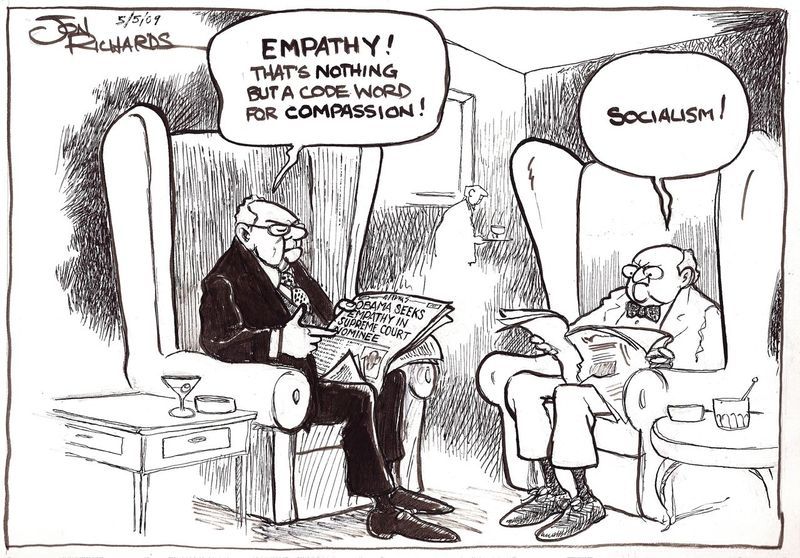
Much as empathy, the ability to see or feel other minds as equivalents of one's own, offers a solution to the problem of solipsism, it also offers a solution to the problem of selfishness in ethics. Being able to approximate the experiences of others in one's mind allows one to appreciate their experiences and thereby establish a kindred connection between Self and Other.
This is a powerful connection that can succeed where reason has failed. While it is certainly possible for one to hold fast to ethical precepts, the abstraction of these precepts cannot match the tangibility of the simulated experiences generated in an emphatic connection.
And the beautiful thing about empathy is this—it allows us to see others in terms of our own selves, thus short-circuiting the solipsistic tendency by transferring our selfness onto others so we could act (or react) as though prompted by our own experience.
This may be a simplistic way of looking at this matter, but it's a start.
Can an immutable law be, at the same time, constrained by context and dependent upon particular circumstances for its construction and application? I think so. To put it simply, a law is made real insofar as it is known and obeyed, and its construction and application is dependent on the societies (and on the particular moments in their history) that institute it and that are governed by it. Yet the same law may have the gravity and the force of an immutable law.
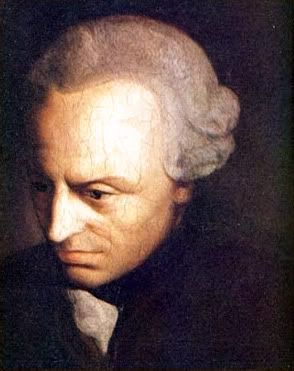
But it is not my intention here to discuss the metaphysical implications of this line of reasoning. Instead, I want to take a brief look at a pillar of Kantian ethics, which is the notion of autonomous will. As my memory of Kant's first two Critiques is sketchy, I am indebted to the SEP in writing this quick recap of Kant's moral philosophy.
Unlike the utilitarians and many other ethical systems, Kantian ethics holds that moral law is constituted not by instrumental principles that rational agents must adhere to in order to attain some form of ultimate good. Rather, moral law is founded upon the categorical imperative, which is a non-instrumental principle and which is not predicated on the existence of an abstract notion of ultimate good.
Nor is morality the product of our physiology. Unlike the central principle of, for example, an ethic that is based on empathy for others, the categorical imperative does not command us to act by virtue of what we feel (although emotions may play an important part in motivating us)—it commands us unconditionally.
Hence, we have a duty to obey the categorical imperative. But not all duties are absolutely binding—the law of the land, for example, is only binding insofar as we fall under its jurisdiction, a status we can often opt out of by leaving. The duty to obey the categorical imperative is, on the other hand, absolute because it is binding for all rational agents who are by definition "capable of guiding their own behaviour on the basis of directives, principles and laws of rationality". And we cannot opt out of our membership in the category of rational agents.
We can therefore see the connection between the categorical imperative and our status as rational agents. But the notion of autonomous will has not yet entered the picture. What role does it play in Kantian ethics? We are tempted to assume that rational agents possess autonomous will, which is a point that Kant does argue for. But how does he do so? And how is this important to the categorical imperative?
As rational agents, human beings possess rational wills, which is a will that "operates by responding to reasons". Hence, for it to be rational, it should not be entirely constrained in its operation by, for example, "being determined through the operation of natural laws, such as those of biology or psychology". To some, this might seem like an attempt to divorce reason from our biological make up, which they would regard as labouring in vain under the idealist illusion. However, Kant does not seem to go so far. He argues only that what is necessary for a will to exercise itself freely is "the Idea of its freedom", holding that having free will means not strictly operating under the constraints of immediate practical considerations when "trying to decide what to do" and "what to hold oneself and others responsible for". In other words, as I understand it, we can be said to have free will because in our practical endeavours we are capable of engaging in "self-directed rational behaviour and to adopt and pursue our own ends"; we are capable of making choices and not just of doing as the physical or material circumstances dictate.
Thus, Kant asserts that rational wills are also necessarily autonomous wills. And the significance in his ethics of the autonomy of a rational will can be found in the Kingdom of Ends and humanity formulations of the categorical imperative. Under the Kingdom of Ends formulation, a will that regards itself as a member of the category of rational wills must "regard itself as enacting laws binding to all rational wills" and thereby as a member of a “systematic union of different rational beings under common laws”—a “Kingdom of Ends” whose members "equally possesses this status as legislator of universal laws". Hence, not only must we acknowledge other people as fellow rational, autonomous beings, we must also recognise that they possess the same responsibilities as we do because they are similarly, in their capacity as rational and autonomous beings, capable of enacting universal moral laws. This is a strong basis for the concept of human dignity, a concept that is articulated in the Humanity formulation of the categorical imperative, which demands that we treat others' humanity not as a mere means to our own ends but as an end in itself.
What this means, in plain language, is that we must respect fellow human beings as equals who, like us, possess a significant basic level of dignity. This is a law that should appear immutable to us as both its legislators and its subjects; it should not be modified depending on who we're talking about or on the prevailing circumstances. Even those who are guilty of heinous crimes retain their humanity and therefore their human dignity, and the punishment meted out to them should not fail to recognise this.
All this might seem quite obvious when we think about it, but when we feel antipathy towards others for the smallest of reasons, we clearly need to remind ourselves why we shouldn't our feelings cloud our reason.
On the relative unimportance of the relativity of truth
Posted by
moses
@
18:02
ethics,
philosophy,
politics,
society
0
comments
I wonder how often the pronouncement that "It's all relative anyway" is accompanied by the knowledge of why exactly that is so. Perhaps utterance without precise understanding is somewhat apt within a relativist paradigm. In any case, it would certainly be apt to draw upon one philosophical tradition, which grounds beliefs on a particular theoretical basis, in order to explain and mitigate the notion that truth is relative. Hence, I want to look at structuralism and its take on the crisis of foundationalism.
The structuralist critique of foundationalism and the metaphysics of presence revolves around the arbitrariness of the link between the signifier and the signified. Essentially, it denies that inherent ideas or mental states accompany the utterance of words such as to supply the words with fixed and unmistakeable meanings. The arbitrary nature of the signifier/signified connection, however, does not imply that individuals simply decide what they mean when they say something. Meanings are decided, subject to perpetual change, through the relations of words with one another, governed by principles that constitute a language (by which I mean langue or a system of signification) and that are beyond the simple agency of individuals.
The implication is that truth claims are problematic insofar as the instability and arbitrariness of meaning make the communication of claims about objective or universal truths impossible—meanings and the truths they are supposed to convey do not necessarily translate from language to language or, depending on which philosopher you are reading, between communities that speak different languages based on the respective forms of life that characterise them. And if thought is a form of internal communication insofar as it is constructed linguistically, then it seems to follow that it is impossible to apprehend objective truths that must by nature correspond perfectly in the minds of all individuals.
Thus, there appears to be two aspects to the problem, one communicative and the other epistemological. In downplaying the practical implications of relativism, I will focus on the communicative aspect as it seems more directly applicable to our everyday lives. This seems, at any rate, appropriate in view of the linguistic orientation of the structuralist critique. Moreover, communication that is not crippled by relativism may help address the epistemological dimension to the problem, so it might be useful to deal with the communicative aspect first.
What indications are there that meanings are not hopelessly relative and mutually unintelligible when we communicate with each other? For one, there is the interesting fact that individuals who may be regarded as belonging to different communities are capable of being ‘on the same page’ while communicating to each other, even when they are making truth claims. This may be attributed on a broader level to experiences that are common to all human beings, which may, for example, make certain ethical propositions more or less universally acceptable. Even if we were to narrow down the scope of our analysis, we would find that shared experiences that constitute what is called ‘intersubjectivity’ do not permit us to neatly categorise people into distinct communities that draw on exclusive pools of meanings. We often share experiences with one another and thereby establish common grounds of shared meanings that cut across all divisions that traditionally delineate communities.
As part of our daily experience, communication in turn helps us find and perpetuate such common grounds. The act of communicating the structuralist critique of foundationalism itself presupposes shared meanings that are communicated in an effort to create a larger common ground with a potentially vast group of individuals from a range of different communities. Hence, intersubjectivity is arguably an inevitable outcome of communication.
This suggests that even if the epistemological side of the problem proves intractable, even if we can never really know whether objective truths exist, we can get by pretty well without being mutually unintelligible to an extent that cripples communication. And part of our process of getting by would undoubtedly involve having beliefs in ‘objective’ truths that we share with others who are able to empathise with the reasons for those beliefs.
Furthermore, communication can help us to come to know more about objective truths through processes of discourse, as theorists of communicative rationality might argue. In this sense, as I have mentioned earlier, the communicative aspect may be said to precede the epistemological.
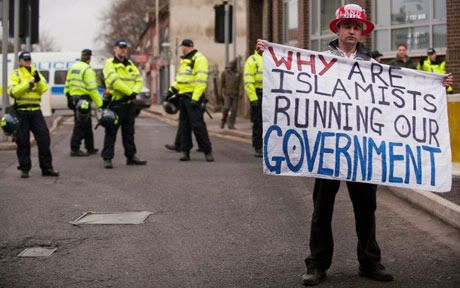
Most importantly, however, the fact that we are able to communicate with a diverse range of individuals from different communities means that the relativity of truth, whether it is itself objectively true, is almost irrelevant to our daily practices in a modern liberal society. And in times when the notion of multiculturalism is under sustained attack, it reminds us that there is likely no water-tight philosophical reason for not being able to coexist and communicate with each other.
A systematic defense of Wikileaks
Posted by
moses
@
11:45
ethics,
ideology,
media,
politics
0
comments
Having had a few garbled conversations with people where I've had to play the solitary role of a Wikileaks apologist, I'd like to do this systematically. (On a side note, who would have thought that it's Wikileaks that needs to have apologists, not the powerful organisations whose much more serious wrongdoings the former tries to uncover. This shows just how powerful ideology is in getting even ordinary people, who have little to nothing invested in it, to support the cause of governments and corporations.)
Let me begin with a very simple one-sentence argument, which I will expand on: The problem with secrets is that we cannot know and therefore make an informed judgement on them. Thus, people who are condemning Wikileaks for leaking out some 'inappropriate' information have the logic backwards, so to speak. You only know some things were inappropriate for release and are therefore condemning Wikileaks because they have been released.
Secrets, therefore, present a particularly tricky ethical problem because by definition they cannot be known, thus defying any attempt at rational analysis by which a sound ethical position can be arrived at. You cannot make an informed judgement on things that are secret, the knowledge of which is not available to you. Strange how this almost Mosaic principle in neo-classical economics is so often ignored in the neo-liberal world, for all its talk about free markets and the ubiquity of utilitarian decision making processes, which stress the ability to make informed judgements in order to maximise utility.
So you can rail against Wikileaks, but it doesn't seem to make much sense to be fundamentally opposed to its modus operandi as long as you are relying on the knowledge of the content of what it released. Also, asking Wikileaks to filter the information it gets before going public is to ask it to be yet another gatekeeper for information that only a select few can know, which seems to contradict its very raison d'être.
To reinforce this point and illustrate it in simple practical terms, let's take a look at the essential argument that the consequentialist stance entails:
Wikileaks leaked the diplomatic cables. Having seen them, I am capable of deciding for myself whether some cables should not have been made public. Therefore, I think Wikileaks was wrong to release some of them.
The second premise sits uncomfortably with an objection to the leaking of the information, which is after all being used to arrive at the conclusion. Thus, it would have to be removed in order to be consistent, which would necessitate a modification of the argument:
Wikileaks leaked the diplomatic cables. Therefore, Wikileaks is wrong.
Clearly, the argument becomes arbitrary. At best, it is inadequate—some premises and assumptions have to be filled in to make any sense of it. One way of doing so is to add "The authorities say that Wikileaks is wrong to do so" between the two sentences, thereby grounding one's ethical stance simply on what the authorities say.
Alternatively, one could acknowledge that basing one's opposition on a consequentialist argument (essentially, that leaking the cables is 'not a good thing to do') is unworkable, instead opposing Wikileaks' action on deontological grounds for 'not being the right thing to do' in principle. This position would then require a further argument regarding the ethical principles that Wikileaks have violated through the act of leaking the cables.
However, from I've seen so far, arguments to that effect seem to rely on treating public officials as private individuals who must be afforded privacy in their correspondence to each other through diplomatic channels. This argument is absurd because as long as public officials are using official channels to communicate to each other, they are performing roles on a public capacity. Therefore, the concept of privacy does not apply to them in such instances. Privacy applies to private individuals, and, as things stand, it may not even apply to the more public aspects of private individuals' lives, such as on the internet and at work. Confidentiality would be the more appropriate concept to use in this case, and it is governed by a different set of principles altogether.
Evidently, there is much work to be done disentangling some of the basic concepts and ideas involved in taking a stance on the Wikileaks issue. Being aware of the fundamental problem with secrets, I can nevertheless imagine that there are indeed certain situations where absolute transparency is not viable, especially where it directly endangers lives. However, in order to formulate rational beliefs about issues of public information, we first need to know what concepts to apply, where not to apply them and what principles may accordingly be invoked. This is what should be discussed out there in the public sphere, but I guess there won't be a slot on prime time programming as long as the public is preoccupied with blind furore over the leaks.
I'm going back to the start
Posted by
moses
@
06:29
ethics,
life,
personal,
philosophy
0
comments
What might seem like simple things can indeed unravel the whole.
I don't even need to look elsewhere. I just need to look inwards. At the end of another pointless day doing mundane work for an exploitatively small wage, I feel little.
But I can blame the world for that, talk about how stupidly work is organised in this society, how for the sake of a few lines in our résumés we force ourselves to seek 'work experiences' that, in reality, teach us almost nothing.
However, there is something else I can't push away in self-pity—something that might seem much simpler on the face of it, but that might mean a lot to someone else. Something that ultimately means a lot to me as well.
At the end of another pointless day, after an errand done "on the way home" that sent me in a different direction from home, I was wishing that things were better. That was when a woman fell onto her hands and knees on the side of the path just in front of me, without a sound. I even looked. She looked like she might be ill.
And I didn't know what to do, so I walked on as though I was afraid of doing something about it. People walked past. I turned back to look after a short while, but I didn't stop. Perhaps I was hoping that she had gotten up on her own. She hadn't.
At first, after I left the scene, it bothered me a little and I thought to treat it as a lesson learned. "Next time, be sure to offer help when something like this happens."
But I couldn't think of why I couldn't have done that earlier.
Then I thought to myself, "Well, if you're going to be ruthless to get ahead in this world, maybe you shouldn't let this bother you. It was probably nothing serious anyway."
Unfortunately, I couldn't buy that thought for more than a few seconds. It occurred to me that, having walked past, I was no different from the others around me at that time. I am the same. I am the most Singaporean of Singaporeans.
This was like poison in my mind. I realised that I am not different, that I can't look past myself. I feel little. Too little to offer even the simplest of help in a little situation.
What have I got to be proud of? I have lived for a good while and I have failed to really learn anything worthwhile. I realised that, because of this, I can't be anything.
And perhaps that is my real problem—today has proven that, after more than twenty years, I have done nothing.
The Death of Danton
Posted by
moses
@
17:31
ethics,
nationalism,
Singapore,
society,
United States
0
comments
Every year on Armistice Day and V-Day Europe remembers the dangers of nationalism—at least one would hope. In contrast, I don't think too many people in Asia are attuned to it. Maybe not enough of us have died tragically in its name?
Certainly, between violent squabbles about the ruins of a temple and lengthy periods of compulsory military service, a cacophony of nationalist sentiments permeates Southeast Asia. And few seem to stop and ask: Why does it matter?
Indeed, why? I'm sure we've all heard John F. Kennedy's famous line, "Ask not what your country can do for you—ask what you can do for the country". I think that should be reformulated, and not as a statement but as a question: What does your country even mean to you?
In truth, for many people, I can think of very little. Sure, your country gives you a sense of identity as the place you were born in, where you perhaps live and have the right to be. But you pay your taxes, don't you? As productive or at least honest members of society, you are paying your dues to the community as a member. You are participating in the community.
Yes, everyone stands to lose if the country is weak and vulnerable, but up to what point are concerns about security still reasonable? When does it start to resemble paranoia?
The leaders know that simple pragmatism alone wouldn't commit people to readily pledge their service to the country, at least not to the extent that they're hoping for. That's why they come up with nationalistic propaganda. Their hope is that some sort of love for and sense of responsibility to the country would be instilled in you. The blinder you are as a follower the better. When they need martyrs, they know where to look.
So why do we play along? What is it that the country gives us in exchange? We know why the politicians hold office and why the government is in power. They give their service in exchange for power and position. I can perhaps understand the American sentiment that the country is the defender of their liberties. But especially in places like Singapore, where you're always simply asked to go the extra mile for the 'greater good', so that the country can be competitive, what's in it for you?
Do you think the country takes care of you? In the age of globalisation, where the welfare state is deemed inefficient, the country can no longer make the promises it used to make. Will you have jobs? Will you be able to earn a decent living? Will you have enough funds to retire comfortably? The paradigm of the neo-liberal state gives no clear answers to such questions. You are essentially on your own. The role of the state is to leave you free to do what you want, provided you have the means to do it. Batteries not included, of course.
Even then, in some countries you're not actually free to do a great number of relatively harmless things, like buying chewing gum.
And so, as I've said some time ago, is there any real meaning to nationalism today? How is it that they are asking you to love something selflessly in a world of self-love? If you love yourself, you will find the means to live. That is the living ethic of today. Can loving your country provide an alternative?
It's funny that years ago I had a pragmatic attitude towards nationalism, seeing it as necessarily existent and even necessary. Young minds are impressionable, I suppose. And that's when it's most dangerous. If the leaders want to fight a great war, they need the young to be on board.
A mutinous army results in a dead Tsar. Do we want to give him the power with which he could kill us instead?
For a eudaimonic society
Posted by
moses
@
03:20
ethics,
eudaimonia,
philosophy,
politics,
Singapore,
socialism
0
comments
What does it mean to live the good life?
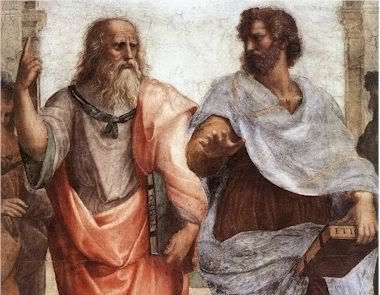
That is Aristotle's question. It's also one that we would do well to think about in this day and age. Does it merely translate to pleasure-seeking, a vulgarised Epicurean way of life, or a crude Utilitarian one based on the consumption of material goods? Looking at how many people view life and its rewards today, those do seem to be very popular views.
Well, I won't be preaching about the good life here. I will merely borrow Aristotle's concept of the eudaimon life—meaning a fulfilling or flourishing life—because I think it's very appealing. Basically, it's a life in which one seeks to realise one's potential as fully as possible.
What I will instead talk about is how the eudaimon life figures in politics. After all, a coherent ethical system has to integrate the private with the public or the individual with the social and political.
I think it's a great weakness of the modern (and here I mean liberal) political system that it doesn't tackle this question. At most, it only goes as far as to praise freedom or autonomy and encourage the means that are necessary to ensure it, such as political participation. Of course, governments often do promote the concepts of a harmonious society, healthy living and etcetera, but these are a matter of policy rather than integral aspects of a coherent philosophy.
The problem comes where, instead of enabling a pluralism of perspectives that the prizing of autonomy warrants, modern political philosophy merely ends up looking away while a dominant ideology monopolises the people's consciousness.
And that ideology can do so because people have material needs, which it has been able to dictate, both through their provision and through the creation of new ones. In other words, with a pervasive market system based on the valuation of most aspects of life through currency, it has been able to dictate people's way of life. It has also been able to create a false consciousness, which I take to mean the creation of endless wants and needs that it and only it can fulfil.
It's no wonder that many view life as a long road of hard (or not so hard) work that promises to reward them with comforts and luxury. And in such a society, money (and I don't mean just hard currency), as the universal medium, becomes paramount. Everyone becomes, often involuntarily, money-minded.
That is quite contrary to the eudaimon life. What the latter seeks is not material wealth, but wealth of character and being. It teaches moderation and encourages the pursuit of excellence. It seeks a balance between the material, social and spiritual.
But only if people are released from the shackles of material domination and false consciousness would they be truly free to pursue such a way of life.
And this is why I think the eudaimon life is related to and forms a moral structure for a socialist society. Far from being an egalitarian hell, socialism seeks to collapse the structures of material domination, to put the fruits of labour in the hands of those who laboured for them so that they may live their lives to the full. It does not stand for authoritarianism and collectivism. It stands for freedom in more aspects life than just the political.
Now, on a final note, does a political philosophy that seeks the fulfilling of one's potential imply support for a meritocratic system? This is something that needs more time to be considered. But if I were to hazard a guess I'd say no, in the sense that if meritocracy gives license for material domination by the meritorious, then it would be contrary to the spirit of a eudaimonic society.
Besides, we need to be careful when we talk about meritocracy. Without a level playing field and true quality of opportunity, true meritocracy is not possible. We need to distinguish between true and idealistic meritocracy and pragmatic meritocracy, the latter which Singapore (for example) subscribes to. Which do we mean?
Pragmatic meritocracy does not make a clear distinction between those who have the odds stacked against them and those who were born lucky. And our sense of fairness, which is apparently corroborated by neuroscientific evidence, should prevent us from buying into it.
The veiled truth
Posted by
moses
@
21:28
ethics,
France,
philosophy,
politics,
religion,
society
0
comments
What I'm going to talk about this time is certainly a controversial topic. And I think must state clearly that this is my opinion. I don't like saying that because I don't like how opinions are commonly regarded (i.e. as either equally right or equally wrong). But as I cannot claim to have a very informed opinion on this matter, it's better to be humble when there's reason to be, isn't it?
Recently, France has moved towards partially banning the burqa in public places. Of course this has provoked both outrage and approval, often across traditional political lines. I'm not exactly going to take a side on this issue, since my own position straddles both sides of the debate somewhat. I think that this is not a good move, especially with how it has been portrayed by its proponents—I'm not a fan of European views on foreign cultures and integration. However, I don't agree with those who say that this is a clear violation of the freedom of conscience as I disagree that the veil is Islamic.
And I say that because I have a generally positive view of Islam, which can be more progressive than Christianity in issues of social justice (as the Christian conservative majority seeks to prove daily). The notion of an Islamic veil, therefore, sits uncomfortably with me.
Ultimately, the argument boils down to whether hadiths should be seen as binding and what implications this has on one's faith and devotion. In the article, an imam answers the former in the negative, stating there is nothing in the Quran that directs women to cover their faces. And I agree with him. I think that Islam is primarily based on the Quran and that hadiths, as a secondary source on the words and deeds of the Prophet, are a matter of tradition. Thus, I don't think they can be binding, and they should certainly not reflect on the strength of one's faith and devotion.
However, as a more detailed treatment of Islamic doctrine is beyond my ability, I shall offer a logical and ethical argument for this view. There are, I'm sure, many practices based on religious traditions that are uncontroversially disallowed in modern societies. Female genital mutilation is one good example. Of course, not all of them are based on such an old and supposedly weighty set of traditions. But if an ancient and important religious authority did prescribe the practice of female genital mutilation, does that make it more acceptable? (Of course, this question presumes at least some degree of moral realism; I am assuming that we don't think something is right just because people think that it is, or that moral statements merely reflect our emotions)
I also find it disturbing that people are using the notion of freedom to support repressive ideas and practices. Is the veil even really worn for the purposes of modesty today? Cultural norms have changed, and I think the only reason why the veil remains in a lot of places is the patriarchal traditions that some Muslims subscribe to. Besides, if it is about modesty, why do men not wear it as well?
The only good thing that I've heard about it (found here) is that it potentially renders the issue of female looks irrelevant to career prospects in jobs that don't technically require good looks. However, communities that place great importance on it also don't tend to value women's education and work as much as men's. That certainly has implications on the notion that it serves as a gender equaliser.
And as with any other issue, to shout about freedom in arguing for the acceptance of repressive things is inherently contradictory. The logical conclusion of such a view would be akin to the extreme libertarian view, as espoused by Robert Nozick, that someone is free to sell him/herself into slavery. The contradiction in such a line of thinking should be clear, and if we subscribe to the notion of fundamental rights we cannot at the same time think that people can give them up. If that is the case, they wouldn't be 'fundamental'; the argument is thus self-defeating.
Hence, also noting that the ban is after all only partial, I disagree with a lot of the criticisms of this move. But, having said that, I do think that it is misguided in the way it has been conceived and recommended. Even if equality is to be merely paid lip-service, the legislation shouldn't have been expressly aimed at Muslims. Otherwise, it sends a message that xenophobia plays a part in the decision. And if you like to think in slippery slopes, you can imagine what sort of precedent this might set on the issue of integration.