Padd Solutions

Converted by Falcon Hive

Showing posts with label adulthood. Show all posts

I keep coming back to David Brooks' article on finding a job because I'm quite fascinated by its message. When I first read it last spring, my first reaction was to be indignant. I was still working towards my degree and feeling secure in school. I still had a little confidence that if I did well, it wouldn't be a problem finding a rewarding job that I am passionate about.

Six months after graduating, and having indeed done well in school, I have lost all that confidence as I continue to look for paid and fulfilling work (I have done unpaid work in the meantime, so I'm not just being lazy). I find myself applying to a variety of positions just so that I can pay my own rent and gain any professional experience that will be useful later.

So was Brooks right? Is it a matter of applying yourself to whatever opportunity comes up and not of finding the opportunities you want? In a practical sense, he is certainly right. Do most young job seekers have any other choice in these times?

But, inside, I'm still resistant to his message. There is something I fundamentally disagree with, and it's not just because I'm being naive and idealistic. Yet I could never put my finger on what. Until now.

Imagine a society where a typical adult has prosthetic limbs. It’s normal to have them and they are seen as an important part of what it means to be an adult and a full-fledged member of this society. These prosthetic limbs are advanced enough that they don't hinder people's day-to-day functioning. In fact, they perform better compared to natural limbs, which is originally why people do this. The only price you have to pay is the relatively small cost of the operation and the moderate amount of temporary physical pain associated with the process. To some young people, this procedure might seem a little frightening. They might express their reservations about it and they might even try to negotiate a way out. But the adults who have gone through the procedure pooh-pooh these feelings. It's just part of the process of growing up, they say; you'll get used to it.

But what these adults don't realise is the price paid in terms of the loss of your natural limbs. They have already paid that price, so they can easily forget about it. Only practical concerns enter into their calculations. Young people, however, may be aware of this price. They may like they way they are and don't like the idea of being compelled to cut off parts of themselves as part of a self-augmentation procedure.

This is essentially the problem with Brooks' message. He is arguing not only for the practicality of simply grabbing whatever opportunity comes up, but also that this is quite natural and is, in fact, good for young people because that is how they will find themselves. It doesn't seem to occur to him that who young people are before they enter the working world may hold some value that will be lost in the process.

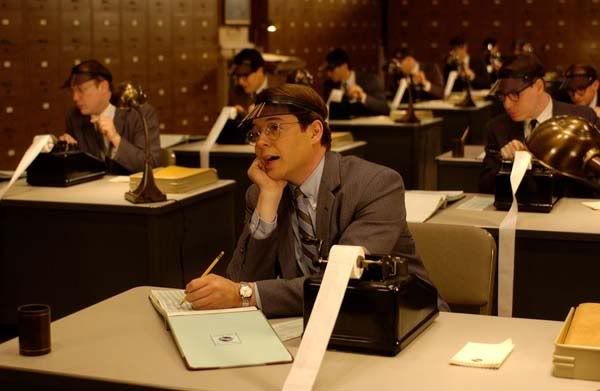
Thus, capitalist wisdom, as articulated by Brooks, holds that one's self identity cannot be complete without being shaped by one's role in the capitalist relations of production. While it's true that the latter tends to shape one's self identity, such wisdom jumps the gun by normalising this process and not recognising prior identities as being complete and worthy of holding on to. And it glosses over this uncomfortable point by assuming that youth precludes having a strong self identity in the first place, which allows it to posit the process of finding one's career as incontrovertibly and necessarily part of the process of 'growing up' and becoming a fully-formed human being. In other words, it tells young people to just do as the market dictates because who they are before that doesn't really matter anyway.

I dislike this message very much because, inside, I feel that who I am is important in considering what I’m going to do for a living. Even if I am presently just an inexperienced young person, I like who I am and dislike things that try to force me to become someone I am not. And I realise that the process of finding employment often entails the latter.

Besides, this is just the beginning. When I do get one of these positions, I will have to live with it every day. That’s when the person I am will begin to change, and I’m not sure if that will be for the better.
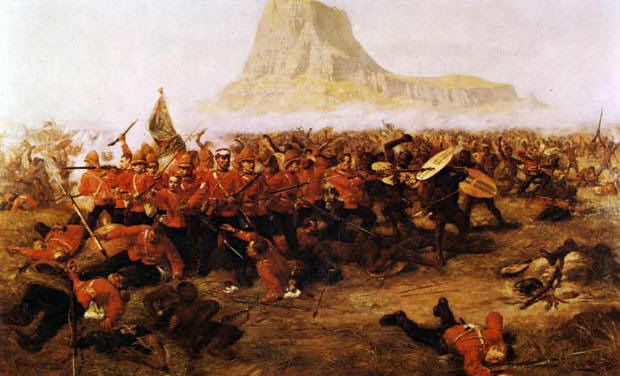
When cornered, many animals fight back. We should probably do the same. Compromise becomes impossible when there is no middle ground. The only options are capitulation and confrontation, and at times only the latter offers a chance at survival.

When people talk about confronting an issue or a problem, they sometimes mean capitulating to it. Catchphrases like "change your mindset" or "adapt to the situation" may conceal a sense of helplessness that has prompted the speaker to give up without actually admitting as much.

Indeed, surrendering may often seem the easier option. Sometimes, the world seems hostile to our ideas and our aspirations; sometimes, it defeats us. However, even if we haven't lost, it's so much easier to give up without a fight. Let the world consume us rather than resist it. After all, isn't defeat inevitable?

It's true that, chances are, going against the world will be a tough long slog. And you're often alone in that struggle. But it may be your only chance at achieving freedom when everything conspires to bind you. The more remote the possibility of compromise, the more you have to fight.

If we do choose to fight, we shouldn't expect to survive, much less to win. But perhaps, by the time we are done fighting, a path towards compromise would have opened. Or perhaps we would indeed have to surrender in the end. But you will certainly never find out for yourself if you give up from the start.

And that I think is a fitting message to think on as the new year rolls around.


What do some people ever do? They only criticise – the sort the 'can do' macho types hate. Well, unfortunately, I'm one of those annoying ones. I just can't help but be contrarian.

And this time I'm going say that contrary to the popular saying, mandatory military service or national service does not turn boys into men, at least as far as I can see. It simply keeps boys as boys.


Why is there a need for such a process in the first place? What's wrong with being a boy? Military personnel seem to approach this question from a particular angle when answering – to wean kids off their parents and make them tough and independent people.

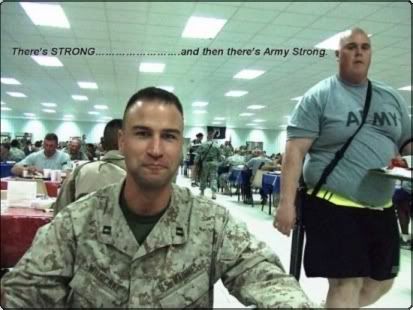
So we've established that they want to turn mummy's boy into a military man. Is it, therefore, manly to be in the military? I suspect most military people have never really bothered to ask themselves what exactly makes a man. Or maybe they have, but the answer they come up with is manifestly stupid: If you march around, follow orders and shoot guns, you're manly.

Well, I'm sorry, but brawling is manlier. There's nothing manlier than getting up close and personal when fighting, yes? But try it and you're likely to end up in jail. And which real man wants to listen to someone's stupid orders anyway? But they make it a point to ensure that you obey them. So I guess the authorities don't like real men too much.

But let's cut them some slack here. I'm sure some military people have thought this through and do come up with a much better answer: A man is a man because he's an active and independent decision-maker who is diligent enough in pursuing his goals. Essentially, he doesn't need others to tell him what to do and is capable of putting himself on track to get what he wants.

Now does military training accomplish that?

No need for others to tell him what to do? There's a common phenomenon in the army – collective stupidity. During national service training especially, intelligence is at a premium. Most of those in charge can only shout and threaten to get things (frequently just orders from above or by-the-book stuff) done. Those below them are so afraid of doing the wrong thing that their initiative drops to negligible levels and they frequently lose the use of their common sense. And then there's the chain of command. At best, if you do make your own decision, you'd better damn well be sure that it produces the right results. Otherwise, you can't hide behind the chain when the blame game starts. So in this the training is mostly a failure.

Capable of putting himself on track to get what he wants? Threats are the most significant motivator in the army. Without sufficient initiative in the process, how does anyone claim that he has put himself on track to get a desired result? I'm really not sure how the military method is supposed to teach you the necessary independence and diligence. As much as writing "I will not be late for school" 100 times on the black board teaches you punctuality, I guess. So in this the training is mostly a failure as well.

Since we can determine no part of the training that can clearly turn boys into men, what does national service actually do?

The answer is it seeks to wean boys off parental dependency by substituting it with indoctrination in ways of thinking that are actually very boyish. As I said, real men don't need some guy shouting at them to get things done. Children might, though. And real men don't have to surrender their capacity to think to a system that demands complete obedience.

Nonetheless, if you are obedient to some other authority and you've been conditioned to make your bed through threats and punishments, then maybe you really don't have to be mummy's boy anymore. So I guess it does something.

Still, it doesn't turn boys into men.

But, as some might ask, why am I spending time complaining about this? Well, I do have some decisions to make about what I want to do with my life for the next few years. So I'm off to be a man now, and you 'can do' macho types can save your ire for someone else.

Anyway, I'm sure you have some boots to clean before you fall in as per routine orders.