Padd Solutions

Converted by Falcon Hive

Showing posts with label pessimism. Show all posts

Recently, someone asked, "Do the humanities have a future?" They certainly do have a future, but I'm not optimistic it would be something that I would consider to be good.

Not everyone thinks the same way, though. In the first place, their notion of what is good for the humanities is different. Some cite the proportionately higher numbers of humanities graduates employed in management roles as a sign that the humanities are in a good place. Others reporting less stellar outlooks note that someone with a humanities degree still tends to earn more than someone without a degree, and that when the economy picks up, questions regarding the future of the humanities will die down again as graduates have a much easier time finding work.

However, these seem to be rather odd things to say where the humanities are concerned. In modern society, common wisdom has it that education and industry should function symbiotically, with schools feeding industry with the manpower and skilled personnel that it needs. But the humanities often impart a very different worldview, one where human life is far richer than simply work life; one where the goal of learning is not just to make money or to become a useful cog in the industrial machine.

If one takes the lessons from the humanities seriously, then one would be quite ill-suited for the kind of life where economic concerns are to be privileged above everything else. One would therefore be at a disadvantage in an environment driven overwhelmingly by competition for economic advancement. Thus, someone who has a bad career progression in modern industrial society, or someone who is consumed by internal conflict, seems quite a natural product of education in the humanities today.

So if the success of the humanities is to be measured by society by how well their graduates are advancing themselves economically, then I'd say that the future of the humanities is bleak indeed. How can it be otherwise, when they are made to produce what they were ideologically never supposed to produce?


Why do people celebrate the new year? It only marks the end of the holiday season; it means jumping back into the rat race that had so occupied you for most of the past year. Yes, the days can be full of excitement at times, but it's like the rush of battle—you don't want to get back to it so soon.

So will there be any new opportunities that you could not have seized this past year? Are you hoping, vainly, for something new to happen to you?

It occurs to me that it's much better to live for the day knowing that the year after next year after next, you would have lost your youth or vitality. That great year you're looking forward to? It's the year you've been looking forward to again and again, never to actually arrive. And one fine day, your life would have passed with barely a whimper.

It's funny that the brash can spout "happy new year" and "carpe diem" in the same breath, should their lonely neurons just fire accordingly. "Happy new year" is the symptom of a malaise afflicting our forward-looking society, which overlooks everything that happens in between now and that shiny imaginary future.

No, it probably won't be a happy new year unless you've had a happy year. And no, it won't be the new year that brings you happiness—if you play your cards right, it's you who will.

untitled

@ 12:33 , , , 0 comments


I don't know if this has specifically been addressed by someone before, but one dimension to the existential problem is banality of existence. There is a kind of abstract meaninglessness that people like Camus have written about, but there's also a very practical sense of the banality that most of us are, from time to time, conscious of. In short: How do we live a life where we know that the world is so full wrongs and that we are, by and large, powerless to change it?

We live our lives day to day seeking our own happiness as though it carries a deep meaning. We suffer for the most trivial things, and we are put through all kinds of absurdity in order to buy ourselves some comfort in which we can pass our days. We lose, we gain; and after time has had its way, every joy or pain loses its significance. We live in bubbles, painfully focused on the minutiae of our lives but often unaware of the larger things going on around us.

And for our entertainment, we often watch others pass the same banal lives—characters on screens or on pages looking for happiness and revelling in frivolity. Or if we seek an escape, a fantasy, we try to lose ourselves in a world where individuals have power and could shape the world around them; and sometimes this only reminds us of just how unremarkable our own existence is.

Then there's religion or faith. But all it tells us is that, yes, we're powerless, that ultimately we need to depend on a greater power. It only gives an answer to the problem by affirming it and denying that we there is anything we can do on our own.

So how do we do it? How do most of us go about living our daily lives willy-nilly? It's strange, even fascinating. 

Perhaps that is the miracle of life.


When cornered, many animals fight back. We should probably do the same. Compromise becomes impossible when there is no middle ground. The only options are capitulation and confrontation, and at times only the latter offers a chance at survival.

When people talk about confronting an issue or a problem, they sometimes mean capitulating to it. Catchphrases like "change your mindset" or "adapt to the situation" may conceal a sense of helplessness that has prompted the speaker to give up without actually admitting as much.

Indeed, surrendering may often seem the easier option. Sometimes, the world seems hostile to our ideas and our aspirations; sometimes, it defeats us. However, even if we haven't lost, it's so much easier to give up without a fight. Let the world consume us rather than resist it. After all, isn't defeat inevitable?

It's true that, chances are, going against the world will be a tough long slog. And you're often alone in that struggle. But it may be your only chance at achieving freedom when everything conspires to bind you. The more remote the possibility of compromise, the more you have to fight.

If we do choose to fight, we shouldn't expect to survive, much less to win. But perhaps, by the time we are done fighting, a path towards compromise would have opened. Or perhaps we would indeed have to surrender in the end. But you will certainly never find out for yourself if you give up from the start.

And that I think is a fitting message to think on as the new year rolls around.


Those who wish to hold on to dreams should also be prepared to give them up. One cannot be uncompromising about dreams, for dreams have power over us. They have the power to reveal our mortal limitations, unclothed by the delusions of power that flights of fancy bring. For dreams are always a few steps ahead of us—the more we are able to realise, the fancier they become. Confidence often leads to our undoing, and the moment when we see the precariousness of our situation, the potential futility of our efforts, is the moment of despondency; a moment of lifelessness and regret for failures past.

To dare to dream is to dare to give them up. Yet, on the other hand, can we do without them? As dreams give meaning to our lives, they may also take them away. Thus, it is not having dreams or giving them up that is most crucial. Most importantly, accept the passing of dreams. Old dreams die to be replaced by newer, often less exalted ones. As we age, so do our dreams decay. But still you must hold on to them, to give them up later or perhaps to even realise them. That is what we really live for—the chance, however small, to see some of our dreams realised, or to fight again another day until we breathe no longer.
Gatsby believed in the green light, the orgiastic future that year by year recedes before us. It eluded us then, but that's no matter—tomorrow we will run faster, stretch out our arms farther… And one fine morning—

So we beat on, boats against the current, borne back ceaselessly into the past.

Sometimes things just don't work out; life seems intent on proving that you are not capable enough. Sometimes you are prevented on moving to higher or better paths and endeavours. Instead, you are dragged down and forced to traverse the lower roads, to eke out a bland existence in a fundamentally alienating universe.

You may then be left with a feeling of purposelessness, a sense that things took their own turn and have left you high and dry with your wants and your plans. Perhaps you may even realise that you don't know what you want anymore.

Strangely, though, I'm not too hung up on these feelings. Well, it's not exactly strange because I think I know why. The reason, however, is strange enough—I'm not so bothered by purposelessness because I've realised that it's pointless anyway. At least when you don't have the means to control your life.

So how does it work? How can the realisation of pointlessness somehow be helpful?

Perhaps it will become clear once I explain my reasoning. The point is when you realise that there is no point, you become less insistent on fulfilling a specific purpose (as opposed to a general one, such as to be happy). You become less preoccupied with following a predetermined course. In a somewhat Schopenhauerian sense, when you realise that there is nothing but the chains that bind you to the material world, all that you can lose are the chains that bind you to self-inflicted suffering; if you desire nothing that badly, you wouldn't feel that bad about not having something.

But what do I mean by the fact that there is no point? Have we perchance arrived at the Grand Hotel Abyss?

This isn't a sigh of despair. If you've read some of my earlier entries, you might notice that I try to draw strength from weakness, zest from purposelessness. Why I reason about life is not to express a desire to give up, but to articulate a wish to go on.

As for why there is no point, I'm not going to offer a grandiose narrative about suffering. I think suffering is merely a consequence and could therefore be reduced or avoided if we focus on the right things. Instead, my reasoning is much more Marxist in character. It stems from our alienation from our own labour.

The fact is, out there, almost no one is interested in your purpose or the exact function that you desire for yourself. They say that you have to sell yourself. What this really means is you have to make you seem useful to others. And that's how you make you useful to yourself—without being made use of, you'd seldom have the means for subsistence. You serve yourself by, willingly or not, first serving the purposes of others, most likely the impersonal ends of your employers.

Thus, what is the point of being stubborn about a specific purpose of yours, especially when that doesn't mesh well with reality as it turns out? You'd only inflict physical and emotional suffering on yourself. If you can serve your own purpose while at the same time serving those of your employers, that's great. But such serendipity may be hard to come by.

This realisation that they hardly matter in society is what makes me fairly indifferent to personal milestones and sense of direction. If no one else cares, why should you care? It's your choice: You can choose to be exacting and suffer, or you can choose to shrug them off as inconsequential.

A personal kind of purposelessness, therefore, turns out to be good. But to take it further you need to turn it into the ability to adapt, something that I'm still trying to learn. Basically, if I don't have anything that I badly want to be, I can be anything that people want me to be.

And therein lies power, the flowering of your potential to actually take control.


What has kept me going with a smile is philosophy.

In the face of the unknown, I find joy in discovering that the absurd man might be superman or overman. Vanity? No, reality.

And, in a way, I find myself agreeing the Hegelian sentiment here—while religion might have been the opium, philosophy offers the vision.

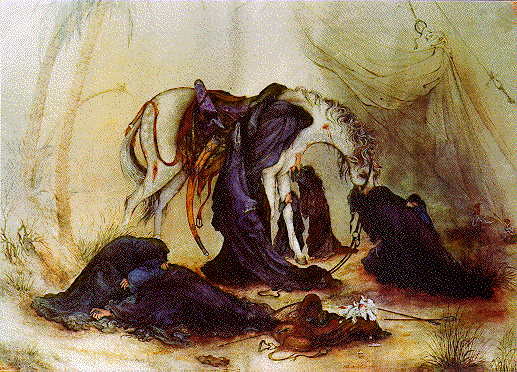
Let me explain what I mean. It begins like a story, "zeer-e gonbad'e kabood", or under the dark sky, as the Persian Shia tradition goes. One day, we wake up to discover that the world is an impersonal place. We find that it is unfamiliar to our reason and hostile to our plans. This is the moment of the absurd, as Camus describes it, the moment when we realise that our selves are subject to a universe whose laws are indifferent to our thoughts. We know then an irresistible force, but it isn't a living one; it does not know us. "Yeki-bood; yeki-nabood"—there was one, and there was no one.


But let us break away from lyricism. While Habermas, perhaps echoing Kierkegaard but from a less fatalistic perspective, says that secular reason is somewhat lost and "unenlightened about itself", Camus contends that the absurd man lives with the imperfection of reason and does not leap into what he considers the irrational—blind faith, or the obliteration of reason. The former, however, would reply that the banner of reason has only led, ironically, to a naive faith in science.

It's hard to say who's right. Yet I think Habermas has merely arrived at epistemic circularity, the practical fact that we need faith in our basic ways of perceiving and reasoning to make any sense of the world; he is probably also saying that reason doesn't tell us why we should have faith in those. And the absurd is more than admitting and living with these 'deficiencies'. It is the knowledge that what matters to each of us most in this world, the subjective self, does not square with the objective world.

This is the reality that I was talking about, a reality where the subjective individual is alienated and dominated by the objective. We live in a world that is, in truth, very far from enlightenment; and this gulf will remain as long as we live or die by the grace of money.

That is the reality that needs lyricism. But, above all, it needs thought.

And so we tune in again. Julian Young writes in Nietzsche's Philosophy of Art that nausea, the reaction to the absurd existence, is almost a dignified condition. Down this path, he sees Nietzsche's overman as the world-affirming man, one who is willing to go through each and every experience in his life over and over, who regrets nothing. "Yes", the overman says, "the world is a hostile place—and so what?"

Is the overman, then, the absurd man? Have we been looking at the man in the red cape and never thought to look at any person that we might pass by in the street?

This perhaps is key: in the affirming of a harsh reality, the subjective self reveals its strength and is affirmed. While in the most agonising moments, we like critical patients might need some morphine to go on, it would not solve the problem of existence. In times, I imagine, when even your faith abandons you, you choose to live or die; and in choosing the former, what we always know as the human spirit refuses to submit itself to be obliterated.

The lyricism and the introspection, then, are not vanities. They remind us of the problem of existence. They might be our lifeblood when we lie wounded.

And in the spirit of storytelling and reflection, I've realised something else: the mourning Mother Courage, the mother of slain children who is able to stop clinging to her wares to go on is the tragic heroine of the working class.

In the end, revolutionaries might be the sons of a better age, but they should not forget themselveslest they forget to pass over a petty careless existence.

As you get older, you tend to find yourself looking back more and more.


When you're young, chances are you couldn't wait to grow up because you wanted to do things you couldn't do as a child. But as we get older, I think many of us find that we want to go back, half-wishing that somehow we could reverse time, perhaps dreaming that we could change some things about the past.

Is life doomed to be full of nostalgia and regret?

Well, I think nostalgia can be a kind of recreation, so it's not really a bad thing. Regret, however, is much more difficult to judge. I won't say that we should never have regrets, because some things are worth regrettingwithout the prospect of regret, we might do things that we would do well to regret later. But is it worthwhile to live a life full of regrets?

As I reflect on it, it becomes more apparent how different and perhaps incommensurate with others' every individual's experiences are. You would think that people with broadly similar circumstances would have broadly similar experiences, but that's not necessarily true at all. While today's mainstream philosophy often regards experience as very much an internal thing—experience is intangibly subjective and thus it is impossible for one person to fully apprehend another's experiences—most people still intuitively think of it as an external thingthere is a real world that we are obviously interacting with and is therefore what determines our experiences.

I think the truth is somewhere in between (or a configuration of both?). How you felt, thought and acted are determined both by your circumstances and how you perceived them. The past is like this or that because you are partly responsible for making it the way it is, not just through your externally-oriented decisions but also through an internally-oriented one—how you chose to see and internalise your circumstances at that time.

Indeed, how you perceive the past is also a choice. However, there is a relatively inflexible element to memory in that it is to a large extent determined by past decisions you made, which are unchangeable. If you saw your days as miserable, you're likely remember them as miserable today whether you want to or not because the decision has been made in the past to perceive and thus remember them that way.

How you feel about the past is perhaps more of a choice. But, by extension, you're still relatively unfree to choose since the memory that you are reacting to is, as I mentioned above, inflexible even in the internal (self-determined) sense. Therefore, I think regret is often an unavoidable feeling.

What can certainly be helped and what really matters is your decisions on the present and, to some extent, on the future. And as I mentioned on New Year's eve, past experiences can help by informing these decisions. So you may regret things in the past, but don't let the mistakes you regret bleed into the present, either by persisting or by negatively affecting your ability to choose how you live your life today.

Thus, the past may be there to be wept over and the future may be there to worry about, but the present is here to be lived and enjoyed.

As we get older, I think we would do well to keep that in mind.


I might sometimes be guilty of this myself, but I try hard not to be. I have very little respect for people who don't do as they say, people who don't keep their word. But, of course, at the same time, I'm not sure I like Chigurh-style honour either. I guess the choice is often between two evils. As they say, there is no such thing as a free lunch; no such thing, perhaps, as genuine kindness.

Another quip that is often repeated is "Talk is cheap". It sure is. It's much cheaper to talk about integrity than to actually practice it at the cost of giving up the advantages you get by being unprincipled. And, ironically enough, when some people are caught red-handed, they'd be full of it – they'd be full of remorse, warning others not to follow their example, reshaping themselves anew as moral leaders.

But what if they had never been caught?

On a related note, you might expect that I don't believe in things like Corporate Social Responsibility. Well, no surprises here – you'd be right on the money. Corporate Social Responsibility should have a new marketing name: Bull Fucking Shit.

By definition, corporations don't have any sense of social responsibility. Anything they do is for profit or for the bottom line. Why, a company is not an individual with a moral compass. It's a collectively profit-oriented entity composed of business people who employ workers. In fact, Adam Smith, the grandfather of capitalism himself, killed the idea of Corporate Social Responsibility centuries ago by stating that it is self interest that motivates people to work; that good arises out of selfishness by virtue of the invisible hand, which ordains that more social benefit will come out of it than loss.

Of course, today, it's all about dressing it up. The concept of the invisible hand is one of the earliest moral pretences that have been constructed to justify profit-seeking and selfishness in the consciences of people. Another example is the capitalist or conservative ethic: You 'deserve' every penny you earn and don't 'deserve' every penny you don't. In other words, poor people are generally lazy and morally bankrupt people, and that's why they are poor. Evidently, circular logic is sometimes needed to forget the nagging feeling that something isn't right.

And it's actually easy to see what is wrong, if only we'd wrest ourselves from our conditioning. When selling bread, the baker might not be concerned about feeding you, being concerned instead about getting paid. Nonetheless, the baker needs your custom and you need his bread. You exist within a community whose members are interdependent and are thus inevitably working for each other's benefit. Individualism and selfishness are the main reason why there is inequality and poverty. The invisible hand is a myth, and people, by the non-principle of selfishness, go on to create systems that seek to maximise their respective individual benefits even at a terrible price to others. Is the good of a Warren Buffet greater than the good of a hundred people without adequate health care? Is the good of one American or European greater than the good of a hundred Africans?

Therefore, all the moralising hides a serious moral lapse that was born when our imaginations took a leap of faith away from the reality of interdependence.

Speaking of morality, we can probably agree that lying is generally immoral. But is the alternative then to be honest?

Sometimes people have candid moments that betray their true interests, especially when pressed. At a recent conference, a business representative warned that more regulations against corruption would force companies to maintain profits by engaging in more corruption. In a letter to the newspaper, the Singapore National Employers Federation (ST, Sept 30) resisted calls to implement fair employment practices for women, particularly pregnant women, citing the need to maintain profits. These are moments of honesty where we can clearly see that companies are not interested in society insofar as it is not profitable to be.

Does their honesty make it better? The Singapore government argues that it is better than corrupt governments in the region because it is open about paying senior politicians astronomical salaries based on salary estimates of (overvalued) private sector executives, rather than letting them engage in backroom deals. Is it right in saying so?

I contend that being honest about it is no better. Exploitation is exploitation. Injustice is injustice. Dressing them up does not change the fundamental wrongs. The only better way is to say good things and act accordingly.

That said, on a personal level, I do appreciate people who do not mince their words. It is much less tiring to deal with even outright meanness than having to guess what people's true intentions are.

Unfortunately, if we do not engage with hypocrites, some of whom might be living around us, how many people and parties do we have left to deal with? Would we be able to do anything?

Looks like we all have to be willing accomplices in this nauseating game. Personally, I have to reserve my contempt to those who have proven themselves to be completely untrustworthy. Sometimes, or perhaps most of the time, there is no choice but to single out only the worst offenders.

Sometimes, it's hard to be optimistic about this world.


I think George Orwell has covered the general reasons very well. But there are specifics that I could get into when I speak for myself. And in light of a few recent conversations and my own reflections, I think it's good to write them down now. For my future self, if nothing else.

There's actually a dualism here. One aspect is why I write how I write, and the other is why I write at all. Even though the latter precedes the former, I find it somehow more apt to talk about the former first.

I admit one of the concerns that motivated me to think about this is the prospect of having my character read from my writing. I've said that I'm an optimist – I always come back to what I've written before, if mostly only in the form of personal reflection; I always ask myself if I still think so, because I mean it all. No doubt some things will change, and there's no shame in that. However, to prove the opposite immediately is to become a joke. On that note, how am I a positive person when most of what I write is criticism or negative things? Do I not seem like a mere malcontent, a Dostoevskyite underground man who turns to cyberspace to vent his frustrations like many other ineffectual people?

Firstly, I have a dialectical and critical viewpoint. This is a school that is rooted in Hegelian dialectics, an ultimately positive stance that looks towards an end – the unity with the Absolute. In Marxist terms, it means to hold on to the hope for a better society, rejecting the notion that we should accept the status quo as a given and as the best possible path. Critique is to dispel the myths and wrongheadedness that keep us in our alienated state, preventing us from reaching for that better, more universal state. This is why being negative about the absurd and the unjust is being positive. We reject the bad because we hope for the good.

At the same time, I'm influenced by Schopenhauer's pessimism, by the idea that there can perhaps be no end point; that life is a constant flux, a never ending struggle and a cycle of creation and destruction. It sounds almost Schumpeter, but not at all. It merely informs me that we must be prepared to witness our progress destroyed, to face constant reverses and to keep rebuilding with that hope in our minds. The cycle itself is not live-giving. We are the source of our vitality through our struggles.

Thus, I want to provoke thought. Too many of us have laid it aside, having to contend as we do with the dry and mundane struggles of everyday life. Who can think of the state of society? And what influence can we possible have? The latter is a difficult question, but there is one important truth to realise: Nothing will come of nothing. If there is no beginning, there will never be progress.

This is why I write how I write.

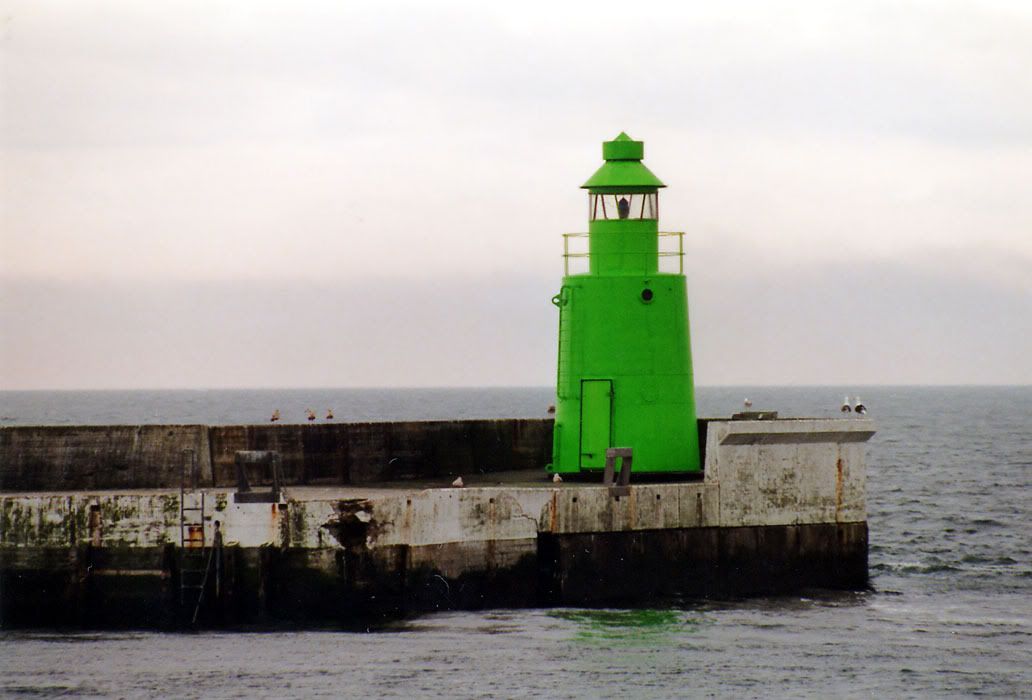
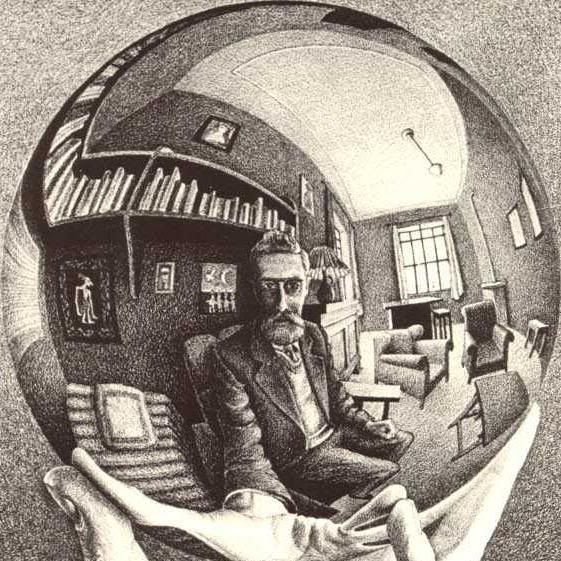
But to speak on a more artistic level, I write in themes, which can be seen from the accompanying pictures. I have already explained the philosophical basis behind my style of writing, but I'm aware that this will not overpower the quick, sharp impressions that one gets from what is seen before the eyes. It's difficult to keep recalling the deeper reasons, and as human beings we give in to the immediate sentiments. Hence, it would be good to remember that judging the author's character from the writing is never an exact science.

I would like to be more precise, though, because I think I have to be committed to what I write. I'm not writing as an artist who is merely seeking to explore certain emotions and themes. Nothing I write is not genuine. However, reading beyond what is conveyed by the text itself cannot yield conclusions with any certainty. If the theme is rebellion, the content is certainly about rebellion, but it is not necessarily about the author being such a typical rebel – and I think this example is apt, since it references my most overt attempt to provoke a rethinking of attitudes.

Hence, lest the immediate negative sentiments simply put people off, I feel that it's time to state the purpose of my writing.

The other aspect of why I write is much more mundane, but crucial nonetheless – why do I write at all?

Although writing may appear to be completely unproductive to the very practically minded, I don't think it is. It's easy to be cynical about the fact that many do the same thing, to little or no effect. However, at the very least, I find it good practice for an activity that I enjoy and may turn into something that has more tangible results in the future.

But more importantly, yes, it allows me to give voice to my feelings, which may in another perspective be called venting. This is the most personal reason of all, one for which people should rightly feel that they don't have to be concerned. I have feelings on many matters, and living in a topsy-turvy world triggers them. It's only healthy to express them rather than bottle them up. I think this is a very legitimate reason to write, for which no one should ever be faulted. 

That is very valid, and it is very personal. But, at the same time, I hope that it is able to coexist with my more public reason for writing, which gives me the impetus to continue putting effort into what I write.

I had considered giving up. As I've mentioned, there are mundane everyday struggles to contend with, which include the concern that I might be misjudged by what I write. Who knows how a potential employer, for example, might read into it? But even as I reflected on my reasons, I found a source of inspiration that helped me to be persistent.

Well, why should we let the new age of the meek smother us?


Maybe some people are just born with it, y'know – that enthusiasm that follows them wherever they go. It seems as if they're about to find a pot of gold at the next turning. Well, good for them. I think it's great. But sometimes we gotta wonder if it's true. After all some of us don't find the pill-popping sort of happiness all that worthwhile.

It's another slow day today, and with it comes too much opportunity to think. I grew up here, but increasingly I find that this place feels less and less like home. Whatever reason I have to be here seems to decay with each passing year or even month, and the result is I don't feel like I belong anywhere now.

Alienation (remember Brecht?). With such a sentiment pervading my thoughts, I find imperative to recall some things I learned over the course of the past year or so. The wonderful thing, I think, about my education is how I don't simply learn about particular subjects. In fact, I'd say that I'm neither a good philosophy student, a good politics student nor (especially) a good economics student. It's shaping up to be something like the professional toilet that is the Liberal Arts. I realise that its legacy will be how I think and how I am – and those will probably be the keys to the future.

And a great truth that I learned from many of the books I read and the lessons I had is our alienation from ourselves and our surroundings. Apt enough considering my present situation. Who are we and why are we here? These aren't questions that common wisdom devotes a lot of attention to. It is said that where there's a will there's a way. But Schopenhauer and the Buddhists taught that where there's will there's suffering. How well do we know ourselves and our purpose? And, consequently, do we act accordingly?

I will offer no other purpose here other than to be happy. Perhaps, to be more precise, to be eudaimon. What are we doing to achieve that end? Or, perhaps more pertinently, why do we do what we are doing now? Is it in accordance with our purpose? And do we really understand ourselves when we make decisions?

For that matter, I think we might never. But the first step is to recognise that we don't, to realise that we are our own worst enemy, that we have to constantly struggle against ourselves to achieve our purpose. The first step to finding our way is to realise that we're lost – as individuals and as a whole society. Our situation is expressly disconcerting. That is why I am a pessimist.

And here we return to the question of why. Knowing that we're often misguided, we must ask ourselves why we do what we do. Why do we desire this and that? Why do we work? Why do we spend? What is our reason for doing something? Is that really our purpose?

Do we really want this and that?

If people ask themselves why, they probably wouldn't be building a few more shopping malls with the same bunch of shops. They probably wouldn't be working hard to pay credit card bills for things they don't need.

Why are we letting others tell us what we want, what our purpose is? Why do we just listen to people who tell us what exactly we have to do to achieve our purpose? "Buy this and life will be perfect." As the Marxist critique suggests, why do we care so much about the exchange or the relative value of things and so little about what use we really have for them?

Maybe we find that we do want something. Then we should ask ourselves why as well. Does wanting something make us happy, or does it make us miserable? As we must sometimes not listen to others, we must sometimes not listen to ourselves. As I said, we are fighting against ourselves, struggling with our own will. Learning to let go is as important as learning to be determined.

But the good news is we don't have to renounce the world or our will. As long as we realise our purpose and constantly ask ourselves whether what we do is in accordance with it, we don't have to be constantly lost.

And, on the other hand, realising our purpose also changes how we choose to see things. The truth is nothing to celebrate about, but we don't have to crushed by it. We can nevertheless celebrate life, appreciate the things in it, big and small. We can transcend the bleak world of things by understanding it and choosing to see the good that it contains. Thus we would overcome our pitiful selves, who are slaves to the topsy-turvy world – we become Übermenschen.

The right way lies in the combination of understanding reality and celebrating what we have as per our purpose; in living in our time, understanding its fatal flaws and working towards a better future. This sounds almost like it's coming from a good Hegelian man. That is why I am optimistic.