Padd Solutions

Converted by Falcon Hive

Showing posts with label culture. Show all posts


In my previous job, I often wondered why we had to travel by air to meet clients.

On one hand, my company was very used to video conferencing. We worked with teams scattered around the globe—some in Europe, some in South Asia, and others in North America. My own team was spread across Asia-Pacific, and so were our clients. Some clients, notably tech companies, were perfectly comfortable with video calls, and we did plenty of online training to take our clients through how to use our products.

On the other hand, some clients were not, and that might mean we had to fly somewhere to have meetings, sometimes just for a few hours. And that often meant ten times the amount of time spent getting to meetings and having them versus if we had just had a video conference—and God knows how many times bigger the carbon footprint.

The company might be global and online, but a local, physical presence was sometimes demanded of it.

Fast forward to today, the world is in the grip of a pandemic. Suddenly, almost everything had to be done remotely, whether people like it or not. By now, I have had quite a lot of experience using Zoom and other video conferencing and presentation tools, and I find myself doling out advice here and there to people who are trying them out for the first time, including church groups who are moving their meetings online. Well, Jesus did say, "For where two or three gather together in My name, there am I with them." It's certainly interesting to think about Jesus lurking in the background on Zoom.

And, on that note, it's much easier to be a silent participant when you are not physically present.


Yawning or coughing during a meeting? (Photo: yanalya - www.freepik.com)

Let's face it, doing something remotely is often not as effective as being present while you're doing it—whether that means time being wasted unproductively doing everything else at home, or people simply being disengaged while having an online meeting with disembodied voices. Yes, that's the price we pay for our lack of physical presence in a purposeful environment. And, of course, it's a price we can often afford to pay if we take into account the material, environmental, psychological and health costs of having to always be in an office to get something done.

But there is a price. And in the current rush to proclaim the goodness of doing things remotely, the faddish world is rushing headlong into a different extreme.

As I go through every social media posting like everyone else these days, I'm quite amazed by the sudden explosion in the number of proud introverts. Have I just never noticed, or have introverts become very extroverted about their introversion now that they have a good excuse?

I'm an introvert too, at least according to various personality tests, but I find myself kind of sad about people using the virus as a reason to fall silent and quietly drop their participation in group activities because these activities no longer involve their physical presence. I'm probably guilty of that myself. I suppose, at the end of the day, we are sensory beings, and the lack of physical tangibility might confuse our minds and our perception.

As my past study in the philosophy of mind suggests, we learn about the world through our sensory-motor functions, and hence anything that does not engage most or all of our senses may seem less real and, as such, less important to us.



Trump knows what to do (Photo: Nicholas Kamm - Getty Images)

So what does this mean in the days of #StayHome? Doing things remotely is great, and I wish people had embraced it more willingly earlier, but it does require that we invest effort into making sure we are doing things like we would if we were physically present. It means not turning into ghosts just because we can more easily evade notice. It means not letting our introvert selves turn us into phantoms of a dark basement, whose voice can only occasionally be heard.

Make remote working great again. Shut down the borders to bad home-based habits.

(Okay, I'll stop now.)


Top image created by makyzz - www.freepik.com

O tempora, o mores!

@ 15:59 • , , • 0 comments


I was recently asked one of those questions by old people that went like this: "Is it true that young people these days are more sensitive and need to be handled gently?" My reply was that that really isn't true, or at least that's beside the point. What is true is that the younger generation today expect to be treated with respect. And, obviously, not all young people are pampered, witless kids anyway.

Certainly, the hollow and delusional pronouncements made by the dreamier ones, like the many vacuous 'Gen Y manifestos', don't do anything to help. What needs to be done is to give a proper account of the general trends in which the younger generations find themselves, and not speculate about how individual upbringing contributes to the collective character of the youth.

Complaining that young people don't have the right qualities, that they are lazy and addicted to easy living, is a recurring behaviour and tradition that dates back to ancient times. Socrates was supposed to have said, "Children nowadays are tyrants. They contradict their parents, gobble their food, and tyrannise their teachers." And such quotes from the ancients, whether or not they are verifiable, have been trotted out for centuries, suggesting that concerns about the morals and behaviour of youth are certainly not a new thing.

In this light, all the talk about the "entitled generation" seems myopic, even navel-gazing. And it overlooks the fact that the younger generations do deal with their own problems, as such perks as stable employment and certainty increasingly become a thing of the past.

What is actually happening, then, is that society seems to be getting more used to living with the idea of democratisation.  Our political and social systems are beginning to cast off the mantle of the old patriarchal, authoritarian structures, and the wide availability of information today means the elders have less of a monopoly on knowledge through their experience. This means the youth of today feel less need to be silent and quiescent before their elders and their ‘betters’. Consequently, they expect more respect from their fellow human beings and have less unquestioning respect for authority. That is why shouting at them doesn't have the effect that you were expecting.

It seems to me a positive thing if people respected each other more no matter who they are. Thus, it seems that this is something that the older generations can learn from the youth of today. Are they willing to accept this, though, or will they stick to their guns? How they react would show which generation is in fact the better one.


What is a legitimate want in our society?

Living in a materialistic society at once obsessed with survival and with accumulating wealth like Singapore, legitimate wants seem to stop at the fulfillment of one's basic material needs–one has no right to demand anything else beyond that, and what is excluded ranges from things like political freedom to self-fulfillment. Those who have the basic needs fulfilled are by definition speaking from a position of privilege and can therefore never claim to be wronged by the system.

But the fact of the matter is people want different things. Some may indeed be happy with a safe and mundane life where they just work and spend their money; others may not be. Labeling those who are not as "ungrateful" or asking them to leave is simply a demonstration of the inability to see outside of the box that you have placed your mind in.

Yes, in a society with a developed economy, all of us can be said to speak from a somewhat privileged position. Most of us are privileged in that we don't actually need to be overly concerned with our survival (despite the political scaremongering). Our issues can be described as, quite literally, 'First World problems'.

Be that as it may, the problem of having a narrow range of legitimate wants has to do the goals of national development. As long as the state ideology is predicated on the notion of development as a single-track route to economic prosperity, our state and our society would be unable to comprehend the multiplicity of human goals. And because of that, our society would continue to be keen on imposing the same goals for everyone. And this is precisely why, on one hand, people are feeling stifled and, on the other, there are retorts that label such people as "ungrateful".

So, in this light, perhaps we need to be careful in referring to issues beyond basic material needs as 'First World problems'. While it may conventionally be correct, the term is misleading at the same time, as it assumes that 'First World' is a kind of privileged position that everyone in the world aspires or must aspire to. That is manifestly untrue. Yes, it's nice to have good nutrition and an adequate wardrobe as a matter of course. But some people are willing to trade some luxury off for more fulfilling human experiences. I think this is a reasonable desire, and it cannot be dismissed by simply invoking privilege.


Positively poisonous

@ 10:37 • , • 0 comments


The ineffectual complainer is a hateful figure. But much more insidious is the ever-accepting positive person who is a force of inertia in society.

Chances are you know a few: The people who are always trying to get others to look on the bright side; who cannot accept any negativity; who may regard any criticism as unproductive by definition, professing to prefer 'action' (regardless of whether action by itself would actually change anything).

These types are insidious and even downright dangerous because they are disarmingly benign. They are also eminently lovable—certainly to the recipients of criticism, but also because they engender positive emotions in others who are taken in by their attitudes. They negate critique and actively try to get society to ignore ugly truths.

Suppose a man-made disaster happens in a society. These are the people who would advocate not pointing fingers—as was the case in the aftermath of the 2008 financial crisis. They ignore the fact that not laying any blame would likely result in similar disasters happening again in the future, due to the failure to enforce any form of accountability.

Even if these positive people are simply genuinely positive by nature, they must always be treated with a healthy dose of skepticism. It may be difficult—their positive emotions are infectious. But if they are allowed to be dominant, society's progress towards a more positive future would, ironically, be slowed.

Lies multiply

@ 15:03 • , , • 0 comments


I was asked to write a piece on a new marketing concept called the 'multiplier' as an assessment for a job. What I wrote was probably not what they were looking for. Nevertheless, my scepticism towards it is the only worthwhile thing I had to add. 

Here, I reproduce the piece in full.

---

As outlined by McCracken in a blog post, ‘multipliers' seem to not simply be a new breed of consumers but a category of people that supplants them. 'Multipliers' are not consumers in the traditional sense of the word. Creating an opposition between the two terms, McCracken contends that unlike with consumers, whose responses to products are "an end state", producers "depend on [‘multipliers’] to complete the work". 

'Multiplier', however, cannot be a good definition for today's consumer as it seems to represent an attempt at looking past something that we as consumers will probably never leave behind—the act of consumption, with all its less-than-noble implications (or, in McCracken’s words, its “mischievous and sometimes malevolent intent”). 

The idea of consumption is closely tied to the consumer-being, the Subject, and therefore also to his physical self. 'Multiplication' is orientated towards the Object, which is either a product or its value. Therefore, there are two inherent dangers in using the latter term: The first is that the term 'multiplier' objectifies the highly anthropocentric act of consumption and takes it entirely into the abstract realm of value, thereby inverting the relationship between Subject and Object; the second is that in abstracting the act of consumption, we would forget the physical and to some extent destructive nature of consumption. These problems are explained in turn below.

The Subject-orientation of consumption means that although consumers may sometimes build on a product they buy, in reality they do not ultimately do so to engage in the act of value creation. Consumers make consumption decisions according to their desires and goals. This means that even where they add value to products, they do so for their own purposes, which may or may not be to the producers’ benefit. For example, player modification of PC games for the benefit of other players is good for producers where it drives sales for the base products. Conversely, fan-made subtitles (fan subs) of Japanese animation often come with the original products for free, and thus many viewers, for whom the subs are a crucial access point to the products, need not pay for the products at all. These details would likely be lost with the term ‘multiplier’ or ‘multiplication’.

The second danger in using the term 'multiplier' is that we would risk forgetting the nature of the beast—of the physical, animalistic and often irrational impulse of consumption. 'Multiplication' makes it sound like a pure act of creation and would therefore belie the endless, insatiable and destructive striving that has come to be implied by the term 'consumption'. And thus we may forget the real costs that consumption imposes, whether or not any value was added in the process. This is not just in the context of finite resources; it is also relevant when the Object does gain mastery over the Subject, such as when the Diderot Effect (another area of McCracken’s work) takes hold and a new possession induces an avalanche of consumption.

All of these are nuances contained within the term ‘consumer’ that I do not see in the term ‘multiplier’. Making the latter the definition of today’s consumer would therefore risk sounding like a cynical marketing exercise that conveniently glosses over them. Caveat emptor.

Robotic notes

@ 18:52 • , , • 0 comments


Recently Gallup did a study that indicates Singaporeans are among the most, if not the most, emotionless or inexpressive people in the world. The reactions from some people were predictable.

Immediately there were people who contended that the survey questions are subjective, which only seems like a puerile stock response. How much interpretation is needed for questions like "Did you smile or laugh a lot yesterday?" Do Singaporeans understand words like "smile or laugh" differently? Besides, although people's perceptions of happiness or other feelings are indeed subjective, subjectivity is not the issue here—whatever people might think emotions like happiness mean, the study simply wants to know if they feel them or not.

A critique of the methodology needs to be better than that. And because the results are empirical, you can't disagree with them (the plural of your anecdote is not data, by the way). You could disagree with the interpretation of the results, but there too the critics have mostly failed to impress. This brings us to another irony in the indignant responses that seek to paint Singaporean culture as different and therefore not assessable from "subjective" 'Western' perspectives.

This group of responders seems to be asserting themselves as the voice of objectivity and of calm unemotional logic. Yet they fail to see their own hilariously inaccurate assumptions and the contradictions in their position. This is true in at least two respects:

1. "Asian Values" are a stereotypical fantasy

There are clearly some cultural differences between, say, the USA and Singapore. But simply citing "Asian values" is far from giving a good description of these differences. For one, it is widely recognised that Singaporeans are very materialistic and often egotistical in their pursuit of wealth. How does that jibe with the supposedly communal-spirited Asian Values that are now used to explain why Singaporeans are less emotionally expressive as individuals?

Popular conceptions of Asian Values are incoherent and not matched by the reality in our society. This calls into question the whole concept of a monolithic set of Asian Values itself.

2. Your government wants to retain talent, not drive them out

Many of those arguing against the study seem to be people who are patriotic and fiercely protective of Singapore's image. These are often the same people who, going by what they say, like to insist that Singapore does it better than most other places. And because of that, they tend to agree that the ruling party has done the right thing and therefore that we should all be more grateful to the government and the country instead of being critical. Don't like it? Then pack your bags and leave.

Well, that demand—that people who complain, both foreigners and citizens, should leave the country—is not one that the ruling party is making. In fact, evidence points to the contrary: They want to attract and retain talent to keep Singapore economically competitive. So for all your insistence that the government and the country are on the right track on the important things, you seem to be advocating doing something different here. What gives?

It might seem that the study implies we're a race of robotic worker bees that are emotionless or at least inexpressive. But it turns out that we're robots without a good sense of logic either. So that begs the question: What are we really good at?


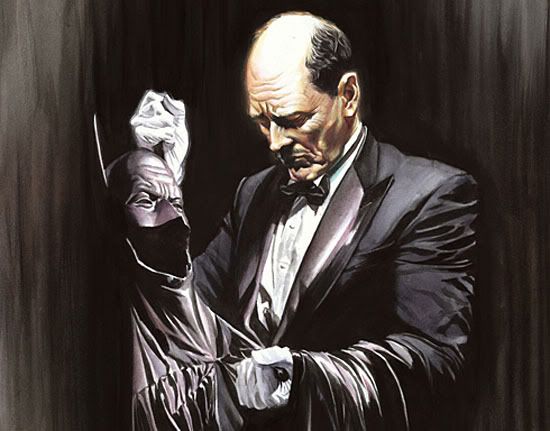
I'd finally gotten round to seeing The Dark Knight Rises last month, and, frankly, I enjoyed it. As such, although the film—like Nolan's other works—did not leave me with much of a lasting impression, I will not be too critical of it, acknowledging the film for what it is: An encapsulation of Hollywood at its flashiest.

Certainly, one may detect proto-fascist undertones in the film. The Dark Knight Rises tells us, after all, that raw violence and not money or influence is the ultimate source of power—Bruce Wayne's wealth and position may get him all his fancy gadgets, but he could not defeat Bane until he trained himself up physically and prevailed against his adversary in a slugging match.

Nevertheless, I will not go as far as to say that The Dark Knight Rises' politics are regressive or backward. For one, the film strikes me as partly an attempt to articulate a contemporary brand of political consciousness; although it does so in a traditional comic-book-hero fashion, hence the seemingly more backward elements in its symbolisms. The film's favouring of muscle power over sophisticated methods could, for example, simply be explained by the film's comic book roots.

The Batman of the Nolan films is also very much a traditional comic book hero. He is basically benevolent, despite his psychological scars and his initial motivation to seek vengeance. And he fights for a supposedly universal sense of justice while remaining outside of the political and legal systems. The latter is an especially important aspect in The Dark Knight Rises, and it has been given a contemporary twist: The legal and political system of Gotham are structurally unable to solve the city's serious crime problem, and it's thanks to the work of a vigilante hero that the city is saved—a narrative that banks heavily on today's post-crises distrust of traditional institutions.

But Batman isn't just Batman; he is also Bruce Wayne, whose wealth and technological expertise can save the world in their own right. How he uses or does not use them is bound to be interesting. And it turns out that he chooses not to use them except in aid of his role as the vigilante hero—all because of his fear that someone might misuse whatever technological marvel he came up with that could, on the other hand, have untold benefits for humankind.

Not only that, while fighting crime as Batman, the wealthy and powerful Bruce Wayne does little or nothing to transform the legal and political systems that are part of Gotham's problem. As such, Bruce Wayne/Batman stands for the contemporary reluctance to rock the boat too hard, representing our bitterness towards the capitalist/democratic system that is, at the same time, tempered by an unwillingness to cast it aside. Nolan's Batman is thus the hero of today: A benevolent but broadly non-interventionist patriarch, shaking his head at the excesses of late capitalist society but letting it go on nonetheless, only scraping at the mould on the rotting meat. If anything, the world must be "ready" for utopia before it can be given it—or, more correctly, it must ready itself, because he is too cynical to help it along.

Where radical movement and revolution are represented in the film, they are portrayed as simply a big con job perpetrated by the terrorist Bane, who is not actually interested in emancipating the people. Even then, when Bane's motives are finally revealed, the film plainly steers clear of any portrayal of ideological conflict. The origins of the war (on terror) can ultimately be attributed to family drama, a perennial bourgeois favourite of a genre since when novels were the most prevalent form of mass entertainment.

Thus, it's difficult not to see the film as reactionary, a middle class abrogation of things like the Occupy movement, or perhaps even a vision in a Tea Party reverie with Bruce Wayne standing in for the Koch brothers. However, it is probably overstating the case to say, for example, that the film advocates fascist politics or plain old feudalism. After all, I would hesitate to attribute a nefarious genius to a politically-flat director like Nolan. Instead, I would suggest that the film was primarily made to entertain and, like many other films, to make money, and that its haphazard politics are merely an accident, the result of the film being made in contemporary times.

Thinking that way certainly helped me switch off and enjoy the mindless entertainment while it lasted.

The whole controversy over Dîner en Blanc in Singapore is really a storm in a teacup; it's a trivial matter that isn't worth all the fuss that has been made about it.

But the reactions towards it are, nevertheless enlightening—they tell us quite a lot about how people think and what our society is like.

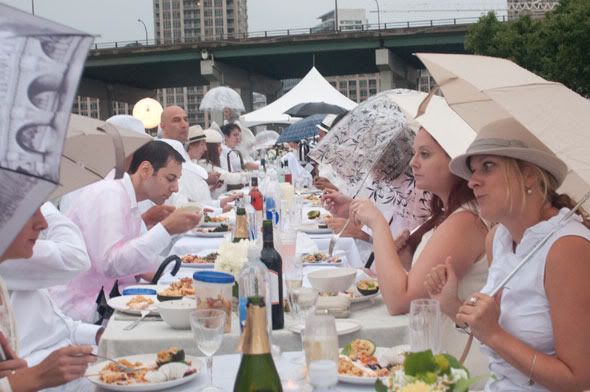
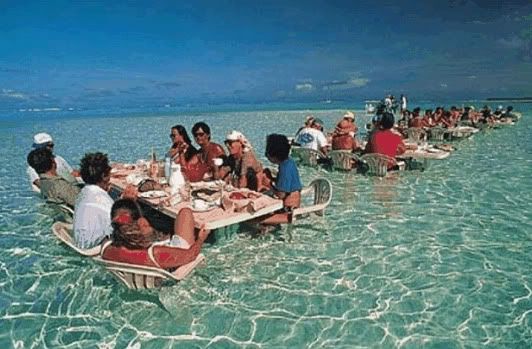
What happened is as follows: Dîner en Blanc, a pop-up, invite-only picnic is being organised in Singapore as its first Asian location. Thousands are keen to go the exclusive event, which has large groups of people dressed in white meet for an evening of 'fine dining', learning of the location of the event only from the organizers just before it occurs.

In every Dîner en Blanc event, there are strict rules that, according to the organisers, “[recall] the elegance and glamour of court society”: Guests must attend with a member of the opposite sex, men and women sit across each other in a planned arrangement, and guests must bring their own food, white tables, chairs, fine china crockery and dress only in white—in short, it's a stuffy event that makes itself out to be too good for everyone.

Along came food blogger Daniel Ang, who recommended 12 white-coloured local dishes to bring to the dinner. The blogger, an invited guest, was told by the organizers to take down his post and was then uninvited because the food he recommended was deemed unsuitable. Angered, he shot back, stating, "You can disrespect me as a blogger, and disrespect my blog posts, but you do not disrespect my culture,” adding that “Singapore local delicacies are the classiest foods ever in our hearts.”

To begin with, the indignation of the food blogger has an element of irony in it. Sure, it's annoying to be excluded, and in his position I might react the same way. But it isn't as shocking as it might seem. After all, this is an event that celebrates 'fine dining' à la "court society"—we can expect food elitism to come with the territory.

Moreover, a raison d'être of food blogs is to promote certain discerning eating habits. These may not necessarily be more exclusive than the concept of good taste itself, but by touting certain gastronomic preferences and tastes as 'good', these blogs are likely to be guilty of some measure of food elitism as well.

Further still, while 'fine dining' may arguably be all a matter of presentation and, therefore, quite an arbitrary concept, this is probably not unfamiliar territory to food bloggers. Indeed, in giving his recommendations on what local food to bring, Mr. Ang said:
Tau hway is a simple, inexpensive and elegant dessert. Jazz it up to be served on a fine China bowl, and it will look good.
Such a statement displays perfect awareness of the conventions of 'fine dining'. Perhaps the organisers' outright ban of local offerings caught him by surprise, but it's far from inconceivable—he knew what kind of business he was getting into.

Hence, the disagreement between the blogger and the organisers doesn't stem from radically differing views on food and gastronomy, but from differing views on what kinds of food fall within the category of 'fine dining'.

So it would be a mistake to see the blogger as an agent of a conflict between a gastronomic/cultural elite and the masses—he is more or less aligned with the elite; it's just that he has been excluded by a particular group of elites and is crying foul over it. His liking for food that is also consumed by the masses does not make him the face of the latter any more than Paul Ryan liking Rage Against the Machine makes him the face of the Occupy movement.

In this vein, much of the public anger over the incident is at best misplaced and at worst disingenuous. The fact that such an absurdly elitist event exists—and that many want to go to it—should have raised disdainful eyebrows from the start. Yet Singaporeans choose to be angry, and to be angry over the fact that certain local food items have been rejected by the organisers. If those items hadn't been rejected, many of them might even have felt pride that what they eat is considered 'classy' enough. So those people aren't angry about elitism; they are angry, like the blogger, over the fact that their tastes have expressly been excluded from the endorsement of an elite.

Worse, some have turned this into a matter of national pride, as though the rejection is a grave insult to the nation. The foreigners have done it again, it would seem—they have once again shown that they have no respect for local culture and customs.

If our national pride depended on the status of some food items, then it's a worthless thing indeed. But, more interestingly, this corroborates my previous observation that many people aren't actually feeling angry about what they say or think they are: In actuality, they are angry that their tastes are not considered good enough by an elite; they are angry that foreigners have come to take their jobs away and have altered the cultural landscape. Little or no part of their self-righteous outrage is really about the preposterousness of an extreme kind of food elitism that may signify an increasingly unequal society. It's really just dog whistle politics belying xenophobia and a deep-seated inferiority complex that—I would say—is the product of a highly-controlled society.

So let's be more honest about the underlying agenda here: What are we really mad about?

And the moral of the story is not that we should banish all forms of elitism; that would be impossible, especially in a 'meritocratic' society like ours. Rather, we should acknowledge that all of us practice some form of elitism, that we often like to present our tastes as good and better than others'. This will help to put things in perspective so we can reject the most egregious examples of elitism without knee-jerk reactions that only demonstrate how stupidly oblivious we are to our own positions. And that entails steering well clear of things like Dîner en Blanc, and not complaining loudly only after having been excluded.


Upon hearing that a massacre had occurred during a premiere of the latest iteration of the Batman films, some people asked, "Where was Batman?"

Perhaps the joke, all jokes are not an appropriate response to such a tragedy. But this is also a singularly powerful question. Indeed, where was—is—Batman?

Of course. He's not real. Batman is fiction. Everyone except some kids (and maybe some delusional fools) knows that. People can be expected to know the difference between reality and the superhero fiction, can't they? Well, can they?

Most people know that superheroes don't exist. But to what extent do they grasp this fact? I mean, why do people like superhero stories? The modern trend in fiction may be to humanise superheroes, to depict the conflicted and flawed hero. But they're still superheroes—they are still powerful; they can still solve the world's problems, even if they must bleed and sacrifice much in the process. Perhaps stories like Watchmen defy this convention altogether, but not the Batman films.

Christopher Nolan's Batman is a tortured hero, a hero who has to mask himself as a villain. But the audience are well aware that he is hero. And the fantasy of the mighty superhero, furthermore, is not shattered. People can expect Batman to save the world within the big screen. They want to savour—even just a shadow of it—the excitement that springs from the knowledge that a saviour is here to fight for them. Fiction melds with reality; the story is not real, but physiological reaction to it is.

That is why the massacre is semiologically powerful—a horrible crime is occurring while the superhero is 'present' on the big screen, a demonstrably flat image that interacts with the world purely as illusion. It's not even impotent; it's nothing at all. The mirage is shattered completely by the jarring reality of a tragedy unfolding simultaneously. Thus, observers may be prompted to ask, "Where was this hero?" Of course they'd known that he doesn't exist. But this incident makes them realise that anew and takes the realisation to a higher, uncanny level.

The death of the superhero, a theme that has been explored in fiction, is not as devastating to the fantasy as the real deaths of superhero fans in front of the big screen.

However, while many of us may intuit this, not everyone will realise what it means. Take, for example, this Facebook comment about the survivors:
All I can say is send them a hero Chris send the dark knight to the hospital for them, so the children know there are real heroes out there, and that evil won't win
This is exactly the kind of sentiment that should have been extinguished by this incident. Yet people want to hold on to the fantasy and, worse, to perpetuate it by instilling the same delusion in children—the notion that there is a simple fix to the big problems that can be accomplished by a few mighty and benevolent individuals.

Perhaps adults have a vested interest in raising children who are naïve and docile. Some of them had probably been raised to be that way themselves. But the use of a crutch is symptomatic of disability—this much-needed delusion reveals people's psychological inability to steer away from a petty existence waiting for salvation.

Those people have got it the wrong way around. If they did exist, superheroes would exist because people are unable to fight for themselves. Thus, instead of wishing that they did exist, we should want their existence to be unnecessary. That, not having a superhero around, would be truly empowering.

Some people have idealised views of how they can change the world or their surroundings. It's good that these people have dreams, but even if those dreams can be translated into action, it's worth asking if the action would make any real difference. If not, then it would be quite silly for them to think that they are actually doing something.

Recently, as part of their school project, a group of students in Singapore decided to reach out to foreign workers who are employed to do 'low-skilled' jobs. As a result of this outreach, the students have put up an account of the workers' daily lives and their struggle to earn in a living in a society composed mostly of people of entirely different classes from them, a society that mostly ignores their existence.

This is a wonderful attempt at raising social awareness. But, unfortunately, it stops there. I find the students' recommendations for future action particularly uninspiring. The following is what they advocate, in full:
All i want to say, is that we should really learn to appreciate and accept them as our equal. Maybe the next time we see them, we could perhaps just give them a simple smile, or even a word of thanks, to show our appreciation for what they are doing, I'm sure it would make their day. Or at the very least, the next time we see them, we can just try not to pull an ugly face or walk away.

Thank you for taking time to read this, and although every share would not get a dollar donated or anything, but every share is a step closer to a warmer, more accepting society.
It seems not a little naive and condescending to acknowledge that low-skilled foreign workers are economically marginalised while acting as though social acceptance and recognition are going to improve their lot. Yes, levels of social awareness are painfully low in Singapore such that having any is quite commendable. But, having become aware, what are you going to do about the system and the government that author such oppression?

I find the above project to be the humanitarian equivalent of "sending positive vibes" to help people who are faced with problems. It tries to engender good sentiments but does nothing in reality. While these workers may appreciate your reaching out to them, the failure to even mention political and economic solutions makes this gesture seem almost as hollow as the act of spamming of "Kony 2012" on the Internet, a recent example of slacktivism. Raising awareness becomes simply a way to soothe your own conscience when you're not prepared to ask the tough questions and talk about real measures to create change.

So stop just smiling like fools in a photo op—bare your teeth and attack injustice at its source.

Illustration by Frank Chimero

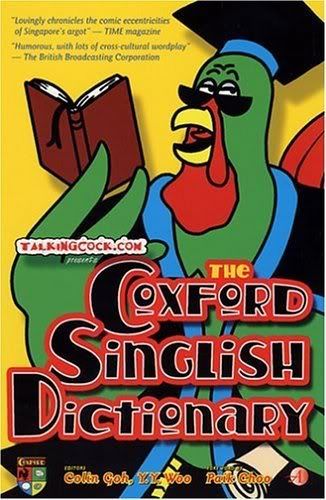
Some people may lament the lack of official recognition for Singlish. There is no definitive glossary of Singlish terms, no authoritative dictionary that people can turn to in order to reaffirm the meanings in this local variety of English that they use.

But does Singlish (as this Wiki article claims) not have its own version of the Oxford English Dictionary because the government disapproves of it? While that may be a contributing factor, it is but one that contributes to Singlish's larger 'problem'—the lack of institutionalisation. 

And that is as it should be.

But why wouldn't a Singlish dictionary be useful? It might be useful for foreigners who are visiting Singapore, as an aid for finding their way in daily conversations with locals. But for such visitors, wouldn't a short glossary do? 

If some visitors require more because they are staying for a much longer period, wouldn't it be best if they learned by being involved in local conversations? Doesn't the appeal of Singlish come from the fact that it is the lingua franca of the neighbourhood, something that is tacitly learned and that is the culmination of the different customs and culturally-specific meanings that have been thrown together in the melting pot that is Singaporean daily life?

Hence, attempts to codify Singlish and set its rules on paper are missing a crucial point—the very character of it as a creole that is woven into everyday life. Moreover, this brings up the more fundamental issue of the difference between creole and language, a difference that can tell us why the idea of a proper Singlish dictionary is at present quite nonsensical.

As mentioned earlier, meanings in creole are tacit and very much tied to users' habits rather than to formal rules. Thus, the very nature of a creole implies that its rules are institutionalised to a lesser degree compared to a language. And it is worth saying here that the politics of language is really all that separates the two, since language can hardly call itself pure either—most languages are after all derivations of others.

In that sense, there isn't really a sacred philosophical distinction between creole and language. Still, creole is, by virtue of its relatively uninstitutionalised character, closer to Wittgenstein's concept of language-games—examples of language use where actions define the meanings of words and the rules of language. In other words, the meanings of words in creole depend on how people collectively use those words (even more so than in language), in contrast to an imaginary situation where people adhere strictly to prescribed meanings when using words.

So, just as with language, the meanings of words in creole are defined by convention. The difference is, in creole, the conventions are not institutionalised to the same degree by things like authoritative dictionaries, academies and educational systems. Hence, attempts at creating creole dictionaries would not enjoy any kind of spectacular success without also being a real step towards institutionalising the rules that govern creole and thereby towards turning creole into language.

Of course, convention, being a rather 'democratic' thing, tends to come about only with the tacit agreement of the subjects—in this case the creole speakers. And this has implications not just on the meanings of words, but also on the nature of the creole itself. That is why Singlish dictionaries will, in the foreseeable future, remain mainly as humorous rather than useful material; and they will remain so until Singlish speakers tacitly agree to turn Singlish into a properly institutionalised language that is more rigid and bound by abstract rules.

What I learned

@ 08:07 • , , , , , • 0 comments


I have other topics in mind that I want to write about, but right now I'm struck by a sudden desire to recapitulate and summarise what I studied last year. Maybe it is the desire to seize something tangible before my memory of it fades. So here goes. 

The main lesson I derived from the research I did for my dissertation is that any claim that film critics have as arbiters of a non-pluralistic (in both the moral and universal senses of it) notion of good taste is undermined by the idea that taste is a means of social distinction; a means of thinking of oneself as superior or different based on vague but compelling categories of identity with which one identifies. 

This implies that taste is neither objective nor entirely subjective. While critics often try seductively to suggest the former, aesthetic 'laymen' tend to stress the latter. Rather, according to my research, taste should perhaps be described as 'intersubjective'. But, more precisely, it is constituted by hyperreal categories (such as socio-economic class) that often appear to us as objective categories.

In other words, from the perspective of theories of language, taste is an entirely practical concept in human language that has perhaps received far too much theoretical attention. It is very much rooted in our social structures and psychology and does not properly belong in the domain of the aesthetic.

I understand that aestheticians may want to think of (good) taste as the practical implication of what is good or beautiful in aesthetics. But I think that's just not the case in contemporary reality. Taste has much less to do with aesthetics than with social categories.

And as articulations of the social structures that give rise to this social phenomenon, the pieces of film criticism I examined do not even use the language of aesthetics, contradictory or hypocritical as it might often be. Tellingly, the critics do not seem to care to exhibit a grasp of aesthetics before presenting themselves as an authority on film tastes.


What is the simple life? Traditionally, it is understood as a thrifty life lived without pretensions. But what exactly does that entail? Are you thrifty as long as you don't buy yachts or mansions or don't live a jet setting lifestyle? Can you be free of pretensions even when you chase the latest trends and fashions?

Of course, the simple life, in the traditional sense of it, still exists. But in the developed part of the modern world, it is increasingly rare. In everyday life, the urge to consume—to spend and to be wealthy enough to spend—is overwhelming. Through constant exposure to various media whose function is to encourage consumption, we have been conditioned to desire and even need extensive material comforts.

Consumption is also about status and a social-psychological need to earn one's place in modern society. Simply being able to consume and being 'sophisticated' enough to know how to consume confers upon us identities that are compatible with the self image of modern society. And what falls outside of the latter is at best unconventional.

Thus, society exerts a pressure on individuals to conform to a consumerist lifestyle, and this pressure increases as more and more people embrace that way of life. Mass exerts its own gravity; popularity may well correlate with conformity.

One result of this trend is the engendering of a pervasive inertia among the expanding middle class—we have become much more productive over the past century, but most of our time and energy goes into the furious cycle of production and consumption, leaving us perpetually exhausted and, in our spare time, desiring only to enjoy the material comforts that our labours have bought. So despite the great degree of empowerment that human beings have enjoyed over the past century, most of us remain content to let the world take shape around us, to let the powerful and influential push society in whatever direction they desire.

Hence, while the simple life would help bring us out of the passivity induced by the consumerist lifestyle, the simple life is by no means simple to live. And so we drift.


Illustration by Don Daily

As a debate plays out this weekend regarding the use of Singlish, let us recall the fable of the Fox and the Grapes. It's a story that is familiar to us, in which a fox, unable to reach some grapes, disparages them as sour grapes.

The term 'sour grapes' has come to signify envy, but there is an element of the pathetic in the fable: Unable to obtain something, the fox takes refuge his rejection of that thing.

Those who entertain thoughts of replacing English with Singlish should remember this tale. The idea of replacing English entails doing away with it altogether, and, if they have resistance in mind, that would not constitute a gesture of resistance.

Why is that so?

An act of resistance without a centre or a point to which it is opposed is untenable. While it might seem clear that communicating in Singlish can be conceived of as an act of resistance that is externally directed against the officious imposition of standard English, it would—recalling the fable—be reduced to a desperate cry if it does not arise from an internally-directed conflict.

This argument is motivated by the mirror-image of the maxim that external opposition is inevitably a reflection of internal contradiction—that a deliberate work of art must be internally coherent to project a meaningful opposition externally. The act of speaking Singlish, if it is to be a performance that mimetically mocks or deconstructs official language, must achieve this internal coherence through the act of conscious and deliberate resistance by the speaker, who has the capability to communicate in standard English and yet chooses not to do so. Without this capability and the actor's power to choose to begin with, the act loses its strength.

It seems eminently foolish to oppose centres of power by reducing what power you have to enact gestures of resistance. Even if those who are for replacing English do not intend it as an act of resistance, their position would still be tantamount to advocating the weakening of the power to resist standard English as a symbol of coercive authority. That would certainly impoverish any speak Singlish movement.

The difficulty of praxis in art is compounded by the intrusion of the empirical or the purely practical. The definition of art is a political matter; it is bound up with the power to dictate or influence what is considered art and what is not. Perhaps the philosophy of art can exist in parallel with the power structures that, in our reality, define art and the beautiful. However, one gets the feeling that praxis should still entail the reconciling of aesthetic theory with aesthetics in practice, if not overcome the latter altoghether.

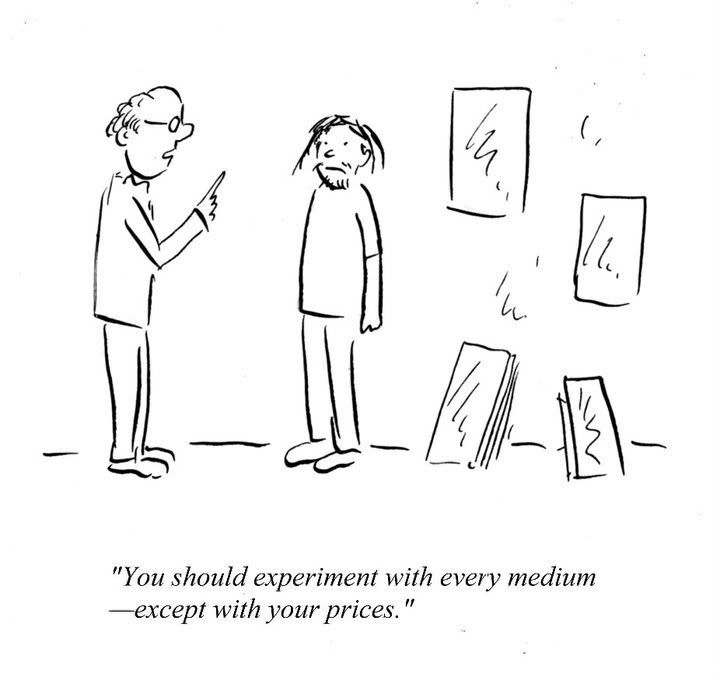
The trouble for aesthetic theory is, even if it has revealed the secret of the beautiful and why art is art, it frequently does not account for the practical preoccupation with the medium as a crucial determinant of what can be considered art. A digital image is at most 'art' in a much more qualified sense than is a painting on a canvas. This is because it does not in itself (without relying on the reputation of the artist or on physical installations), by virtue of its medium, typically garner the kind of recognition as an artwork that comes with socially-bestowed value and that can provide the artist with the material means to continue his work.

A way of dealing with this reality is to call for an anti-elitist view of art that disregards or devalues the importance of the art establishment, the respected institutions that serve as gatekeepers for universally-recognised art. Such a view would not discriminate between career artists and those who are not or between one medium and another.

Yet, as suggested earlier, this conception of art would only exist in parallel with the politics of art in practice. Praxis becomes viable but constrained, maintaining itself only by the act of a splintering, by taking itself away from dominant trends.

What is needed is an aesthetic theory that critically engages with the politics of art and, in a dialectical fashion, brings theory and practice together under an all-encompassing praxis. If the medium indeed plays a part in deciding what is art and what is not, such a theory would, as is done in Hegel's philosophy of art, explore the essential elements of art and show how they create qualitative differences between different media. However, it would also have to be cognisant of and explicate the power relations that mediate social perceptions of art.

In this sense, only a synthesis between aesthetic theory and the sociology of art can provide an all-encompassing praxis for art.

Part I

In the second part of this discussion of Adorno and Horkheimer's The Culture Industry: Enlightenment as Mass Deception, I conclude by building on the key observations made in the first part regarding mass culture and capitalist relations of production, sketching out a slightly different theory of mass culture. The latter is subsequently applied, partly with reference to Slavoj Žižek's Shoplifters of the World Unite, to a brief analysis of the social problems facing contemporary British society (although it applies similarly to many other contemporary societies) that culminated in the disturbances that occurred in the summer of 2011.


It has previously been postulated that mass culture celebrates both consumption and success within the capitalistic paradigm, the latter which revolves around its particular social relations of production. Success in this context, however, has to be seen in relation to consumption, for the market for status and identities in a capitalist society demands equivalence, which in turn demands objective measurability. As such, success is measured by what is called 'purchasing power' and its instantiation in the form of the consumption of goods and services.

At the same time, the association between consumption and success also has its implications on consumption—while it has been suggested that consumption promises an inauthentic easy form of happiness, it is only always easy in a metaphysical sense, inasmuch as happiness as a concept, as Adorno conceives of it, is always being sought rather than readily found. In practice, consumption is by no means always attainable, particularly in forms that are socially valued and identified with success.

Yet, in spite of the relative difficulty of socially-valued consumption, mass culture must nevertheless persist in tempting audiences with it in order to maintain their interest and, consequently, the industries that depend on it. This creates a harsh paradox in which consumption is sold as an easy and attainable pleasure that is, on the contrary, more difficult to accomplish than it is made out to be, and must be so in order to maintain a degree of exclusivity that upholds the social value of consumption.

The contrast between the expectations generated by mass culture and economic realities in turn leads to social tension, as segments of society are continually being seduced by the promise of socially-valued consumption without the means to engage in it to substantial extent. And this phenomenon may have serious practical consequences for society: For example, the violence and the looting that occurred in London and a few other English cities can be understood as at least partly the result of the frustrations engendered by mass culture in its celebration of consumption and of success as measured by consumption.

That is not to say that there is a simple causal relationship between mass culture and social unrest in contemporary capitalist society. Discontent may, at least initially, emerge as movements of resistance, some of which express themselves in benign ways.

Yet what Žižek calls the "impotent rage and despair [that is] masked as a display of force" and the "consumerist desire violently enacted when unable to realise itself in the ‘proper’ way" (2011) seems manifestly connected to the influence of mass culture. The latter's power may not be as absolute as the Frankfurt School asserts. However, unless we choose to regard the looters simply as human beings who became "beasts" (Žižek, 2011) on their own accord, we must see that mass culture, in wielding significant influence over the modern psyche through the pervasiveness of mass media and through its relentless and seductive celebration of consumption, helps to create an impetus for them to go out and take what they want. Moreover, on a fundamental level, the 'anti-social' act of looting is partly one of lashing out against the fundamental tenet of capitalist society that is property rights, the legal framework that maintains the exclusivity of material ownership and socially-valued consumption.

In light of this, as a famous revolutionary once asked, what is to be done? There seems to be no option other than to continue resisting, but in a different way. While capitalism, presented to us by the messenger that is mass culture, "represents truth without meaning", giving us the freedom to choose only "between playing by the rules and (self-)destructive violence" (Žižek, 2011), we have to return to what is perhaps a less novel and less cynical way of thinking—we need to adopt a teleology of social and personal life that is both meaningful and lucidly aware of its humanity. We must become aware of the centrality not of particular things or even of transcendent things that may cloud our vision, but of human life itself and the importance of realising it in the fullest capacity possible.

I believe that this is the essence of the Frankfurt School critique of mass culture, or indeed of the Marxist critique of the capitalist relations of production. And this is a point that is not undermined by the dispute over facts about audience reception.

While cultural studies has today succeeded in appearing to undermine the Frankfurt School critique of the Culture Industry, the machinery of commodification steams ahead, more productive than ever. The intellectual world is powerless before this trend and continues to concede its influence. Numerous scholars of culture are striving to make their field at once more obscure and more accessible. They toil to create a happy vision of a world that is poised to reap the benefits of new communications technology, promising a cosmopolitan future of choice and enlightened consumption.

This vision is constructed through discourse that is sprinkled with an ever-growing list of newly-coined terms. Yet it is, at the same time, one that people can readily identify with—for who isn't ready to believe in the prospect of a brave new world, especially when the media has just informed them of the exciting new products available in the market?

Admittedly, Critical Theory does not often fare well in today's intellectual climate, a circumstance that I feel is attributable to its underpinnings in the labour theory of value, or at least in varying degrees of economic determinism. Popular conceptions of value no longer hold it as something objective or cardinal. Value is something that is purely relational and manifested in actual preferences. In other words, that people value something more than another cannot often be explained in terms of natural and tangible causes. Valuation is often a subjective affair.

In a powerful way, this undermines the Marxist critique of exchange value, not only by dispelling the labour theory of value on which the critique is based, but also by replacing the concept of use value with ordinal utility. Now we have another conception of value that is also Subject-determined and correlated with exchange value but is not equivalent to the latter. And the concept of use value seems cumbersome and obsolete beside one that is able to account for all Subject perceptions of value, including the intangible, instead of being mired in the materialist paradigm. Moreover, this conception of value is seductively democratic. After all, what can appear more empowering than a view of value that privileges people's preferences and decisions?

What this means for the Frankfurt School critique is its effective isolation as an elitist view of culture that presumes to tell people what they ought to value. If preferences are subjective, what right does anyone have to proscribe any as long as no actual harm can reasonably be alleged to result?

It is difficult to defend the Frankfurt School from such a charge. Yet I maintain that its critique of the Culture Industry still rings true, albeit in a way that may necessitate some distancing from Marxist discourse. My proposition is to look at the critique from a particularly modern perspective that revolves around expectations and hype.

If there is anything that we have learned from the last global financial crisis, it is that expectations may diverge from a more tangible reality of a situation, whatever the latter may be. Perhaps this can be seen in terms of the divergence between short-term and long-term confidence, the latter which is dependent on a stricter or more complete procedure of reasoning. But regardless of what exactly we should compare expectations to, the evidence seems to point to the existence of hype.

Hype can be understood, in that sense, as the inflating of expectations of returns relative to a more tangible measure of actual returns. Even under conventional ways of looking at the market, hype is rarely a good thing—it implies that buyers are ultimately losing out in terms of expected versus real returns to their spending. And since hype is paid for by marketing costs that are likely to figure in pricing decisions, hype also represents a potential deadweight loss.

What does this have to do with the Culture Industry? It is my contention that the Culture Industry is a major source of hype. It deals in feelings, manufacturing them in order to generate interest in things—a process that is typically subsumed under the goal of making profit. It thus becomes the primary source of trends that influence people's preferences in goods. To grasp the commercial importance of the Culture Industry under late capitalism, simply witness how advertising thrives on the products of the Culture Industry.

Moreover, this principle does not apply merely to the products of various industries, but also to more general things such as lifestyles and even happiness—the message is that spending our money on something or adopting a certain attitude or lifestyle can bring us happiness or a sense of fulfillment.

But can hype not become real if it proves to be permanent? After all, there are still many people who would be very happy to buy, for example, the latest Apple products simply on the basis of the expectations that have been generated through marketing. Thus, it would seem to be the case that these people continue to get what they expect.

Yet it remains true that no one really knows how long the ephemeral expectations that are associated with hype can last, especially on the level of the individual. All it takes is for the realisation to come, in one fine moment, that there is no basis for believing that something is as good as it has been made out to be. Much of the perceived returns would be lost in that moment, just as the perceived values of certain financial instruments evaporated a few years ago.

The lie that Culture Industry sells us does not, therefore, have to depend on a highly contentious philosophical analysis of value. Whatever the exact nature or typology of value may be, hype as the commodification of feelings can be observed in our everyday experience; and it stands clearly a means of extracting profit through the inflating of expectations.

I don't care much for procedural politics in general. My aspirations for social and political change are a little bit on the 'pie-in-the-sky' side. This is not to say, though, that I don't care to vote. Voting is important for some rather obscure reasons to do with the technicalities of particular representative democratic systems, barring some really exciting circumstances—and this comes from someone who normally likes pretty obscure stuff. Real life seems rather too important and straightforward for obscure reasoning, but in the absence of strong reasons to believe otherwise, citizens should exercise their voting rights.

So that is to say that I am normally pretty agnostic towards voting, but I am leaning more for it than against it. Now let me explain why I don't think voting is anywhere near the limit or the be-all-end-all of the exercise of one's capacity as a political (in the bona fide classical sense) individual.

In order to do so, it looks like I have to first explain why I have little faith in the electoral process as a mechanism for social and political change anyway. Perhaps I live under somewhat exceptional circumstances, but I have seen the election of new governments fail spectacularly to institute much meaningful change. In a country like Singapore, where institutions can be expected to be particularly sticky or conservative, the electoral process certainly doesn't inspire me with much hope.

I am not familiar with comparative and more empirical theories of democracy, and so I turn to bigger narratives to find reasons why it is the case that elections are not normally game-changing. There is a myth defended by the older stuffy liberals (sometimes known as conservatives) that voting is the ultimate exercise of one's capacity as a responsible political agent. This is the myth we are brought up to believe, which may explain the religious seriousness with which some attend to the matter of voting in elections. However, reflecting Habermas' narrative of the decline of the public sphere, elections constitute a dated procedure handed down from ages past, an old gentlemen's game that has been massified but nevertheless expected to retain the same significance for each individual voter. Meanwhile, as the actualisation of the sovereign will of the people, it is actively being circumvented in modern times by influential political organisations with direct access to policy makers and by purported political exigencies that are subject to little public scrutiny. In other words, your votes as individuals pale in significance to how much power and influence is wielded by a political elite, whose mandate to rule over you is ironically affirmed by your votes.

The only way forward, under present constraints of the prevailing democratic systems, seems to be in trying to match the direct policy-making influence of powerful organisations. We are in need of a large civil society consisting of citizen activists who would fight for the causes they believe in. The only way forward is through citizen advocacy groups, unions and active everyday participation in politics. The days of waiting for elections and for your representatives in parliament to make your voices heard are over, if they were ever there. Only then can the public put itself on the same playing field as elite organisations in determining the character of governance.

In a sense, the conservatives have it right: Don't trust the authorities. But that does not mean we should minimise government—the government does many beneficial things after all; it means we should have a civil society to match. This, if anything, is the true meaning of a big society.

For this to happen, however, there must be a lively as well as a quality culture of political participation in society. It takes a certain amount of awareness, political wisdom and community spirit amongst citizens to institute a strong civil society. Unfortunately, the current state of Singapore's society and its public discourse does not inspire me with much hope in this either at present. Nevertheless, the stirrings in the public, if rather too naively focused on the electoral process, might be a sign of the beginnings of change. This may also be somewhat 'pie-in-the-sky', but, ultimately, I think one should be optimistic and look forward to real change.


Here I present a reading of Theodor Adorno and Max Horkheimer's The Culture Industry: Enlightenment as Mass Deception, with reference to Frederic Jameson's essays on Adorno in Late Marxism and Amresh Sinha's Adorno on Mimesis in Aesthetic Theory.

So where should we begin? The first thing to note is the fact that there is more to Adorno and Horkheimer's theory than the suggestion of mass culture as fundamentally characterised by passive consumption. That is really only a symptom (though a very important one for Adorno and Horkheimer) of the general 'malaise' of mass culture, and one that has received far too much emphasis in media studies to the detriment of the discussion of its other aspects. In light of this, I will endeavour to present a more contextual reading of this essay.


I am looking at Adorno and Horkheimer's critique of mass culture from the perspective of their critique of pleasure as it is associated with mass entertainment under late capitalism. It should be noted that Adorno and Horkheimer's analysis of pleasure "takes place within a framework of the theory of the alienated labor process" (Jameson, 1990: 145). This entails the analysis of mass culture as the colonisation and the commodification of leisure time—amusement is the prolongation of the working day insofar as it merely functions as a period of relaxation that demands no effort (hence the passivity of the consumer), which is sold to the individual worker so that he/she can continue working contentedly the next day. Pleasure is therefore seen not only as a flight from reality but also as the flight from "any last thought of resistance" (Adorno and Horkheimer, 1998).

The full implications of commodification will be brought out later. Presently, we will attend more closely to the notion of the colonisation of leisure, which involves the mechanisation of culture that reflects the mechanisation of modern economic production: The enjoyment of culture is schematised for a passive audience so that, as mentioned above, no effort is required on the part of the latter. This entails the presentation of "repetition and the familiar" (Jameson, 1990: 148) in order not to tax the audience's minds. Thus, the familiar character of the labour process is ironically reproduced in entertainment, which indicates that the monotony of "standardised operations" that characterises the working day "can be evaded only by approximation to it in one's leisure time" (Adorno and Horkheimer, 1998).

This is where media scholars' criticisms of Adorno and Horkheimer are typically focused, with their rather belaboured emphasis on the examination of the link between media consumption and power (sometimes in an effort to deny that the media wield power over the audience). As stated in the beginning, such a perspective is sorely inadequate, and this will become evident as we examine the other aspects of Adorno and Horkheimer's theory on mass culture, beginning with its aesthetic critique of pleasure.

Adorno and Horkheimer hold that pleasure/happiness is found in what is yet to be, and their charge is that the Culture Industry offers 'inauthentic' pleasure that is purported to already exist and is ready for consumption. Furthermore, Adorno postulates a conception of the artistic mimesis as pure expression, which is antithetical to the notion of 'expressing something' (Sinha, 2000). Artistic expression is hence self-identical (Sinha, 2000) and thereby incompatible with the notion of equivalence, which is so important to the process of commodity exchange. Like the mystical in Wittgenstein's philosophy, in other words, it cannot be substituted by something else. Therefore, unlike the products of the Culture Industry, it cannot be subsumed under the mechanism of substituting means for ends (Sinha, 2000), being thus quite apart from the market for identity and leisure that under late capitalism are treated as just more commodities to be exchanged.

One important insight that we can derive from Adorno's conception of art is that, for Adorno and Horkheimer, reception is identified with the capitalist mode of production, particularly in the context of commodification. This means the reception of the products of the Culture Industry has to be understood in relation to their production. The most common criticisms of Adorno and Horkheimer are heavily invested in the critique of their claims regarding reception, emboldened by evidence indicating that audiences are not passive. Thus, a good way to uphold the Frankfurt School critique, without explicitly invoking theories of power, is to bring production back into the discourse.

Equivalence is, as stated earlier, crucial for commodity exchange, and it is created through abstraction—the Marxist account of commodity exchange involves the abstraction of the use values of goods into exchange/monetary value, "allowing comparable and measurable quantities to be manipulated" (Jameson, 1990: 149). This forms a vital part of the commodification of leisure as it is the need to conform to the principle of equivalence and create monetary value that drives the production of cultural products in a manner that is similar to the production of consumer goods, leading to the creation of what Walter Benjamin calls the mechanically reproducible work of art.

But what implications does the nature of production in the Culture Industry have on consumption? Questions of quality come first to mind, but this is, understandably, shaky ground on which to stake a critique of mass culture. We need look above and beyond, at the implications of the relations of production on the consumption of mass culture as a whole and not as discrete cultural products. 

Roland Barthes asserted, mirroring Adorno's critique of pleasure, that mass-produced culture under late capitalism serves to conceal or obscure the capitalist mode of production, thereby eliminating resistance. However, this line of argument is once again susceptible to the criticism, born of audience studies, that audiences are not simply passive recipients. Indeed, I think the exact opposite is the case: Far from hiding it, the Culture Industry revels in the capitalist mode of production, showing us the promises that await us should we acquiesce to the system, namely all manner of consumer goods and the status and identities that come with them—rewards that are, however, readily available. It tempts the audience with these prizes, rather than compelling or co-opting them directly. But, crucially, it also promises the more elusive, yet-to-be prospect of success itself, embodied most vividly and blatantly by the stars it churns out as the human end-products of its capitalist mode of production. It is therefore unsurprising, though ironic in light of Adorno's linking of pleasure to readily achievable ends, that audiences are so preoccupied with stars.

Continued in Part II
 
It might seem awfully difficult to empathise when you want something out of other people.

Indeed, the culture of selfishness that a capitalistic society fosters, for 'the good of all' (enter the invisible hand), orientates us towards the demand side of exchange. The baker does not care that you are hungry. He cares only that you are paying him good money for the bread he makes. Likewise, the buyer doesn't care if the baker has many mouths to feed in his family. He cares only that he gets the bread he wants as cheaply as he can.

This makes bourgeois culture exceedingly hostile towards perceived inefficiency in satisfying demand. We want something and we want it when we want it, the denial of which is irritating at best. The more capitalistic the society, the more hostile it is. On the producer side, this creates an atmosphere of cut-throat competition or a rat race, in which you need to offer what others can offer in order to thrive.

Unlike individual workers, however, businesses have some clout. Through political or market influence, they give themselves room to manoeuvre by ensuring that they retain some avenue for profit without always having to offer what is necessary or what is the best. Where and when they do need to compete with each other, they turn to their workers, wringing more of the latter's labour in order to increase efficiency and maximise profit.

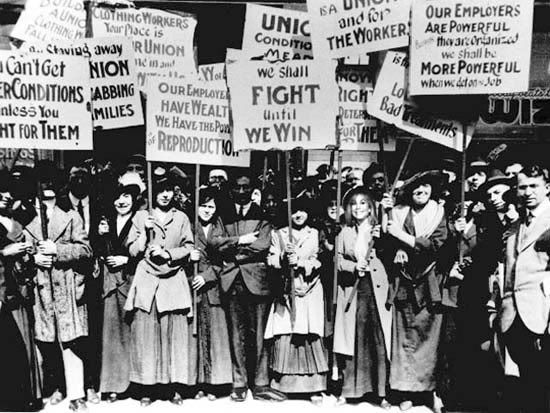
To defend themselves, the workers have to agitate for rights and form unions to negotiate with their employers; or they could deliberately adopt inefficient practices to mitigate or spite the exploitation that they are subject to. And when they do these things, the spotlight of bourgeois wrath is turned upon them—they are seen as lazy and motivated by an unjustified sense of entitlement. This is the capitalist blame game.

Some societies may be less susceptible to such finger-pointing, but the potential for its existence is always there if we believe that human beings are inherently selfish at some level. As such, for us to rise above it, we have to actively moderate our short-sighted tendency to be selfish, to balance empathy against our desire for quick gratification. That remains virtually impossible until we stop buying into modern consumer culture—until we break the vicious cycle of capitalist ideology—for the good of ourselves as both consumers and producers.