Padd Solutions

Converted by Falcon Hive

Showing posts with label charity. Show all posts

Some people have idealised views of how they can change the world or their surroundings. It's good that these people have dreams, but even if those dreams can be translated into action, it's worth asking if the action would make any real difference. If not, then it would be quite silly for them to think that they are actually doing something.

Recently, as part of their school project, a group of students in Singapore decided to reach out to foreign workers who are employed to do 'low-skilled' jobs. As a result of this outreach, the students have put up an account of the workers' daily lives and their struggle to earn in a living in a society composed mostly of people of entirely different classes from them, a society that mostly ignores their existence.

This is a wonderful attempt at raising social awareness. But, unfortunately, it stops there. I find the students' recommendations for future action particularly uninspiring. The following is what they advocate, in full:
All i want to say, is that we should really learn to appreciate and accept them as our equal. Maybe the next time we see them, we could perhaps just give them a simple smile, or even a word of thanks, to show our appreciation for what they are doing, I'm sure it would make their day. Or at the very least, the next time we see them, we can just try not to pull an ugly face or walk away.

Thank you for taking time to read this, and although every share would not get a dollar donated or anything, but every share is a step closer to a warmer, more accepting society.
It seems not a little naive and condescending to acknowledge that low-skilled foreign workers are economically marginalised while acting as though social acceptance and recognition are going to improve their lot. Yes, levels of social awareness are painfully low in Singapore such that having any is quite commendable. But, having become aware, what are you going to do about the system and the government that author such oppression?

I find the above project to be the humanitarian equivalent of "sending positive vibes" to help people who are faced with problems. It tries to engender good sentiments but does nothing in reality. While these workers may appreciate your reaching out to them, the failure to even mention political and economic solutions makes this gesture seem almost as hollow as the act of spamming of "Kony 2012" on the Internet, a recent example of slacktivism. Raising awareness becomes simply a way to soothe your own conscience when you're not prepared to ask the tough questions and talk about real measures to create change.

So stop just smiling like fools in a photo op—bare your teeth and attack injustice at its source.

Illustration by Frank Chimero
Yesterday, I saw a programme on TV where a woman was crying as she told a group of young people about her plight: She could barely make ends meet and at least one of her kids had to drop out of technical school because she couldn't afford the fees. She couldn't even afford the fares for public transport.

The first question that came to my mind was why is this even on TV? To advertise the fact our society doesn't take care of its less fortunate members very well? Do people watch shows like this to cry a tear and then move on with their lives after a needed catharsis? Is this the reality TV version of Aristotelian tragedy?

Then it occurred to me that, if the programme does show that the system leaves something to be desired when it comes to ensuring the welfare of low-income groups, maybe the point is to encourage the public to help by giving to charity. Yes, our system has left these people behind, so please help them.

And that is more evidence that, in some ways, we might well have failed to evolve much from our Crown Colony days.

Recently, I believe, someone famous wrote in the newspaper extolling the virtues of hard work and practically asserting that poor people have the responsibility to pull themselves up by the bootstraps. That could've come straight out of Nashville Times in all its redneck glory.

We've come so far only to think that laughable stuff like that passes for clever social commentary? But perhaps we've come to where we are precisely because we think so, driven by the need to prove something – to prove that we're better than others.

We're so motivated by the need to win, or to not lose, that such a mindset is a distinctive characteristic of us as a people. It may seem funny, but it has a sinister side – we don't care enough about those who lost.

But I think life isn't all about winners and losers. Even businesses nowadays are focusing less on competition in the workplace and more on moving together as a team. Why should a republic not have that approach? Is our idea of moving together hand-in-hand to wave flags and sing patriotic songs together? Screw that. Where's the real solidarity?

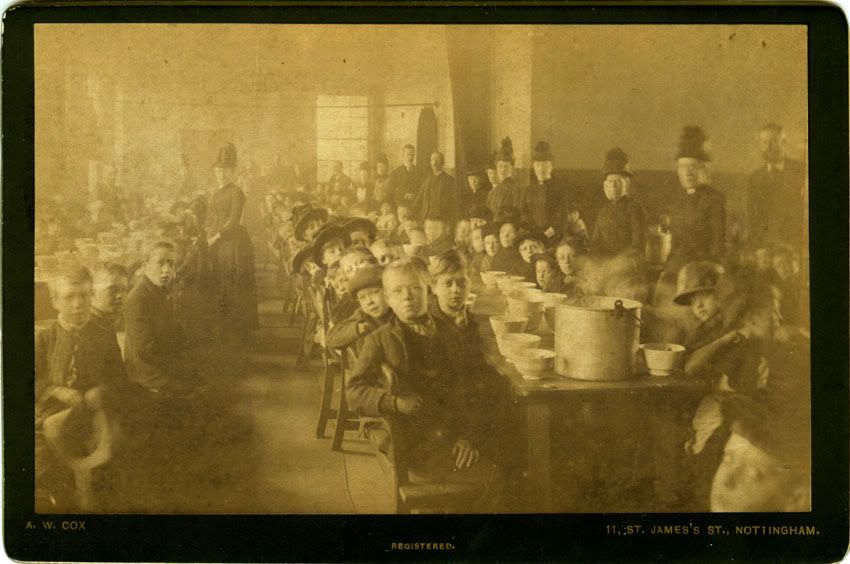
And solidarity with people on the lower rungs is shown first and foremost through social policy, not through charity. Charities did not lift poor workhouse children out of their miserable poverty. Legislation and social programs did. If there's any real determination to pull people up, it would be done on a public capacity, where it is most effective.

But, wait, doesn't the government have policies to help poor people? Heck, it makes sure we hear about those all the time.

Without having to get into a detailed discussion on policy, we can ask a very simple question: Why could that woman not afford to send her child to school?

Isn't it well known, even here, that education is a key factor in social mobility? Why are there cases where people cannot afford it? Especially when it's technical school, not university. Technical school is where people are trained specifically to work for a living. Surely there's no excuse? We can afford to lose $40 billion on stupidly managed investments, we can afford to provide free education to people who would otherwise not have it.

And simply giving handouts, as the government sometimes does (especially if elections are looming), doesn't do much. This is where people who are supposedly for a more equal society often damage their own cause. In fact, here, that could be a symptom of our terrible mindset – people who ask for handouts might often be more interested in tangible short-term gains. They want to get something, but they want it immediately in cold hard cash. That's not how the bigger problems are solved. 

We can hear it from Prof. Eugene Tan of SMU again:

All too often, the larger and more important messages intended by the various budgetary measures are drowned out by the noise of Singaporeans calculating and comparing their budgetary "gains" or "losses".

This "what's-in-it-for-me" mindset may unwittingly lull Singaporeans into sacrificing long-term benefits for short-term gains. 
Instead, a stronger social safety net may encourage Singaporeans to be less risk-adverse and to manage the pluses and minuses of globalisation. More may be willing to take entrepreneurial risks if they can count on a social safety net. The Budget must be seen as more than just a spreadsheet of the state's revenue and expenditures in the new financial year, with goodies thrown in for good measure.

It plays a critical role in keeping our social compact resilient and preparing society not just for tomorrow, but for many tomorrows.
Word.

And, after all, do we really want to live in a country resembling England during the Industrial Revolution, where a class of winners leaves the losers in the dust, only throwing the occasional coin to the latter 'out of the goodness of their hearts'?

Sadly, we might not even realise how close we might be to such a picture. It all looks very nice on the outside. We've also turned image-consciousness into a skill and covered the mirror with a painting.