Padd Solutions

Converted by Falcon Hive

Showing posts with label media. Show all posts


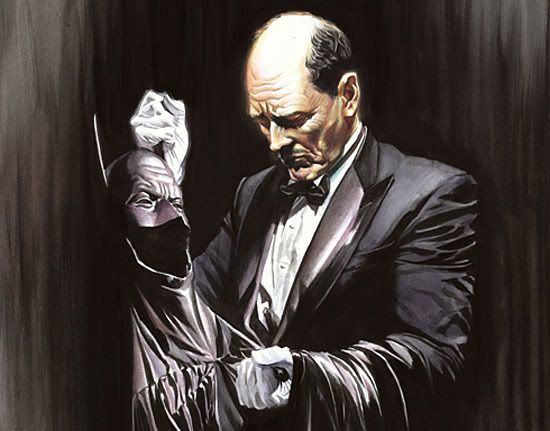
Upon hearing that a massacre had occurred during a premiere of the latest iteration of the Batman films, some people asked, "Where was Batman?"

Perhaps the joke, all jokes are not an appropriate response to such a tragedy. But this is also a singularly powerful question. Indeed, where was—is—Batman?

Of course. He's not real. Batman is fiction. Everyone except some kids (and maybe some delusional fools) knows that. People can be expected to know the difference between reality and the superhero fiction, can't they? Well, can they?

Most people know that superheroes don't exist. But to what extent do they grasp this fact? I mean, why do people like superhero stories? The modern trend in fiction may be to humanise superheroes, to depict the conflicted and flawed hero. But they're still superheroes—they are still powerful; they can still solve the world's problems, even if they must bleed and sacrifice much in the process. Perhaps stories like Watchmen defy this convention altogether, but not the Batman films.

Christopher Nolan's Batman is a tortured hero, a hero who has to mask himself as a villain. But the audience are well aware that he is hero. And the fantasy of the mighty superhero, furthermore, is not shattered. People can expect Batman to save the world within the big screen. They want to savour—even just a shadow of it—the excitement that springs from the knowledge that a saviour is here to fight for them. Fiction melds with reality; the story is not real, but physiological reaction to it is.

That is why the massacre is semiologically powerful—a horrible crime is occurring while the superhero is 'present' on the big screen, a demonstrably flat image that interacts with the world purely as illusion. It's not even impotent; it's nothing at all. The mirage is shattered completely by the jarring reality of a tragedy unfolding simultaneously. Thus, observers may be prompted to ask, "Where was this hero?" Of course they'd known that he doesn't exist. But this incident makes them realise that anew and takes the realisation to a higher, uncanny level.

The death of the superhero, a theme that has been explored in fiction, is not as devastating to the fantasy as the real deaths of superhero fans in front of the big screen.

However, while many of us may intuit this, not everyone will realise what it means. Take, for example, this Facebook comment about the survivors:
All I can say is send them a hero Chris send the dark knight to the hospital for them, so the children know there are real heroes out there, and that evil won't win
This is exactly the kind of sentiment that should have been extinguished by this incident. Yet people want to hold on to the fantasy and, worse, to perpetuate it by instilling the same delusion in children—the notion that there is a simple fix to the big problems that can be accomplished by a few mighty and benevolent individuals.

Perhaps adults have a vested interest in raising children who are naïve and docile. Some of them had probably been raised to be that way themselves. But the use of a crutch is symptomatic of disability—this much-needed delusion reveals people's psychological inability to steer away from a petty existence waiting for salvation.

Those people have got it the wrong way around. If they did exist, superheroes would exist because people are unable to fight for themselves. Thus, instead of wishing that they did exist, we should want their existence to be unnecessary. That, not having a superhero around, would be truly empowering.

What I learned

@ 08:07 , , , , , 0 comments


I have other topics in mind that I want to write about, but right now I'm struck by a sudden desire to recapitulate and summarise what I studied last year. Maybe it is the desire to seize something tangible before my memory of it fades. So here goes. 

The main lesson I derived from the research I did for my dissertation is that any claim that film critics have as arbiters of a non-pluralistic (in both the moral and universal senses of it) notion of good taste is undermined by the idea that taste is a means of social distinction; a means of thinking of oneself as superior or different based on vague but compelling categories of identity with which one identifies. 

This implies that taste is neither objective nor entirely subjective. While critics often try seductively to suggest the former, aesthetic 'laymen' tend to stress the latter. Rather, according to my research, taste should perhaps be described as 'intersubjective'. But, more precisely, it is constituted by hyperreal categories (such as socio-economic class) that often appear to us as objective categories.

In other words, from the perspective of theories of language, taste is an entirely practical concept in human language that has perhaps received far too much theoretical attention. It is very much rooted in our social structures and psychology and does not properly belong in the domain of the aesthetic.

I understand that aestheticians may want to think of (good) taste as the practical implication of what is good or beautiful in aesthetics. But I think that's just not the case in contemporary reality. Taste has much less to do with aesthetics than with social categories.

And as articulations of the social structures that give rise to this social phenomenon, the pieces of film criticism I examined do not even use the language of aesthetics, contradictory or hypocritical as it might often be. Tellingly, the critics do not seem to care to exhibit a grasp of aesthetics before presenting themselves as an authority on film tastes.


What is the simple life? Traditionally, it is understood as a thrifty life lived without pretensions. But what exactly does that entail? Are you thrifty as long as you don't buy yachts or mansions or don't live a jet setting lifestyle? Can you be free of pretensions even when you chase the latest trends and fashions?

Of course, the simple life, in the traditional sense of it, still exists. But in the developed part of the modern world, it is increasingly rare. In everyday life, the urge to consume—to spend and to be wealthy enough to spend—is overwhelming. Through constant exposure to various media whose function is to encourage consumption, we have been conditioned to desire and even need extensive material comforts.

Consumption is also about status and a social-psychological need to earn one's place in modern society. Simply being able to consume and being 'sophisticated' enough to know how to consume confers upon us identities that are compatible with the self image of modern society. And what falls outside of the latter is at best unconventional.

Thus, society exerts a pressure on individuals to conform to a consumerist lifestyle, and this pressure increases as more and more people embrace that way of life. Mass exerts its own gravity; popularity may well correlate with conformity.

One result of this trend is the engendering of a pervasive inertia among the expanding middle class—we have become much more productive over the past century, but most of our time and energy goes into the furious cycle of production and consumption, leaving us perpetually exhausted and, in our spare time, desiring only to enjoy the material comforts that our labours have bought. So despite the great degree of empowerment that human beings have enjoyed over the past century, most of us remain content to let the world take shape around us, to let the powerful and influential push society in whatever direction they desire.

Hence, while the simple life would help bring us out of the passivity induced by the consumerist lifestyle, the simple life is by no means simple to live. And so we drift.


Part I

In the second part of this discussion of Adorno and Horkheimer's The Culture Industry: Enlightenment as Mass Deception, I conclude by building on the key observations made in the first part regarding mass culture and capitalist relations of production, sketching out a slightly different theory of mass culture. The latter is subsequently applied, partly with reference to Slavoj Žižek's Shoplifters of the World Unite, to a brief analysis of the social problems facing contemporary British society (although it applies similarly to many other contemporary societies) that culminated in the disturbances that occurred in the summer of 2011.


It has previously been postulated that mass culture celebrates both consumption and success within the capitalistic paradigm, the latter which revolves around its particular social relations of production. Success in this context, however, has to be seen in relation to consumption, for the market for status and identities in a capitalist society demands equivalence, which in turn demands objective measurability. As such, success is measured by what is called 'purchasing power' and its instantiation in the form of the consumption of goods and services.

At the same time, the association between consumption and success also has its implications on consumption—while it has been suggested that consumption promises an inauthentic easy form of happiness, it is only always easy in a metaphysical sense, inasmuch as happiness as a concept, as Adorno conceives of it, is always being sought rather than readily found. In practice, consumption is by no means always attainable, particularly in forms that are socially valued and identified with success.

Yet, in spite of the relative difficulty of socially-valued consumption, mass culture must nevertheless persist in tempting audiences with it in order to maintain their interest and, consequently, the industries that depend on it. This creates a harsh paradox in which consumption is sold as an easy and attainable pleasure that is, on the contrary, more difficult to accomplish than it is made out to be, and must be so in order to maintain a degree of exclusivity that upholds the social value of consumption.

The contrast between the expectations generated by mass culture and economic realities in turn leads to social tension, as segments of society are continually being seduced by the promise of socially-valued consumption without the means to engage in it to substantial extent. And this phenomenon may have serious practical consequences for society: For example, the violence and the looting that occurred in London and a few other English cities can be understood as at least partly the result of the frustrations engendered by mass culture in its celebration of consumption and of success as measured by consumption.

That is not to say that there is a simple causal relationship between mass culture and social unrest in contemporary capitalist society. Discontent may, at least initially, emerge as movements of resistance, some of which express themselves in benign ways.

Yet what Žižek calls the "impotent rage and despair [that is] masked as a display of force" and the "consumerist desire violently enacted when unable to realise itself in the ‘proper’ way" (2011) seems manifestly connected to the influence of mass culture. The latter's power may not be as absolute as the Frankfurt School asserts. However, unless we choose to regard the looters simply as human beings who became "beasts" (Žižek, 2011) on their own accord, we must see that mass culture, in wielding significant influence over the modern psyche through the pervasiveness of mass media and through its relentless and seductive celebration of consumption, helps to create an impetus for them to go out and take what they want. Moreover, on a fundamental level, the 'anti-social' act of looting is partly one of lashing out against the fundamental tenet of capitalist society that is property rights, the legal framework that maintains the exclusivity of material ownership and socially-valued consumption.

In light of this, as a famous revolutionary once asked, what is to be done? There seems to be no option other than to continue resisting, but in a different way. While capitalism, presented to us by the messenger that is mass culture, "represents truth without meaning", giving us the freedom to choose only "between playing by the rules and (self-)destructive violence" (Žižek, 2011), we have to return to what is perhaps a less novel and less cynical way of thinking—we need to adopt a teleology of social and personal life that is both meaningful and lucidly aware of its humanity. We must become aware of the centrality not of particular things or even of transcendent things that may cloud our vision, but of human life itself and the importance of realising it in the fullest capacity possible.

I believe that this is the essence of the Frankfurt School critique of mass culture, or indeed of the Marxist critique of the capitalist relations of production. And this is a point that is not undermined by the dispute over facts about audience reception.

While cultural studies has today succeeded in appearing to undermine the Frankfurt School critique of the Culture Industry, the machinery of commodification steams ahead, more productive than ever. The intellectual world is powerless before this trend and continues to concede its influence. Numerous scholars of culture are striving to make their field at once more obscure and more accessible. They toil to create a happy vision of a world that is poised to reap the benefits of new communications technology, promising a cosmopolitan future of choice and enlightened consumption.

This vision is constructed through discourse that is sprinkled with an ever-growing list of newly-coined terms. Yet it is, at the same time, one that people can readily identify with—for who isn't ready to believe in the prospect of a brave new world, especially when the media has just informed them of the exciting new products available in the market?

Admittedly, Critical Theory does not often fare well in today's intellectual climate, a circumstance that I feel is attributable to its underpinnings in the labour theory of value, or at least in varying degrees of economic determinism. Popular conceptions of value no longer hold it as something objective or cardinal. Value is something that is purely relational and manifested in actual preferences. In other words, that people value something more than another cannot often be explained in terms of natural and tangible causes. Valuation is often a subjective affair.

In a powerful way, this undermines the Marxist critique of exchange value, not only by dispelling the labour theory of value on which the critique is based, but also by replacing the concept of use value with ordinal utility. Now we have another conception of value that is also Subject-determined and correlated with exchange value but is not equivalent to the latter. And the concept of use value seems cumbersome and obsolete beside one that is able to account for all Subject perceptions of value, including the intangible, instead of being mired in the materialist paradigm. Moreover, this conception of value is seductively democratic. After all, what can appear more empowering than a view of value that privileges people's preferences and decisions?

What this means for the Frankfurt School critique is its effective isolation as an elitist view of culture that presumes to tell people what they ought to value. If preferences are subjective, what right does anyone have to proscribe any as long as no actual harm can reasonably be alleged to result?

It is difficult to defend the Frankfurt School from such a charge. Yet I maintain that its critique of the Culture Industry still rings true, albeit in a way that may necessitate some distancing from Marxist discourse. My proposition is to look at the critique from a particularly modern perspective that revolves around expectations and hype.

If there is anything that we have learned from the last global financial crisis, it is that expectations may diverge from a more tangible reality of a situation, whatever the latter may be. Perhaps this can be seen in terms of the divergence between short-term and long-term confidence, the latter which is dependent on a stricter or more complete procedure of reasoning. But regardless of what exactly we should compare expectations to, the evidence seems to point to the existence of hype.

Hype can be understood, in that sense, as the inflating of expectations of returns relative to a more tangible measure of actual returns. Even under conventional ways of looking at the market, hype is rarely a good thing—it implies that buyers are ultimately losing out in terms of expected versus real returns to their spending. And since hype is paid for by marketing costs that are likely to figure in pricing decisions, hype also represents a potential deadweight loss.

What does this have to do with the Culture Industry? It is my contention that the Culture Industry is a major source of hype. It deals in feelings, manufacturing them in order to generate interest in things—a process that is typically subsumed under the goal of making profit. It thus becomes the primary source of trends that influence people's preferences in goods. To grasp the commercial importance of the Culture Industry under late capitalism, simply witness how advertising thrives on the products of the Culture Industry.

Moreover, this principle does not apply merely to the products of various industries, but also to more general things such as lifestyles and even happiness—the message is that spending our money on something or adopting a certain attitude or lifestyle can bring us happiness or a sense of fulfillment.

But can hype not become real if it proves to be permanent? After all, there are still many people who would be very happy to buy, for example, the latest Apple products simply on the basis of the expectations that have been generated through marketing. Thus, it would seem to be the case that these people continue to get what they expect.

Yet it remains true that no one really knows how long the ephemeral expectations that are associated with hype can last, especially on the level of the individual. All it takes is for the realisation to come, in one fine moment, that there is no basis for believing that something is as good as it has been made out to be. Much of the perceived returns would be lost in that moment, just as the perceived values of certain financial instruments evaporated a few years ago.

The lie that Culture Industry sells us does not, therefore, have to depend on a highly contentious philosophical analysis of value. Whatever the exact nature or typology of value may be, hype as the commodification of feelings can be observed in our everyday experience; and it stands clearly a means of extracting profit through the inflating of expectations.

Here I present a reading of Theodor Adorno and Max Horkheimer's The Culture Industry: Enlightenment as Mass Deception, with reference to Frederic Jameson's essays on Adorno in Late Marxism and Amresh Sinha's Adorno on Mimesis in Aesthetic Theory.

So where should we begin? The first thing to note is the fact that there is more to Adorno and Horkheimer's theory than the suggestion of mass culture as fundamentally characterised by passive consumption. That is really only a symptom (though a very important one for Adorno and Horkheimer) of the general 'malaise' of mass culture, and one that has received far too much emphasis in media studies to the detriment of the discussion of its other aspects. In light of this, I will endeavour to present a more contextual reading of this essay.


I am looking at Adorno and Horkheimer's critique of mass culture from the perspective of their critique of pleasure as it is associated with mass entertainment under late capitalism. It should be noted that Adorno and Horkheimer's analysis of pleasure "takes place within a framework of the theory of the alienated labor process" (Jameson, 1990: 145). This entails the analysis of mass culture as the colonisation and the commodification of leisure time—amusement is the prolongation of the working day insofar as it merely functions as a period of relaxation that demands no effort (hence the passivity of the consumer), which is sold to the individual worker so that he/she can continue working contentedly the next day. Pleasure is therefore seen not only as a flight from reality but also as the flight from "any last thought of resistance" (Adorno and Horkheimer, 1998).

The full implications of commodification will be brought out later. Presently, we will attend more closely to the notion of the colonisation of leisure, which involves the mechanisation of culture that reflects the mechanisation of modern economic production: The enjoyment of culture is schematised for a passive audience so that, as mentioned above, no effort is required on the part of the latter. This entails the presentation of "repetition and the familiar" (Jameson, 1990: 148) in order not to tax the audience's minds. Thus, the familiar character of the labour process is ironically reproduced in entertainment, which indicates that the monotony of "standardised operations" that characterises the working day "can be evaded only by approximation to it in one's leisure time" (Adorno and Horkheimer, 1998).

This is where media scholars' criticisms of Adorno and Horkheimer are typically focused, with their rather belaboured emphasis on the examination of the link between media consumption and power (sometimes in an effort to deny that the media wield power over the audience). As stated in the beginning, such a perspective is sorely inadequate, and this will become evident as we examine the other aspects of Adorno and Horkheimer's theory on mass culture, beginning with its aesthetic critique of pleasure.

Adorno and Horkheimer hold that pleasure/happiness is found in what is yet to be, and their charge is that the Culture Industry offers 'inauthentic' pleasure that is purported to already exist and is ready for consumption. Furthermore, Adorno postulates a conception of the artistic mimesis as pure expression, which is antithetical to the notion of 'expressing something' (Sinha, 2000). Artistic expression is hence self-identical (Sinha, 2000) and thereby incompatible with the notion of equivalence, which is so important to the process of commodity exchange. Like the mystical in Wittgenstein's philosophy, in other words, it cannot be substituted by something else. Therefore, unlike the products of the Culture Industry, it cannot be subsumed under the mechanism of substituting means for ends (Sinha, 2000), being thus quite apart from the market for identity and leisure that under late capitalism are treated as just more commodities to be exchanged.

One important insight that we can derive from Adorno's conception of art is that, for Adorno and Horkheimer, reception is identified with the capitalist mode of production, particularly in the context of commodification. This means the reception of the products of the Culture Industry has to be understood in relation to their production. The most common criticisms of Adorno and Horkheimer are heavily invested in the critique of their claims regarding reception, emboldened by evidence indicating that audiences are not passive. Thus, a good way to uphold the Frankfurt School critique, without explicitly invoking theories of power, is to bring production back into the discourse.

Equivalence is, as stated earlier, crucial for commodity exchange, and it is created through abstraction—the Marxist account of commodity exchange involves the abstraction of the use values of goods into exchange/monetary value, "allowing comparable and measurable quantities to be manipulated" (Jameson, 1990: 149). This forms a vital part of the commodification of leisure as it is the need to conform to the principle of equivalence and create monetary value that drives the production of cultural products in a manner that is similar to the production of consumer goods, leading to the creation of what Walter Benjamin calls the mechanically reproducible work of art.

But what implications does the nature of production in the Culture Industry have on consumption? Questions of quality come first to mind, but this is, understandably, shaky ground on which to stake a critique of mass culture. We need look above and beyond, at the implications of the relations of production on the consumption of mass culture as a whole and not as discrete cultural products. 

Roland Barthes asserted, mirroring Adorno's critique of pleasure, that mass-produced culture under late capitalism serves to conceal or obscure the capitalist mode of production, thereby eliminating resistance. However, this line of argument is once again susceptible to the criticism, born of audience studies, that audiences are not simply passive recipients. Indeed, I think the exact opposite is the case: Far from hiding it, the Culture Industry revels in the capitalist mode of production, showing us the promises that await us should we acquiesce to the system, namely all manner of consumer goods and the status and identities that come with them—rewards that are, however, readily available. It tempts the audience with these prizes, rather than compelling or co-opting them directly. But, crucially, it also promises the more elusive, yet-to-be prospect of success itself, embodied most vividly and blatantly by the stars it churns out as the human end-products of its capitalist mode of production. It is therefore unsurprising, though ironic in light of Adorno's linking of pleasure to readily achievable ends, that audiences are so preoccupied with stars.

Continued in Part II

Postmodern approaches to social theory emphasise multiplicity and de-centring, and these themes find their natural articulation in cultural analyses. Such analyses focus on the richness of cultural interaction and the reproduction of identities in non-linear ways, and where they concern themselves with politics and social organisation, they seek to realise this vision of cosmopolitan society—a society consisting of empowered and complex Subjects. Some theorists have even gone so far as to announce that we live in the age of the Subject.

Is this true? The last claim is especially dubious; our everyday experiences are enough to cast serious doubt on it. There are structural and physical limitations that ensure that Subject-Object relations continue to exist in force and often dominate the social terrain. Thus, trying to establish the existence or even plausibility of pure Subject-Subject relations in mass society amounts, at least under present conditions, to an exercise in wishful thinking.

Such limitations can be observed most clearly in political processes. Indeed, politics may be said to define these limitations insofar as it is considered as the necessary framework of social organisation. Politics, therefore, exercises a restrictive rule on the freedom and the pure reciprocity that would give rise to a society consisting only of relations between empowered Subjects.

The agents that enforce this rule are institutions. Institutions impose their decisions on Subjects in non-negotiable ways, and this happens every day in processes of governance. Democracy and dialogue fade away when individuals are faced with institutional decisions made under the guise of systemic necessity. Dreamers might continue to insist on the democratic possibility of changing such outcomes, but as Marx said, "Between equal rights force decides."

The will of individuals as Subjects and systemic concerns (as they are treated by institutions) are thereby locked in a Hegelian moral opposition—the dialectic is a forceful one. Even Subjects with dialogic aspirations for society need to be able to resort to confrontation in order to assert themselves in reforming or recreating institutions to carry out the vision of a cosmopolitan society.

It is no wonder, then, that non-violence and compliance are attributes that are often considered highly desirable, if not the most desirable, in liberal democracies—institutions may depend upon them to survive when there is potential conflict with the will of the demos, the collective body of Subjects.

Hence, democracy as an ideal exists only in its immutable form in a theoretical revolutionary moment, when the will of the demos is able to assert itself without institutional restriction. Echoing the structuralist critique of the metaphysics of presence, the ideal of democracy is not actually present in everyday procedures of governance and planning. There is typically only the reality of individuals acting as economic units under systems that often vaguely recognise their status as free and equal beings.

What about dialogue? Is there more that can be said about it? Indeed, the critique of dialogical interaction can be expanded from an institutional focus to the relations between Subjects within the demos or the public sphere itself. Some of these relations are no doubt power relations, but the existence of Subject-Object relations can be established beyond the influence of power and as the product of necessity as well. Once we move from small-scale interpersonal relations to mass society, it becomes difficult to avoid the constitution of Subject-Object relations. Mass communication is inherently objectifying because it is depersonalised—in addressing a mass of individuals, Subjects communicate without the ability to recognise particular and distinct Subjects as the recipients of their messages. As such, they must necessarily generalise about and even essentialise their audience, moulding the latter's image according to their messages. While dialogue is possible, it is nevertheless unable create a public sphere consisting of Subject-Subject relations as long as the whole of the mass is considered. The conversation will not be able to take into account every individual in his/her full complexity as a Subject; nor will it empower every Subject by allowing his/her unique voice to be heard fully.

So where does this leave postmodern approaches that try to construct a rhizomatic web of non-essentialising relations between Subjects? The pessimistic answer is "Nowhere"—there will always be Subject-Object relations and they will continue to have great relevance in social organisation. However, to give a more optimistic assessment, postmodernists may take a cue from modernist approaches and seek to address the actual existence of centres, instead of pretending that the Subject has got the better of them. Otherwise, like the proverbial ostrich, they can only make themselves more vulnerable to objectifying processes.


The world of experts is a perplexing one. And that's partly because you wouldn't know what it's really about unless you are an expert yourself. 

One might think that the role of the expert can be democratised in the modern world, devolved to a larger base of 'common man' experts in a context where knowledge is widely available, thanks to a trend that can perhaps be traced from the invention of the printing press to the advent of mass literacy and most recently to the development of information technology. Apparently not.

The philosopher Ludwig Wittgenstein referred to "that whereof we cannot speak", a tacit kind of knowledge that agents draw upon in order to interpret meanings in a language, knowledge that can only be apprehended in its instantiation as part and parcel of practices that comprise social life. This knowledge, therefore, cannot simply be codified and read off the pages of a book or passed through any communicative medium. It has to be lived.

A field of expertise may be regarded as a kind of language, if we apply principles from structural linguistics to the wider realm of social theory. And it makes sense in this instance. Experts are experts not just because they have read a large number of texts on a subject, though that certainly helps; they are experts because they have been extensively engaged in a body of knowledge and have participated in the social activities that are central to the production and reproduction of the knowledge and the field. They literally know it inside-out.

I find the field of politics especially interesting because, rather than just interwoven with power relations in the Foucauldian sense, most knowledge pertaining to the field deals directly with power. It is therefore very relevant to everyone's lives. Are there experts in politics? Michael Oakeshott certainly thought so. Politicians, people who know the 'art' of politics through extensive experience in it, are supposedly the experts, notwithstanding their dodgy reputations and their sometimes alarming ignorance of basic facts. However, taking a cue from the title's reference to Max Weber's Politics as a Vocation, we have to be slightly careful: Are politicians the experts, or does the label more accurately apply to the political bosses?

Oakeshott seems to have had in mind the statesman rather than the campaigning or vocational politician, although the ability to acquire and retain power in a democratic context is certainly implicit in his conception. So let us treat politics in the sense that relates to governance and whatever political manoeuvring is necessary to govern a society. 

A kind of elite theory of democracy that this notion of political expertise implies is consistent with a rationalisation of representative democracy. Representative democracy is held to be superior to direct democracy because 'a government by the people' is mediated by the people's representatives, the politicians, who presumably know more about what governing is really about.  

I don't wish to argue for or against the notion of politics as tacit knowledge here, although I think it's undeniably true to some extent. Instead, I want to offer a critique of expertise as a myth, whereby the expert becomes a high priest of knowledge who is to be consulted and heeded, as augurs were, in an uncritical and almost superstitious manner. In other words, we sometimes think too highly of experts. And with their own interests in mind, they seldom want to correct us. Rather, they readily assume the robes of the high priest. 

I've talked about instances where experts treat a given subject matter in isolation, causing them to draw bad conclusions. Here, I have in mind experts who do not even understand what they are talking about. We can have a significant amount of certainty about their ignorance when it comes to very recent political events, as insufficient time has passed to allow for an extensive body of reliable knowledge on it to emerge. 

The Harvard professor who was dead wrong about the North African/Middle Eastern political upheavals comes to mind here. Yet we still see experts coming forward to offer their expert opinion on this very topic, even as events are still unfolding. It might not matter so much if they were merely at risk of being wrong, but they are also party to the framing of the present struggles of real people as political theatre, as a spectacle for entertainment or as a commodified platform for making a point. And these experts congregate or belong altogether in the media, eager to broadcast their messages to a wide audience partly because this may further their careers.

Therefore, I much prefer the historian's perspective—at the very least, the intervening dimension of time allows for observation that is more respectful and accurate. This notion has some implications on the question of whether politicians can be trusted as experts. 

Not having the luxury of dealing with content that is mediated by time and yet (unlike many experts in the media) having to deal with it all the same, politicians are frequently engaging in necessary guess work. Tacit knowledge could certainly help in making ‘educated' guesses, but given the incentives involved, we don't always know whether they want to make guesses for the benefit of the public. This suggests that while it's generally pretty stupid to tell scientists that they are wrong about things like climate change, this is not the case with politicians. Experts in the natural sciences are in a completely different class compared to experts in politics when it comes to certainty in their knowledge, as well as when it comes to their integrity, occasional scandals notwithstanding. 

Hence, for the sake of a publicly-oriented participatory democracy, we should feel free to take up the role of the common man political expert. It's only for our own good.


Having had a few garbled conversations with people where I've had to play the solitary role of a Wikileaks apologist, I'd like to do this systematically. (On a side note, who would have thought that it's Wikileaks that needs to have apologists, not the powerful organisations whose much more serious wrongdoings the former tries to uncover. This shows just how powerful ideology is in getting even ordinary people, who have little to nothing invested in it, to support the cause of governments and corporations.)


Let me begin with a very simple one-sentence argument, which I will expand on: The problem with secrets is that we cannot know and therefore make an informed judgement on them. Thus, people who are condemning Wikileaks for leaking out some 'inappropriate' information have the logic backwards, so to speak. You only know some things were inappropriate for release and are therefore condemning Wikileaks because they have been released.

Secrets, therefore, present a particularly tricky ethical problem because by definition they cannot be known, thus defying any attempt at rational analysis by which a sound ethical position can be arrived at. You cannot make an informed judgement on things that are secret, the knowledge of which is not available to you. Strange how this almost Mosaic principle in neo-classical economics is so often ignored in the neo-liberal world, for all its talk about free markets and the ubiquity of utilitarian decision making processes, which stress the ability to make informed judgements in order to maximise utility.

So you can rail against Wikileaks, but it doesn't seem to make much sense to be fundamentally opposed to its modus operandi as long as you are relying on the knowledge of the content of what it released. Also, asking Wikileaks to filter the information it gets before going public is to ask it to be yet another gatekeeper for information that only a select few can know, which seems to contradict its very raison d'être.

To reinforce this point and illustrate it in simple practical terms, let's take a look at the essential argument that the consequentialist stance entails:
Wikileaks leaked the diplomatic cables. Having seen them, I am capable of deciding for myself whether some cables should not have been made public. Therefore, I think Wikileaks was wrong to release some of them.
The second premise sits uncomfortably with an objection to the leaking of the information, which is after all being used to arrive at the conclusion. Thus, it would have to be removed in order to be consistent, which would necessitate a modification of the argument:
Wikileaks leaked the diplomatic cables. Therefore, Wikileaks is wrong.
Clearly, the argument becomes arbitrary. At best, it is inadequate—some premises and assumptions have to be filled in to make any sense of it. One way of doing so is to add "The authorities say that Wikileaks is wrong to do so" between the two sentences, thereby grounding one's ethical stance simply on what the authorities say.

Alternatively, one could acknowledge that basing one's opposition on a consequentialist argument (essentially, that leaking the cables is 'not a good thing to do') is unworkable, instead opposing Wikileaks' action on deontological grounds for 'not being the right thing to do' in principle. This position would then require a further argument regarding the ethical principles that Wikileaks have violated through the act of leaking the cables.

However, from I've seen so far, arguments to that effect seem to rely on treating public officials as private individuals who must be afforded privacy in their correspondence to each other through diplomatic channels. This argument is absurd because as long as public officials are using official channels to communicate to each other, they are performing roles on a public capacity. Therefore, the concept of privacy does not apply to them in such instances. Privacy applies to private individuals, and, as things stand, it may not even apply to the more public aspects of private individuals' lives, such as on the internet and at work. Confidentiality would be the more appropriate concept to use in this case, and it is governed by a different set of principles altogether.

Evidently, there is much work to be done disentangling some of the basic concepts and ideas involved in taking a stance on the Wikileaks issue. Being aware of the fundamental problem with secrets, I can nevertheless imagine that there are indeed certain situations where absolute transparency is not viable, especially where it directly endangers lives. However, in order to formulate rational beliefs about issues of public information, we first need to know what concepts to apply, where not to apply them and what principles may accordingly be invoked. This is what should be discussed out there in the public sphere, but I guess there won't be a slot on prime time programming as long as the public is preoccupied with blind furore over the leaks.

There are some things that are perhaps confusing or seemingly very contentious in what I wrote about last. Therefore there is a need to qualify it or, more precisely, to delve into the unspoken claims behind some of the statements made. Most importantly, I think, I must talk about my perspective on choice, freedom of choice and the critique of choice.

I've written some time ago about the ability to question the choice of others. I argued that the sovereignty of the subject is illusory, since choices are often externally induced rather generated by an authentic individual will. I should add that whether there is such a thing as authentic individual will does not pose a problem to this view. In fact, if there is no such thing as authentic individual will, if choices are therefore entirely a matter of persuasion, all the more it should be possible to legitimately debate subjective choice.

There are two new things that I want to bring up here: Firstly, I want argue for the existence of general or common conceptions of what constitutes bad choices. Secondly, I want to question the non-invasiveness of subjective personal choice.

Some might disagree fiercely that what I consider bad are truly bad in any objective sense. Some might go on to say that there is nothing objective about taste. I'd like to question this last statement. Indeed, my position stems from my scepticism regarding absolute relativism even in the notoriously personal and subjective realm of tastes.

As such, I'm not so much positive of the existence of one correct theory of the good as I am sceptical of the notion that people cannot commonly share certain conceptions about what is bad. It may be impossibly difficult to find a general enough conception of the good with which we can objectively judge all choices, but it's a lot easier to find general ideas about what is bad with which we can legitimately argue that certain choices are bad.

This is a lot more obvious for choices with real material, physical and psychological consequences, but if we can establish this in the realm of tastes, it's probably safe to say that it's a solid claim. Are there instances where people commonly regard certain cultural products as lacking in quality? I think so. When I talk to people about reality TV shows, for example, I find that many would admit that certain shows are "trashy" or "bad", even if they admit to having a 'guilty pleasure' in watching them.

Perhaps this is too anecdotal, and perhaps there is a correlation between such sentiment and education level or class. However, there is still something to be said about this phenomenon.

Firstly, this implies that pleasure and people's conception of the good do sometimes diverge. Thus, it seems to contradict the central thesis of traditional hedonistic Utilitarianism, which is ironically a very popular mode of thinking. As such, good and bad is not merely a question of what consequences a choice brings in terms of utility or pleasure.

Secondly, though one might convincingly argue that common perceptions on what cultural products are bad could simply be explained by the fact that people have been told by the 'experts' about what could be considered good and what could not, all is not lost. At first glance, this may seem to corroborate the notion that nothing is objective, that what seems objective is simply the imposition of a subjective viewpoint. Yet, no matter what we think of some of those 'experts', there tends to be a process of discourse that generates and moderates the opinions offered within serious critical analyses of cultural products. Discourse, whether it is realised through an actual debate or through the influence of intellectual traditions that play off one another, lends criticism credibility as something greater than simply a collection of individualist subjective viewpoints.

Therefore, it might be that what is considered bad is something whose merits cannot be seriously analysed and discussed. Hence, it is mostly examined, if at all, merely as a symptom of a cultural trend, tending on its own to fall outside the process of discourse. What is good is a question that is debated, perhaps endlessly, in the discourse, but what is bad simply falls outside of it. The reverse is not true; what falls outside of the discourse is not necessarily bad. However, at least we now have somewhere to begin in deciding what is bad—by asking why some things don't come up in serious discussion on their own merits.

This is a bold argument, and it might come off as some kind of intellectual snobbery. But I would add that it's not necessarily a sin to enjoy something simply for any kind of pleasure that it gives. The problem is when the vast majority of what is offered can only be enjoyed in terms of the overt pleasure that it brings. Thus we come to the issue of the invasiveness of subjective choice.

If you want to do business, half the job would be done for you if you appeal to what people want. Does this mean, however, that consumer choice is paramount in production and marketing decisions? In fact, the very nature of marketing is antithetical to consumer choice. But the power of capital is not so much in forcing you to consume what you do not want, but in making you consume what you want all the time and, in the process, making you want to consume associated products as well.

Thus, the companies appeal to the lowest common denominator in order to increase sales. And they do not let your attention wander, for the sales of other cultural products and physical goods, upon which billions of units of exchange value ride, depend upon your near-undivided attention.

This is how capital imposes a near-monolithic culture on our tastes, by giving us what we want, but on their own terms and hindering our ability to emancipate ourselves from the pre-determined choices that we as consumers and members of modern society are expected to make.

But the burden of creating these circumstances does not lie on inhuman capital alone. In continuing to make the same kind of choices, we are also guilty of imposing on society a narrow range of tastes as the determinant of the cultural products that are available. Hence, our subjective choices are invasive in that, collectively, they deny other people and society at large choices that are emancipated from the dominant cultural milieu, while at the same time bulldozing through any question of quality in favour of focusing on the levels of pleasure obtained from cultural products.

Hence, like slaves who have never apprehended the notion of freedom or like the benighted denizens of Plato’s cave, we perpetually choose to live within the same kind of paradigm, not knowing what else lies outside of it, including things that convincingly possess qualitative value. The market may give us choices, but as long as we are unable to escape the paradigm of pleasure, we know that we are still fundamentally unfree.


If it is true that we are all free, why do we consistently choose what is bad? Why does participation not lead to quality in society?

This is a question that Christianity asks in order to call to our attention true freedom in God, free of enslavement and of human weakness, which causes us to be unable to choose anything but the slavery of sin. Unfortunately, Christianity cannot be divine because it is tainted by human beings. Thus we are left to ask questions on our own, as the Church Fathers did.

Does choosing to be slaves imply freedom? Some might say yes. This absurdity and contradiction comes about through two main threads of human thought: Libertarianism and relativism gone mad. The first posits that human agency is so absolute that human beings can, if they so choose, lose it. The second would have us believe that anything can be good to someone—perhaps some people choose to be slaves because they want to be slaves, perceiving slavery as a good? Or perhaps there is no good at all, only preferences, in which case we might as well be nihilists.

Marxist thought, on the other hand, offers a human solution to this puzzle. In our apparent freedom, we perpetually choose to be unfree because of false consciousness. We are not attuned to our real interests, and therefore we choose what is bad by first allowing our freedom to be subverted in letting powerful groups tell us what we want.

"We are free to choose," they say, as they readily queue up for the next Apple product like the hungry for bread.

It is probably true that to some extent preferences are negotiated. The industries give us what we want while trying to mould our tastes to further their own interests. But, if this picture allows neither side to wield near-absolute power, why does the reality feel so stunted? Why does a relatively free market not produce the promised creativity? Why does the UK publishing industry, for example, only publish what appeals to lowest common denominators, what will attract by virtue of its harlot-like easiness?

Why can we not, for the most part, refuse the bad?

Either we are extremely stupid as free beings, or we are not truly free. I choose to believe the latter.

The fact is we are not free as long as we are enslaved by uncompromisingly non-objective conceptions of the good, or by false notions about freedom. And this is something we as free beings are responsible for—we are guilty of enslaving ourselves through our own ways of thinking.

Some scholars are quite dismissive of the Frankfurt School, thinking it an artefact of a bygone age, while they indulge in blissful proclamations about an age of freedom and choice brought about by technologies they hardly know themselves. They study every petty whim of society and profess to find all that is good with the universe in Coronation Street.

But, far from dissipating, power merely grows ever more subtle in its application. The Frankfurt School is not wrong. It has just become less easy to see what they criticised in their time.

Somewhat unsatisfied with the conclusion of a seminar and in a fit of madness, I decided to post my thoughts on the course forum, which I quote below:
Hi, people. I'm sure all of us had our discussions on this topic in our seminars, where, unfortunately, there wasn't much time to get more in-depth. I'm fairly interested in this topic, so I just want to (hopefully) continue those discussions a little by adding a few thoughts. I think the internet has the potential to be the source of a new Habermasian public sphere, but not in its entirety.

In my seminar group, we were drawn into a debate with arguments for and against the internet as a new public sphere, and I don't think that does the complex issue justice. From a Habermasian perspective, I don't think the internet can in itself become a new public sphere. I believe this is because a Kantian approach grounds rationality in humanity; that is to say, the basis of rationality is found in our ability as persons to apprehend rational concepts and arguments (i.e. our having practical reason). In turn, public discourse is grounded on rationality and can only be carried out if we let our rationality take precedence and thereby respect one another as rational beings, which is where the equality (or non-relevance) of status comes in - what matters is not our background and individual social status, but our universal capacity to reason.

To see public discourse as purely a contest of disembodied arguments is, I think, to miss the point a little. The human aspect is highly important because our capacity to reason is also what makes us able to be rationally persuaded by others and thereby reach a consensus. For this we need some kind of reciprocity, the ability to give each other credit for being right where it is appropriate. The problem with the internet is that, as a depersonalised community that people can opt in and out of easily and where individuals can hide behind a veil of anonymity, it does not lend itself to the kind of reciprocity needed for rational debate. Instead, people tend to become personifications of their arguments and are thus objectified. Internet debates are so fragmented and pointless because consensus is something that is reached by persons, not by objects or strawmen on which are pinned various viewpoints and arguments.

As such, although the internet does give people a platform for expressing their views with less of an eye to status and negative real-life consequences, it also tends to throw out the human (in the Kantian sense) aspect of discourse. Thus, I think there are a few criteria that must be satisfied before a new public sphere can be constituted from the internet:

1) Any proper debate must be moderated to ensure that the participants respect each other.

2) There must be some way for the participants to maintain credibility so that they would respect each other and no one's views would simply be dismissed.

3) There must be regularity, both of participants and of debate, since reciprocity is not achieved in one-off engagements but in a continuous relationship.

There are probably more, but these are what I can think of for now.

This way, a new public sphere can come from within the internet, even though the internet itself cannot be from my understanding of Habermas' theory.

So, will we show the rational efficacy of the internet and debate a little more on this topic?
Fittingly enough, no one responded. From this experience, I can make two observations: First, the Internet can't seem to hold a rational debate to save itself, even within a university environment. Second, professors don't tend to care much for contributions if those do not fall neatly within the programme.


The Prestige

@ 18:28 , , , 0 comments


There's plenty to hate about pop culture. I'm sure all that can be said has been said and is being said again, even by the same people who embrace it daily. Also, I personally don't hate pop culture. I'm fascinated by it to some extent. I think the feeling that it should sometimes inspire is not so much hate (contempt, perhaps, when you're faced with its excesses). Rather, I think the occasional feeling towards it should be fear.

Why be afraid? Well, because of its power and its blindness. And while the weight of its mass is blind, it is controllable and is controlled. On one hand, it expresses the fickleness of public opinion. On the other, it reeks of the real possibility of moulding and pushing that ephemeral opinion one way or another. Moreover, this is done under an appealing visage of individuality and 'culture'.

Take the death of Michael Jackson as an example. Just before it happened, he was a joke, a figure receiving of laughter and contempt in the public consciousness. He was hated for being a likely paedophile, reviled for opting to disfigure himself to change his skin colour and labelled as a has-been. That was the kind of image that the media portrayed.

And then he died. Suddenly, he was a star again. He was remembered as the king of pop, not the has-been that he had just been regarded as. His unsavoury lifestyle and habits were forgotten amidst a worldwide phenomenon of mourning. And that is itself phenomenal. People suddenly acted as if he was a hero, as if he was universally loved for his contributions. But what has he done to merit such an image? Can he really be considered a heroic figure?

So what could explain such a turnaround? What else, if not the fact that people buy readily into hype? And hype is just one face of the manipulation of public opinion that pop culture facilitates and disguises. Behind the phenomena, there are people who want you to think this or that at their whim. One day you're allied with Eurasia and at war with Eastasia; tomorrow, you're suddenly allied with Eastasia and at war with Eurasia – and that is accepted with hardly a blink!

Don't you get a shudder when you think of this? But perhaps you wouldn't, simply because such an incredible leverage is not used for overtly sinister purposes. Why, at most these controlling interests ultimately want you consume this or that, right?

But, once again, that is only one face of the whole machinery, a vast apparatus that is also perpetuating all sorts of problems across the world. And that is because it is an amoral force, a force motivated by objects and concepts that are not even actual objects except by the tacit acknowledgement of people who want them to be. It is an inhuman force.

In this instance, however, the force appears very much human. Pop culture is frequently about celebrating individuality, about expressing yourself. It is called culture. Yet it is one that is mass produced, packaged and marketed to as many people as possible. It celebrates the same 'individual' identities that many celebrate, and also that certain people want you to celebrate. It appears as some sort of social consciousness, but it is one that is very much controlled by large profit-oriented private interests. Clearly, it is paradoxical and absurd.

I guess the fear really lies in the thought that this might be both the present and the future, the idea that we could be watching an unending show that sickens us. And that is because society is unable to break free from the mechanisms behind the phenomena. We watch, engrossed for a while, but as soon as we care to look into it, we realise the trick. And with horror we witness how it captures the audience again and again.

Perhaps they want to believe what they are seeing.

Are you watching closely?